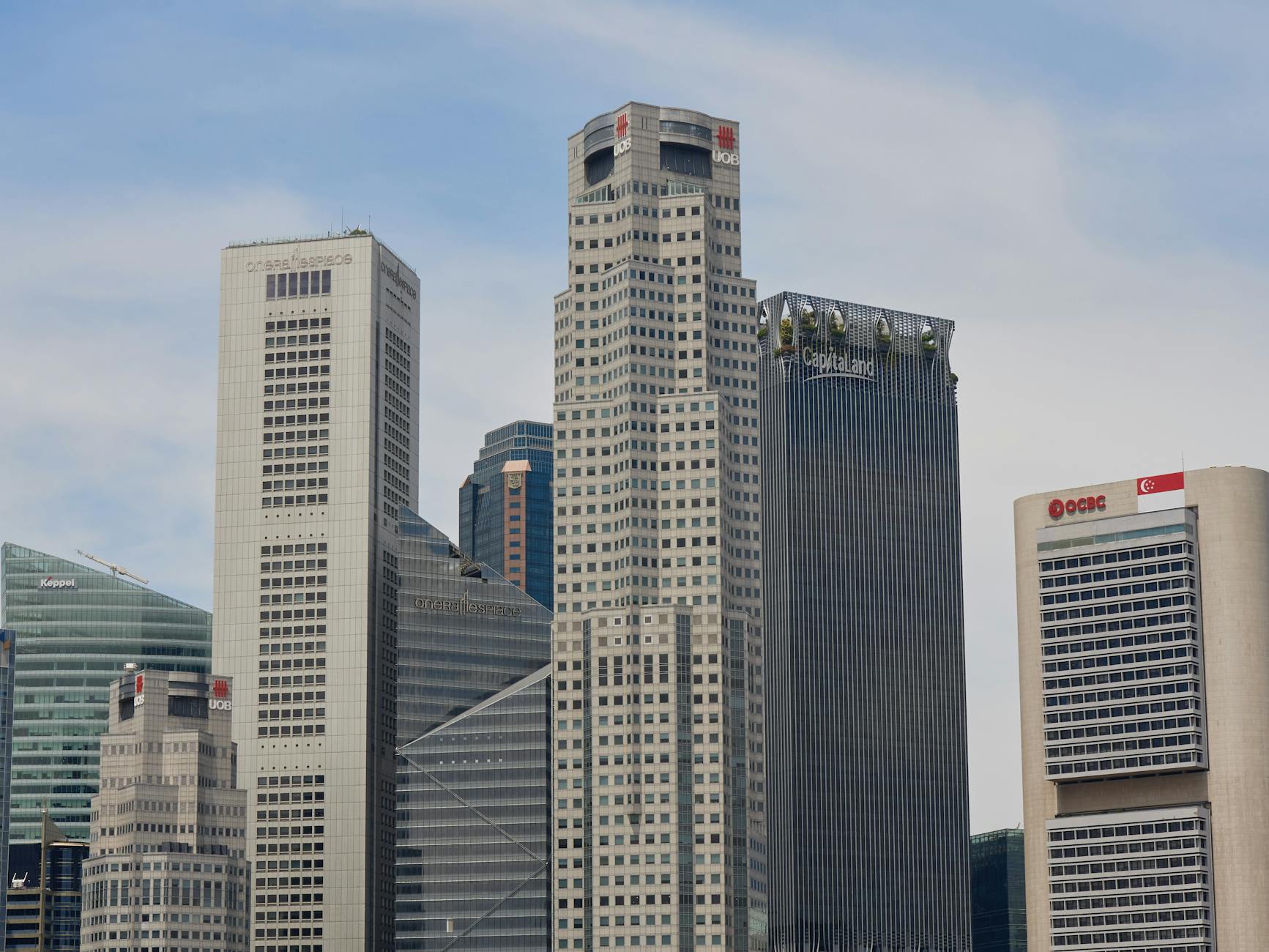
Bank of Singapore reports a 50% surge in Greater China UHNW assets, signaling structural capital flows into Singapore family offices rather than temporary market gains. This drives aggressive hiring.
{"title":"Bank of Singapore Greater China UHNW Assets Jump 50%: What It Means for Family Offices","html":"
Why Did Bank of Singapore's Greater China UHNW Assets Surge 50%?
Bank of Singapore, the private banking arm of OCBC Group, has recorded a 50% jump in ultra-high-net-worth assets from Greater China clients, a figure that signals a structural reallocation of wealth rather than a temporary market-driven uplift. The institution has announced plans to resume what its leadership has described as \"aggressive\" hiring across its Greater China coverage teams, with a particular focus on relationship managers and investment specialists who can serve principals managing assets north of US$30 million. For family office principals across the Asia-Pacific region, this development is a leading indicator of intensifying competition for advisory talent, tighter access to senior bankers, and a reconfiguration of the private wealth service model across Singapore and Hong Kong.
The strategic significance of this announcement extends well beyond one institution's headcount decisions. When a bank of Bank of Singapore's scale — managing an estimated US$150 billion in assets under management as of its most recent public disclosures — signals that Greater China UHNW flows are accelerating at this pace, it reflects a broader migration of capital from mainland China, Hong Kong, and Taiwan into offshore structures. Family office principals who are currently evaluating their banking relationships, custody arrangements, or co-investment access should treat this as a live market signal rather than background noise. The competition for wallet share among UHNW clients is intensifying, and that competition ultimately benefits sophisticated principals who understand how to leverage it.
What Is Driving Greater China Capital Into Singapore and Offshore Structures?
The 50% asset growth figure reported by Bank of Singapore reflects several converging forces that have been building since 2021. Geopolitical uncertainty, evolving regulatory frameworks in mainland China, and Hong Kong's shifting role as an offshore centre have collectively pushed Greater China principals to diversify their booking centres. Singapore has been the primary beneficiary, with the Monetary Authority of Singapore (MAS) reporting that family office assets managed under the Section 13O and Section 13U tax incentive schemes have grown from approximately 700 family offices in 2022 to over 1,100 by end-2024. Singapore's Variable Capital Company (VCC) structure, introduced by MAS in 2020, has become the preferred legal wrapper for many Greater China family offices seeking a flexible, ring-fenced fund vehicle that accommodates both traditional and alternative allocations.
The Variable Capital Company, or VCC, is a Singapore-domiciled corporate structure specifically designed for investment funds, allowing a single VCC to operate multiple sub-funds with segregated assets and liabilities. For Greater China principals, the VCC offers a combination of MAS regulatory credibility, tax treaty access, and operational flexibility that is difficult to replicate in competing jurisdictions. Hong Kong's equivalent — the Open-ended Fund Company, or OFC, regulated by the Securities and Futures Commission (SFC) — has gained traction among principals who maintain dual booking arrangements, but Singapore's VCC continues to attract the larger share of new structures. Taiwan-based family offices, meanwhile, are increasingly exploring Dubai's DIFC (Dubai International Financial Centre) as a complementary booking centre for Middle East and alternative asset exposure.
"A 50% jump in Greater China UHNW assets at a single institution is not a market anomaly — it is a structural signal that the offshore wealth management model is being rebuilt in real time, with Singapore at its centre."
How Does Bank of Singapore's Hiring Push Affect Family Office Talent and Service Access?
Bank of Singapore's decision to resume aggressive hiring directly affects the talent pool available to family offices, particularly single-family offices (SFOs) that compete with private banks for experienced investment professionals and relationship managers. When institutions like Bank of Singapore, Julius Baer, or UBS Private Wealth Management enter active hiring cycles simultaneously, compensation benchmarks shift upward and the supply of mid-to-senior private wealth professionals tightens. Family offices that are themselves building out internal investment teams should treat the current environment as a compressed hiring window — waiting six to twelve months will likely mean facing a more competitive and expensive talent market.
Rickie Chan, who leads Bank of Singapore's Greater China business, has been instrumental in shaping the institution's coverage model for UHNW clients in the region. The bank's approach — deepening specialist capabilities in areas such as structured credit, private equity co-investment, and estate planning — mirrors what sophisticated family office principals are themselves demanding from their external advisers. For multi-family offices (MFOs) operating in Singapore and Hong Kong, the competitive pressure from private banks that are now offering increasingly bespoke, family-office-style service models is a structural challenge that requires differentiation on governance quality, independence, and long-term principal alignment rather than product breadth alone.
What Allocation Shifts Are Greater China Family Offices Making in 2025?
The capital flowing into Singapore and Hong Kong from Greater China principals is not being deployed uniformly. Based on advisory trends and publicly available data from MAS-licensed fund managers, Greater China family offices are making several identifiable allocation shifts. Private credit has emerged as the dominant alternative allocation, driven by yield compression in traditional fixed income and the relative illiquidity premium available in direct lending strategies. Real assets — including infrastructure, logistics real estate, and agriculture — are attracting increased interest as inflation hedges and portfolio diversifiers. Notably, a growing number of Greater China family offices are allocating to Japan-domiciled private equity and real estate, drawn by yen depreciation dynamics and structural corporate reform under Tokyo Stock Exchange governance mandates.
The following allocation priorities have been consistently identified among Greater China UHNW principals engaging with Singapore-based advisers in 2025:
- Private credit and direct lending: Target allocations of 10–20% of total portfolio, with preference for Asia-Pacific-focused managers offering USD-denominated returns.
- Private equity co-investments: Direct co-investment rights alongside institutional GPs, bypassing blind-pool fund structures and reducing fee drag.
- Real assets and infrastructure: Logistics, data centres, and renewable energy infrastructure across Southeast Asia and Japan.
- Succession and estate planning structures: Increased use of Singapore Private Trust Companies (PTCs) and Cayman Islands STAR trusts for multi-generational wealth transfer.
- Philanthropic vehicles: Establishment of Singapore-based charitable foundations or donor-advised fund structures, often linked to the family office's VCC.
How Should Family Office Principals Respond to These Market Shifts?
Family office principals should treat Bank of Singapore's 50% Greater China UHNW asset growth as a prompt to review three specific dimensions of their current arrangements. First, banking relationships: with private banks aggressively competing for UHNW mandates, principals are in a strong negotiating position to renegotiate custody fees, co-investment access, and credit facility terms. Second, structure review: principals who established Singapore family office structures under pre-2023 MAS guidelines should confirm compliance with the updated Section 13O and 13U conditions, which now require minimum local investment thresholds and board-level governance standards. Third, talent strategy: if the family office intends to hire investment professionals in the next 12 months, the current environment favours moving quickly before the Bank of Singapore hiring cycle absorbs available talent. Principals who treat private bank hiring announcements as passive market intelligence — rather than active strategic signals — risk being reactive rather than deliberate in their own institutional development.
The broader regulatory environment reinforces the urgency of structural review. MAS has signalled continued scrutiny of family office applications, with processing times for new VCC and Section 13U approvals extending to 12–18 months in some cases due to increased application volumes. The SFC in Hong Kong has similarly tightened its OFC approval framework, requiring more detailed disclosure of beneficial ownership and investment mandates. DIFC in Dubai continues to position itself as a complementary jurisdiction for principals seeking Middle East market access or Islamic finance structuring, with its Family Wealth Centre offering dedicated governance and succession planning support.
What to Watch: Forward-Looking Indicators for Greater China Family Office Capital
Several developments in the next 6–12 months will shape the trajectory of Greater China UHNW capital flows into Singapore and Hong Kong. MAS is expected to publish updated guidance on the enhanced-tier Section 13U scheme, which may raise minimum AUM thresholds and tighten local hiring requirements for qualifying family offices. The SFC is reviewing its OFC regime with a view to broadening eligible asset classes, potentially making Hong Kong a more competitive domicile for alternative-heavy family office structures. Bank of Singapore's hiring programme, if executed at the pace suggested by its leadership, will be a visible indicator of whether the 50% asset growth figure represents a sustained trend or a single-year spike driven by one-time capital events.
Family office principals should also monitor the pace of Taiwan-based capital outflows, which represent a distinct and underreported component of the Greater China UHNW migration story. Taiwan principals — many of whom have historically maintained US-booked structures — are increasingly establishing Singapore VCCs as primary holding vehicles, attracted by MAS regulatory quality and Singapore's network of double taxation agreements. The intersection of Taiwan succession dynamics, US estate tax exposure, and Singapore's trust law framework is creating a specific advisory niche that well-structured family offices are well-placed to navigate with the right external counsel.
Frequently Asked Questions
What is a Variable Capital Company (VCC) and why do Greater China family offices use it?
A Variable Capital Company (VCC) is a Singapore-domiciled corporate fund structure regulated by the Monetary Authority of Singapore (MAS) that allows multiple sub-funds under a single legal entity, with segregated assets and liabilities between sub-funds. Greater China family offices use the VCC because it offers MAS regulatory credibility, access to Singapore's double taxation agreement network, flexible capital redemption, and compatibility with both traditional and alternative asset allocations — making it the preferred structure for principals seeking a Singapore-anchored family office vehicle.
How does Bank of Singapore's Greater China hiring affect family offices in Singapore?
Bank of Singapore's aggressive hiring cycle tightens the available pool of experienced private wealth and investment professionals in Singapore, raising compensation benchmarks and reducing the window for family offices to recruit at competitive cost. Family offices planning to build internal investment or advisory teams should accelerate their hiring timelines to avoid competing directly with well-resourced private bank recruitment programmes.
What are the MAS Section 13O and Section 13U schemes for family offices?
MAS Section 13O and Section 13U are Singapore tax incentive schemes that exempt qualifying family offices from Singapore income tax on specified investment income. Section 13O applies to Singapore-incorporated fund vehicles with a minimum AUM of S$10 million, while Section 13U applies to larger funds (minimum S$50 million AUM) and offers broader asset class coverage. Both schemes require local investment thresholds, a minimum number of locally based investment professionals, and annual MAS reporting compliance.
How does Hong Kong's OFC compare to Singapore's VCC for family office structuring?
Hong Kong's Open-ended Fund Company (OFC), regulated by the Securities and Futures Commission (SFC), is the closest equivalent to Singapore's VCC. Both structures allow umbrella fund arrangements with segregated sub-funds. The VCC currently has a larger installed base among Greater China family offices due to Singapore's more established private wealth and MAS's proactive family office policy framework, but the OFC is gaining ground among principals who maintain active Hong Kong business operations or require SFC-regulated investment management oversight.
🍾 Evaluating whisky casks as an alternative allocation? Whisky Cask Club works with family offices across APAC on structured cask portfolios.
","meta_title":"Bank of Singapore Greater China UHNW Assets Jump 50%","meta_description":"Bank of Singapore's Greater China UHNW assets surge 50% — what this means for family office principals on talent, VCC structures, and MAS compliance.","focus_keyword":"Bank of Singapore Greater China UHNW","keywords":["Greater China family office Singapore","MAS Section 13U family office","Variable Capital Company VCC","Bank of Singapore UHNW hiring","Hong Kong OFC SFC","Singapore family office 2025","private wealth Greater China","UHNW asset management Asia"],"tldr":"Bank of Singapore reports a 50% jump in Greater China UHNW assets and plans aggressive hiring. Singapore VCC structures and MAS incentives are driving capital inflows. Family office principals should review banking relationships, governance structures, and hiring timelines now.","faqs":[{"q":"What is a Variable Capital Company (VCC) and why do Greater China family offices use it?","a":"A VCC is a Singapore-domiciled corporate fund structure regulated by MAS that allows multiple sub-funds under one legal entity with segregated liabilities. Greater China family offices use it for MAS regulatory credibility, double taxation agreement access, and flexibility across traditional and alternative assets."},{"q":"How does Bank of Singapore's Greater China hiring affect family offices in Singapore?","a":"Bank of Singapore's hiring cycle tightens the pool of experienced investment professionals in Singapore, raising compensation benchmarks. Family offices planning to build internal teams should accelerate hiring timelines to avoid competing with private bank recruitment programmes."},{"q":"What are the MAS Section 13O and Section 13U schemes for family offices?","a":"MAS Section 13O and 13U are Singapore tax incentive schemes exempting qualifying family offices from income tax on specified investment income. Section 13O requires minimum S$10M AUM; Section 13U requires S$50M AUM. Both require local investment thresholds, resident professionals, and annual MAS compliance reporting."},{"q":"How does Hong Kong's OFC compare to Singapore's VCC for family office structuring?","a":"Both are umbrella fund structures with segregated sub-funds. Singapore's VCC has a larger installed base due to MAS's proactive family office policy, but Hong Kong's OFC regulated by the SFC is gaining traction among principals with active Hong Kong operations or requiring SFC-regulated investment management."}],"entities":{"people":["Rickie Chan"],"organizations":["Bank of Singapore","OCBC Group","Monetary Authority of Singapore (MAS)","Securities and Futures Commission (SFC)","Dubai International Financial Centre (DIFC)","Julius Baer","UBS Private Wealth Management"],"places":["Singapore","Hong Kong","Greater China","Taiwan","Dubai","Japan"]}}