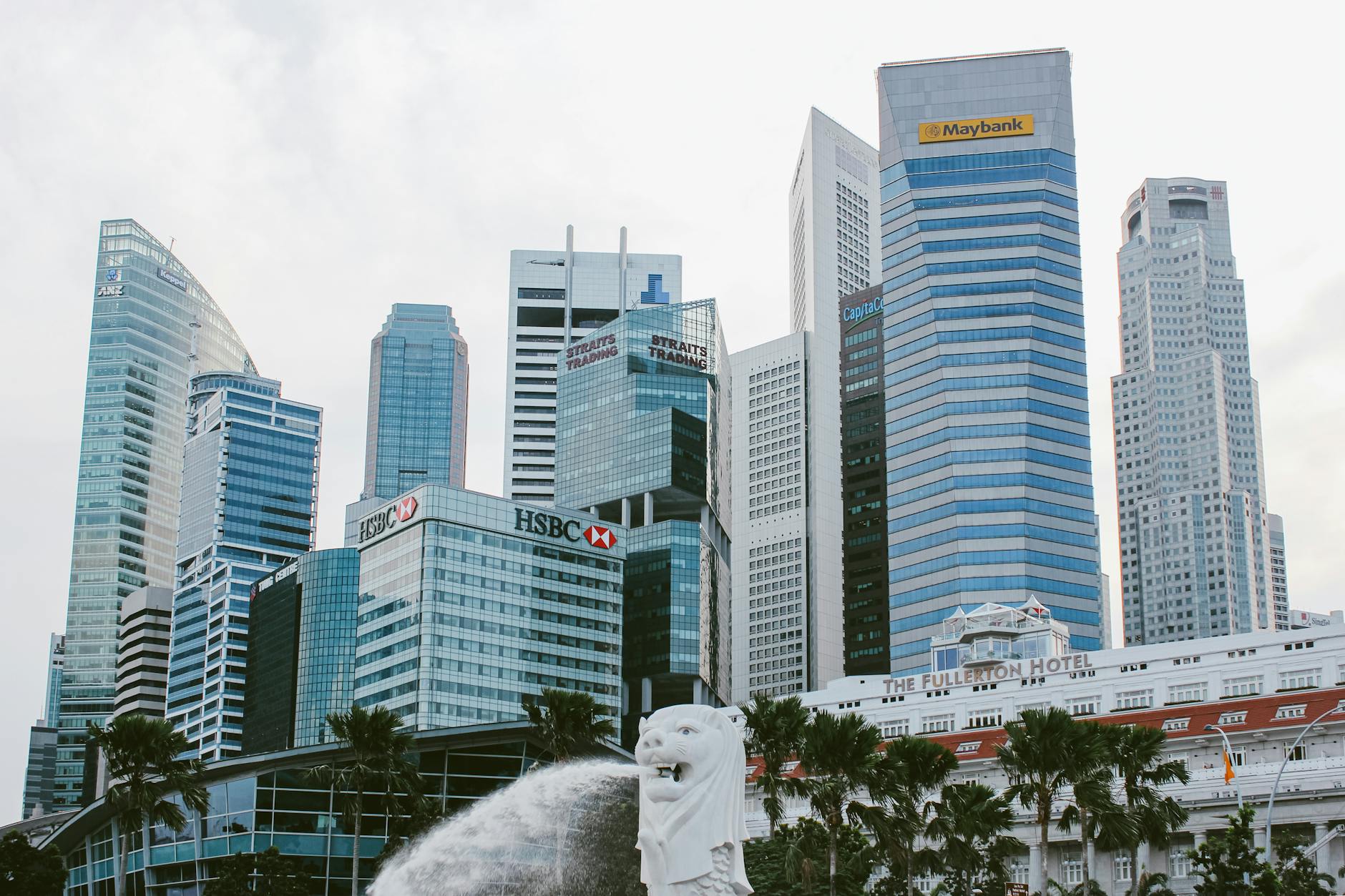
Bank of Singapore reports a 50% surge in Greater China UHNW assets and is resuming aggressive hiring. The move tightens Singapore's private banking talent market and signals continued structural growth in family office formation from Greater China principals.
Greater China UHNW Assets at Bank of Singapore Jump 50%
Bank of Singapore, the private banking arm of OCBC Group, has reported a 50% increase in assets under management sourced from ultra-high-net-worth clients across Greater China — a figure that underscores the accelerating pace at which Chinese family wealth is being formalised and repositioned offshore. The bank's head of Greater China, Rickie Chan, confirmed the institution is preparing to resume what he described as "aggressive" hiring across relationship management and investment advisory functions, targeting experienced bankers with established UHNW client books. The disclosure, made in April 2026, marks a significant shift in posture for a bank that, like many of its peers, had adopted a more cautious approach to headcount expansion over the preceding 18 months.
The 50% AUM growth figure is not a marginal uptick — it represents a structural reorientation of where Greater China principals are choosing to domicile and manage their liquid and investable wealth. Singapore has long competed with Hong Kong as the preferred booking centre for Chinese offshore assets, but the combination of regulatory clarity under MAS, the Variable Capital Company (VCC) framework, and geopolitical considerations has tilted the balance further toward the Lion City. For family office principals already operating in Singapore, the influx of new UHNW capital from Greater China has material implications for deal flow, co-investment access, and the competitive dynamics of talent acquisition.
Why Singapore's VCC Framework Is Central to This Shift
The Variable Capital Company structure, introduced by MAS in 2020 and refined through subsequent guidance, has become a foundational vehicle for family offices seeking to consolidate multi-asset, multi-generational portfolios under a single regulated umbrella in Singapore. Bank of Singapore's reported growth in Greater China AUM is in part a downstream effect of principals establishing Singapore-based family offices — many of which have applied for or received MAS Section 13O or 13U fund tax incentive status — and then centralising their banking relationships accordingly. As of late 2025, MAS had approved over 1,100 family offices under these incentive schemes, with a significant proportion linked to Greater China principals.
For existing Singapore-domiciled family offices, the surge in new entrants from Greater China creates both opportunity and friction. On the opportunity side, it deepens the local ecosystem of co-investment partners, deal syndicates, and specialist advisers. On the friction side, it intensifies competition for senior private banking talent, particularly Mandarin-speaking relationship managers with cross-border expertise and the ability to navigate both onshore China regulatory requirements and offshore structuring considerations. Bank of Singapore's hiring push will draw from a finite talent pool, and principals who rely on key bankers for deal origination and credit access should be attentive to potential relationship disruptions.
What "Aggressive" Hiring Means for the Regional Talent Market
The term "aggressive" hiring, as used by Rickie Chan, is a deliberate signal to the market that Bank of Singapore intends to compete at the top of the compensation curve for experienced private bankers. In practice, this typically means guaranteed bonuses, accelerated client transition packages, and equity-linked incentives for senior hires. The bank is understood to be targeting relationship managers managing books of between USD 300 million and USD 1 billion in AUM, with a preference for those with established Greater China UHNW relationships and experience structuring complex cross-border mandates involving trusts, family holding companies, and alternative allocations.
This hiring cycle comes against a backdrop of broader institutional expansion in Singapore's private wealth sector. Competitors including UBS, Julius Baer, and DBS Private Bank have all signalled hiring intent for Greater China-focused roles over the same period. The result is a seller's market for experienced private banking talent, which has knock-on effects for family offices that employ former private bankers as in-house investment directors or chief investment officers. Retention packages and compensation benchmarking have become a more pressing governance consideration for family office principals than at any point in the past five years.
Strategic Implications for Family Office Principals
For principals of single-family offices and multi-family offices operating across the Asia-Pacific region, Bank of Singapore's renewed expansion offers several actionable considerations. First, the 50% AUM growth figure from Greater China suggests that the pipeline of new family office formation in Singapore remains robust, which supports the case for investing in local infrastructure — governance frameworks, succession documentation, and MAS-compliant investment mandates — that will be needed to accommodate growing complexity. Second, the hiring push by Bank of Singapore and its peers may create an opportunity for family offices to recruit directly from departing or transitioning private banking teams, bringing relationship capital and market intelligence in-house.
Third, and perhaps most critically for principals already in the market, the competitive intensity around Greater China UHNW clients will likely drive product innovation at the major private banks — including enhanced access to private credit, co-investment structures, and bespoke alternatives mandates. Principals who maintain active dialogue with their primary banking relationships, and who are positioned to act quickly on new product or deal flow, will be better placed to benefit from this cycle than those who treat their banking relationships as purely transactional. The strategic implication is clear: as institutional capital flows accelerate into Singapore, the family offices that have invested in robust governance and active relationship management will find themselves at the front of the queue.
Frequently Asked Questions
What drove the 50% jump in Greater China UHNW assets at Bank of Singapore?
The growth reflects a combination of factors: accelerating offshore wealth migration from mainland China and Hong Kong, the establishment of new Singapore-based family offices under MAS incentive schemes such as Section 13O and 13U, and Bank of Singapore's deliberate strategic focus on the Greater China UHNW segment under Rickie Chan's leadership. Geopolitical risk diversification and Singapore's regulatory stability have also been consistent drivers.
How does the MAS VCC framework support Greater China family office formation in Singapore?
The Variable Capital Company structure allows family offices to consolidate diverse asset classes — equities, private markets, real estate, and alternatives — within a single regulated fund vehicle domiciled in Singapore. Combined with the Section 13O and 13U tax incentive frameworks, the VCC has become the preferred structural choice for Greater China principals seeking a compliant, flexible, and internationally recognised offshore platform.
What does Bank of Singapore's hiring push mean for family offices competing for talent?
The renewed hiring cycle will tighten an already competitive market for experienced Mandarin-speaking private bankers and investment professionals. Family offices that employ or seek to hire former private banking talent may face higher compensation expectations and shorter decision windows. Principals are advised to review retention frameworks for key in-house investment staff and to benchmark compensation against current private banking market rates.
Should family office principals be concerned about relationship manager turnover at their banks?
Potentially, yes. Aggressive hiring campaigns often result in mid-cycle relationship manager transitions, which can disrupt credit facilities, investment mandates, and deal flow access. Principals should ensure that their banking relationships are documented at the institutional level — not solely tied to an individual banker — and should maintain active contact with both their primary RM and the relevant team head or market head.
How does Singapore compare to Hong Kong as a booking centre for Greater China UHNW assets?
Both remain significant, but Singapore has gained relative share over the past three to four years. MAS's proactive regulatory posture, the VCC framework, and Singapore's perceived political neutrality have made it the preferred domicile for new family office formation among Greater China principals. Hong Kong retains advantages in proximity to mainland China and depth of RMB product infrastructure, but the trend in new booking centre selection has favoured Singapore since 2021.
🍾 Evaluating whisky casks as an alternative allocation? Whisky Cask Club works with family offices across APAC on structured cask portfolios.