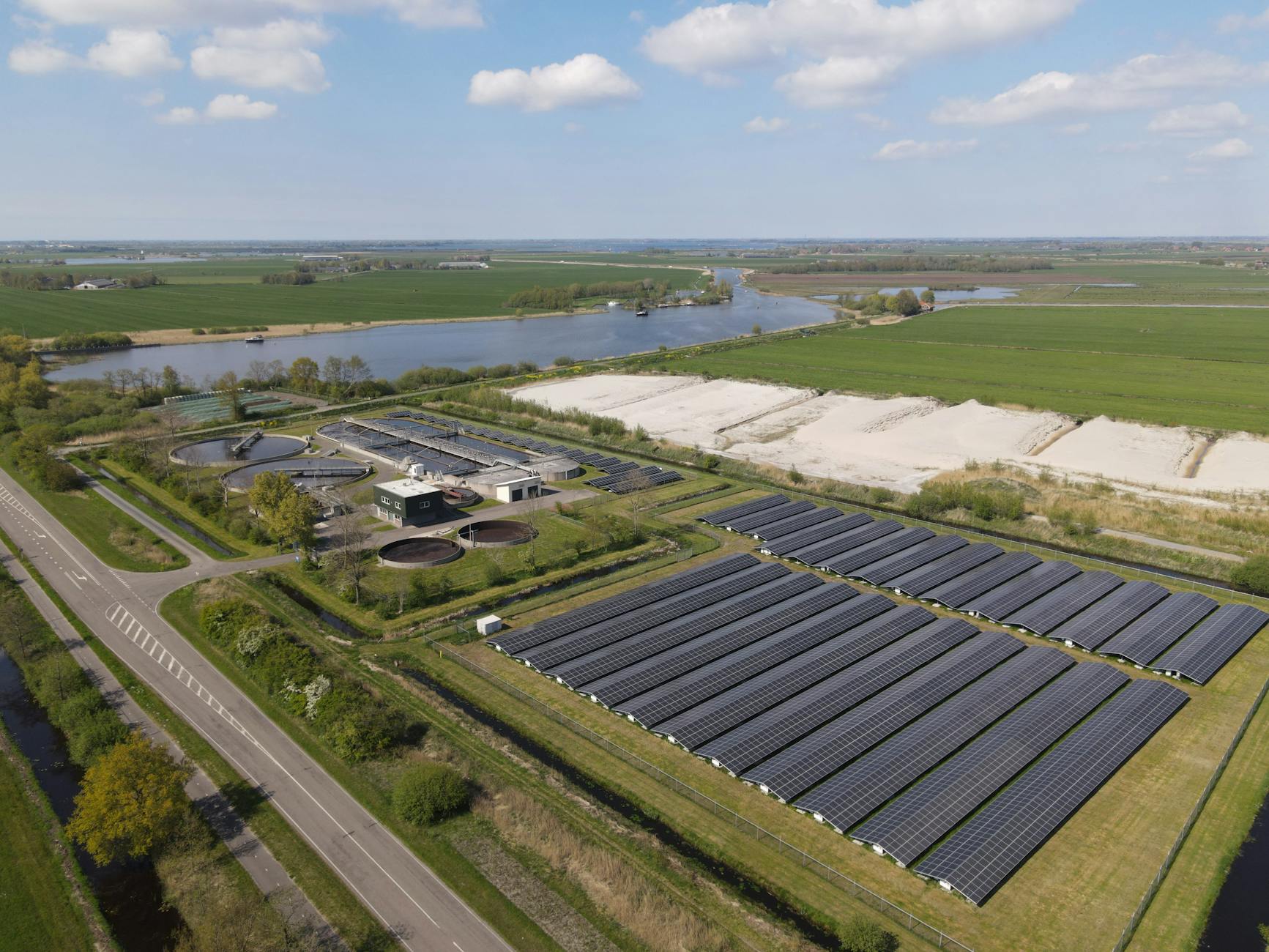
Endowus partners with Copenhagen Infrastructure Partners to offer accredited investors in Singapore and Hong Kong access to a flagship green energy infrastructure fund with a USD 100,000 minimum investment, lowering the barrier for family offices.
Green Energy Infrastructure Comes Within Reach for Accredited Investors
Endowus, the Singapore-headquartered wealth platform, has partnered with Copenhagen Infrastructure Partners (CIP) to distribute the Danish firm's flagship green energy infrastructure fund to accredited investors across Singapore and Hong Kong. The minimum investment threshold has been set at USD 100,000, a figure that meaningfully lowers the barrier relative to the typical USD 5–10 million commitments required by institutional infrastructure mandates. For family offices that have been observing the energy transition from a distance — deterred by high minimums, illiquidity, or limited distribution channels — this partnership represents a structurally different entry point. The collaboration brings one of Europe's largest dedicated green infrastructure managers into direct contact with Asian private wealth, a channel that has historically been underserved in this asset class.
CIP manages approximately EUR 30 billion in assets under management globally, with a portfolio concentrated in offshore wind, onshore renewables, and energy storage across Europe, the Americas, and increasingly Asia-Pacific. Its flagship fund, the Copenhagen Infrastructure IV vehicle, has attracted commitments from sovereign wealth funds and large pension allocators, giving it institutional pedigree that family office investment committees are likely to scrutinise positively. The Endowus distribution arrangement does not alter the fund's underlying structure but enables access through a feeder mechanism compatible with Singapore's Variable Capital Company framework and Hong Kong's regulatory environment for professional investors under the Securities and Futures Ordinance.
Why Family Offices Are Paying Attention to Infrastructure Allocation
Infrastructure as an asset class has been gaining traction in family office portfolios across Asia-Pacific, with allocation surveys consistently showing that principals are seeking to increase exposure to real assets offering inflation linkage and long-duration cash flows. A 2024 survey by Campden Wealth found that Asia-Pacific family offices allocated an average of 8% of their portfolios to infrastructure and real assets, compared to a global average closer to 11%, suggesting meaningful room for reallocation. The green energy sub-sector is particularly compelling given the combination of government-backed revenue frameworks — feed-in tariffs, power purchase agreements — that underpin returns and reduce merchant risk. For family offices managing multigenerational capital, the 15–25 year investment horizon typical of infrastructure funds aligns well with patient capital mandates.
The energy transition also carries reputational and values-based dimensions that are increasingly relevant to next-generation principals. Family offices navigating succession are frequently finding that rising generation members prioritise ESG-aligned allocation, and green infrastructure offers a credible bridge between financial return expectations and impact objectives. Unlike ESG-screened public equity strategies, which can be difficult to verify at the portfolio level, direct infrastructure investment in wind and solar assets provides tangible, auditable impact metrics — megawatt-hours generated, tonnes of carbon avoided — that satisfy both investment committee rigour and family governance conversations.
Singapore and Hong Kong as Distribution Anchors
The dual-jurisdiction launch reflects the geographic reality of where Asian family office capital is concentrated. Singapore's Monetary Authority has been actively encouraging the development of private markets infrastructure through the Variable Capital Company structure, which now hosts over 1,000 registered funds and has become a preferred domicile for family office investment vehicles. Hong Kong, meanwhile, has strengthened its own fund domiciliation framework through the Open-ended Fund Company structure, and the SFC has signalled continued appetite for expanding the range of alternative investments accessible to professional investors. By launching simultaneously across both cities, Endowus and CIP are positioning the offering for family offices that maintain presences in both jurisdictions — a common structure among larger regional single-family offices.
Distribution through a digital wealth platform also introduces operational efficiencies that are relevant to smaller family office teams. Subscription, reporting, and portfolio monitoring through a single interface reduces administrative overhead, and Endowus's existing relationships with accredited investor clients in both markets provide an established investor base from which to draw. The platform has previously distributed private credit and private equity products, making green infrastructure a logical extension of its alternatives shelf rather than an isolated experiment.
Strategic Implications for Family Office Principals
For principals evaluating this opportunity, several considerations warrant attention before committing capital. The USD 100,000 minimum makes the fund accessible, but family offices should assess how a feeder structure affects fee layering relative to direct institutional access — an additional layer of management or platform fees can erode the net return advantage that infrastructure is expected to deliver. Due diligence on CIP's track record in Asian markets specifically is also prudent, given that the firm's historical performance is heavily weighted toward European offshore wind, a market with materially different regulatory and grid dynamics than Southeast Asia or Northeast Asia. Liquidity terms in infrastructure feeders typically restrict redemptions for five to ten years, which principals should map against their own liquidity planning frameworks before allocation.
Nonetheless, the structural direction is clear: green energy infrastructure is moving from an institutional-only asset class toward one where family offices of meaningful but not extraordinary scale can participate on reasonable terms. The Endowus-CIP arrangement is one of several such initiatives emerging across Asia-Pacific, and principals who develop internal competency in evaluating infrastructure opportunities now will be better positioned as the market deepens. Investment committees that have not yet formalised a real assets allocation policy may find this a useful prompt to do so.
Frequently Asked Questions
What is the minimum investment for the Endowus-CIP green energy fund?
The minimum investment threshold is set at USD 100,000 for accredited investors accessing the fund through the Endowus platform in Singapore and Hong Kong. This is significantly lower than the typical institutional minimums for direct infrastructure fund commitments, which commonly range from USD 5 million to USD 10 million.
How does the fund fit within Singapore's VCC and Hong Kong's OFC frameworks?
The fund is structured to be compatible with Singapore's Variable Capital Company framework and Hong Kong's professional investor regime under the Securities and Futures Ordinance. Access is provided through a feeder vehicle, meaning retail investors are excluded and participation is limited to accredited or professional investors as defined by MAS and SFC guidelines respectively.
What is Copenhagen Infrastructure Partners' assets under management?
CIP manages approximately EUR 30 billion in assets under management globally, with a portfolio focused on offshore wind, onshore renewables, and energy storage. Its investor base has historically included sovereign wealth funds and large pension allocators, giving the firm strong institutional credentials.
What liquidity terms should family offices expect from infrastructure feeder funds?
Infrastructure funds, including feeder structures, typically impose lock-up periods of five to ten years with limited or no redemption windows during the investment period. Principals should map these terms carefully against their own liquidity planning requirements and ensure that committed capital is genuinely patient capital before proceeding.
How does green infrastructure address next-generation succession priorities in family offices?
Next-generation principals increasingly prioritise ESG-aligned and impact-oriented allocations. Green energy infrastructure offers auditable impact metrics — such as megawatt-hours generated and carbon emissions avoided — that satisfy both investment committee standards and values-based family governance discussions, making it a credible bridge between financial return expectations and impact objectives.
🍾 Evaluating whisky casks as an alternative allocation? Whisky Cask Club works with family offices across APAC on structured cask portfolios.