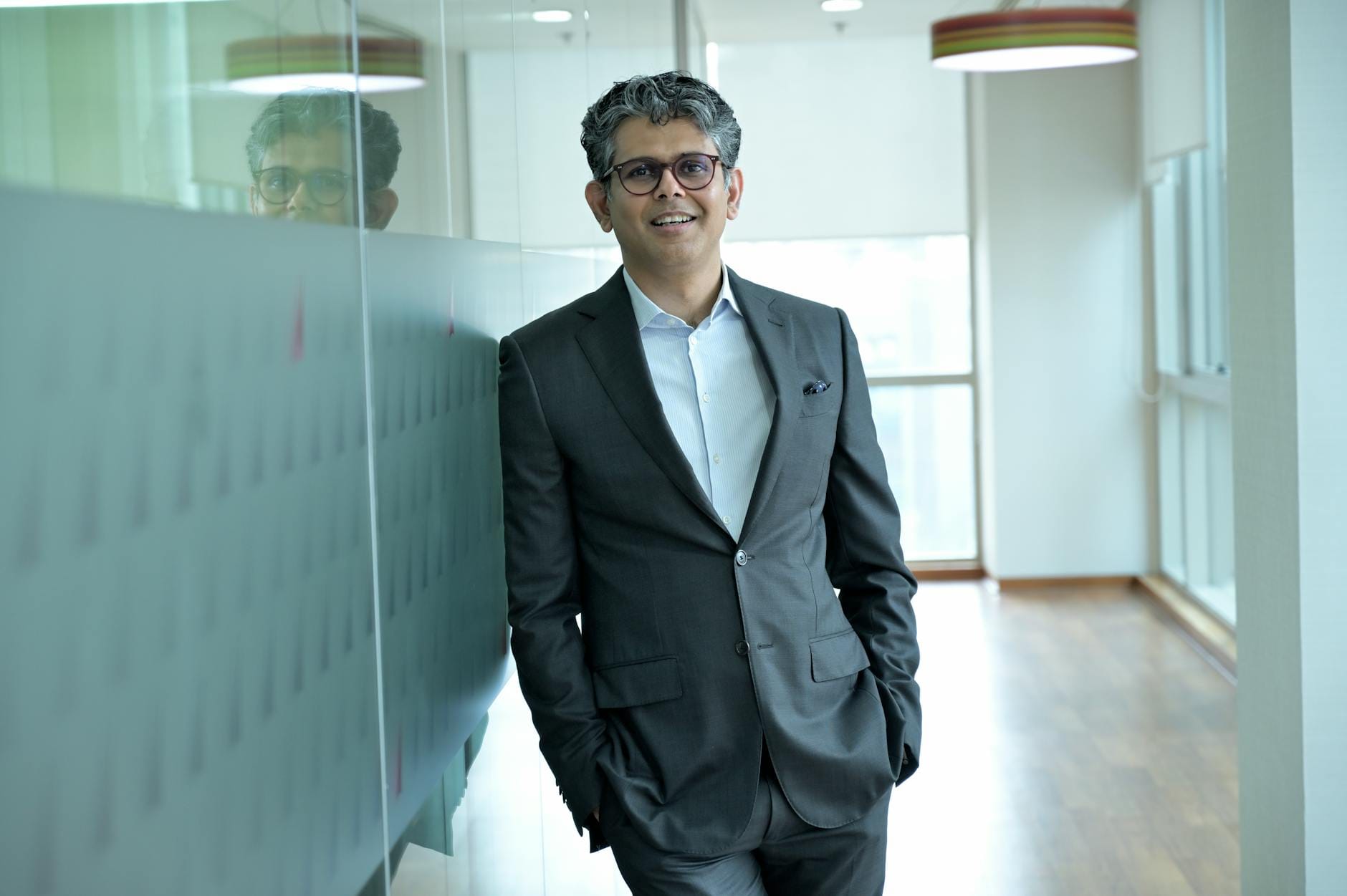
HSBC appoints Gautam Anand to lead its Global India private banking unit across India, Dubai, Hong Kong, Singapore, and the UK, targeting an Indian UHNW investable asset pool projected to approach $1.5 trillion by 2027.
HSBC Positions Gautam Anand to Lead Global India Private Banking
HSBC has named Gautam Anand as the head of its Global India private banking unit, a role that places him at the centre of one of the most strategically contested wealth management mandates in Asia. Anand will oversee client coverage not only within India itself but across the key international corridors where Indian ultra-high-net-worth individuals and family offices have established significant financial and operational footprints — Dubai, Hong Kong, Singapore, and the United Kingdom. The appointment reflects the bank's recognition that Indian wealth is no longer a domestic story; it is a multi-jurisdictional, multi-generational opportunity requiring coordinated cross-border infrastructure. For family office principals with Indian principals or Indian-origin beneficiaries, this signals a meaningful upgrade in the institutional attention being directed at their segment.
Anand's mandate is notably broad. Rather than managing a single geography, he will be responsible for ensuring that HSBC's private banking proposition is coherent and competitive across every major hub where Indian wealth concentrates. Dubai's DIFC has emerged as a particularly significant node, with a growing number of Indian business families establishing family offices and holding structures under DIFC's regulatory framework, attracted by its zero capital gains environment and proximity to Gulf investment opportunities. Singapore, meanwhile, continues to draw Indian principals seeking Variable Capital Company structures under MAS oversight, particularly those with diversified Asian exposure. The dual-hub dynamic — DIFC and Singapore — means that any institution serious about Indian private wealth must maintain credible, well-resourced teams in both jurisdictions simultaneously.
Why Indian Private Wealth Demands a Dedicated Cross-Border Architecture
The scale of the opportunity is difficult to overstate. India is projected to add more ultra-high-net-worth individuals — those with net worth exceeding $30 million — than any other Asian market over the next five years, with estimates from several wealth research houses pointing to a combined investable asset pool approaching $1.5 trillion by 2027. This growth is being driven not only by domestic equity market appreciation and the continued expansion of Indian conglomerates, but also by significant liquidity events: IPOs, secondary share sales, and private equity exits that are placing large, freshly liquid sums in the hands of founders and their families. These are precisely the clients for whom private banks compete most aggressively, and for whom family office governance infrastructure becomes an urgent priority almost immediately post-liquidity.
The challenge for institutions like HSBC is that Indian principals rarely consolidate their wealth in a single jurisdiction. A typical ultra-high-net-worth Indian family may hold operating businesses in Mumbai, a family office vehicle in Singapore or the DIFC, real estate in London, and investment portfolios across multiple custodians. Serving this client effectively requires not just product breadth but genuine cross-border coordination — the ability to provide consistent advice on asset allocation, succession planning, and regulatory compliance across MAS, SFC, DIFC, and UK FCA frameworks simultaneously. Anand's appointment as a global, rather than regional, head suggests HSBC is structuring its coverage to meet precisely this demand.
Competition Intensifies Across Key Hubs
HSBC is not alone in recognising the strategic importance of India-linked wealth. Several Swiss private banks have materially expanded their Singapore and Dubai teams over the past 24 months with an explicit focus on Indian principals, while US bulge-bracket institutions have been building out their India onshore presence ahead of anticipated regulatory liberalisation. The competitive intensity has driven up hiring costs for experienced relationship managers with established Indian client books, with senior bankers commanding packages that reflect the revenue potential of a single well-managed ultra-high-net-worth relationship. For family office principals evaluating their banking relationships, this competition is broadly positive: it creates leverage in fee negotiations and increases the likelihood that banks will invest in bespoke service infrastructure rather than relying on standardised product platforms.
Hong Kong's role in this picture is worth examining carefully. While Singapore has attracted the larger share of new family office registrations in recent years — with MAS reporting over 1,100 single family offices holding Section 13 tax incentive status as of late 2024 — Hong Kong's OFC framework and its proximity to Greater China capital flows mean it retains relevance for Indian families with significant China or North Asia exposure. HSBC, with its uniquely deep Hong Kong institutional roots, is arguably better positioned than most to offer credible coverage across both centres without forcing clients to choose between them.
Strategic Implications for Family Office Principals
For principals running single family offices with Indian founders or beneficiaries, Anand's appointment is worth noting for several practical reasons. First, it suggests HSBC is prepared to invest at the relationship management level in Indian private wealth, which historically has sometimes been served by generalist teams without deep cultural or jurisdictional fluency. Second, the explicit inclusion of Dubai in his coverage remit confirms that DIFC-domiciled family offices will be treated as first-class clients rather than an afterthought to Singapore or Hong Kong coverage. Third, for families currently evaluating which private bank to appoint as a primary relationship bank — a decision with significant implications for credit access, deal flow, and custody efficiency — the elevation of a dedicated global India head at HSBC changes the competitive calculus.
Principals should also consider the succession and next-generation dimension. Indian family wealth is increasingly being transferred to second and third generation members who have been educated internationally, are comfortable operating across multiple jurisdictions, and have investment preferences that diverge meaningfully from the first generation — with greater appetite for alternatives, private markets, and impact-oriented mandates. A private bank that can serve both the founding generation's liquidity management needs and the next generation's allocation ambitions within a single, coherent relationship structure offers a compelling proposition. Whether HSBC's new structure under Anand delivers on that promise will become clear over the next 12 to 18 months as the team builds out its coverage model across each hub.
Frequently Asked Questions
What is the scope of Gautam Anand's new role at HSBC?
Anand has been appointed to lead HSBC's Global India private banking unit, with responsibility for client coverage across India and the key international hubs where Indian ultra-high-net-worth individuals are concentrated, including Dubai, Hong Kong, Singapore, and the UK.
Why are Dubai and Singapore both important for Indian private wealth?
Dubai's DIFC offers a zero capital gains environment and flexible family office structures under DIFC regulation, attracting Indian families with Gulf business interests. Singapore's MAS-regulated Variable Capital Company framework appeals to those seeking a stable, well-regulated Asian base with broad investment flexibility. Many Indian families maintain presences in both jurisdictions simultaneously.
How large is the Indian ultra-high-net-worth wealth opportunity?
India's combined investable ultra-high-net-worth asset pool is projected by multiple wealth research sources to approach $1.5 trillion by 2027, driven by equity market growth, conglomerate expansion, and a significant pipeline of liquidity events including IPOs and private equity exits.
How does this appointment affect family offices evaluating their private banking relationships?
The appointment signals that HSBC is investing in dedicated, cross-border coverage for Indian principals rather than relying on generalist teams. For family offices currently reviewing their banking relationships, this increases HSBC's competitiveness and may provide leverage in fee and service negotiations across multiple jurisdictions.
What role does Hong Kong play in HSBC's India private wealth strategy?
Hong Kong remains relevant for Indian families with North Asia or Greater China exposure. HSBC's deep institutional roots in Hong Kong, combined with the city's OFC framework under SFC oversight, allow it to offer credible coverage across both Hong Kong and Singapore without requiring clients to prioritise one hub over the other.
🍾 Evaluating whisky casks as an alternative allocation? Whisky Cask Club works with family offices across APAC on structured cask portfolios.