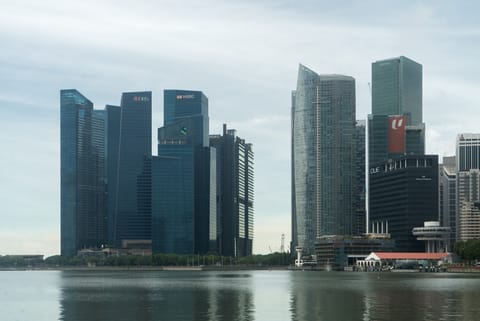

Standard Chartered's private banking division has reported a fivefold rise in hedge fund AUM, driven by high-net-worth clients accelerating alternatives allocations. For Asia family offices, the trend highlights shifting access structures and the need to benchmark current hedge fund exposure against evolving market options.
Standard Chartered's private banking arm has recorded a fivefold increase in hedge fund assets under management, driven by high-net-worth clients accelerating their exposure to alternative strategies after years of underweighting the asset class relative to ultra-high-net-worth and institutional peers.
For family office principals in Asia, the data point is a directional signal worth tracking. HNW clients have historically lagged institutional allocators in hedge fund penetration, constrained by minimum ticket sizes, limited access to managed account structures, and a preference for more liquid instruments. The StanChart surge suggests that gap is narrowing, and that private banks are actively building the infrastructure to facilitate it. Principals who have not recently reviewed their alternatives sleeve against current market access options may find the competitive set has shifted.
Several structural factors appear to be converging. Feeder fund structures and lower-minimum share classes have made hedge fund access more practical for sub-institutional ticket sizes. At the same time, sustained volatility across public equity and fixed income markets has pushed allocators toward strategies with lower correlation profiles, including global macro, multi-strategy, and quantitative equity funds. StanChart's reported AUM trajectory reflects this broader reallocation trend across the private wealth channel in Asia, where family offices and HNW clients are increasingly treated as a distinct segment by fund managers seeking to diversify their capital base beyond pension and endowment money.
Key considerations for family office allocation committees reviewing hedge fund exposure include:
- Liquidity terms: redemption gates, lock-up periods, and side-pocket provisions vary significantly across fund structures and should be stress-tested against the family's liquidity planning horizon.
- Fee drag: the traditional two-and-twenty model has compressed but remains material; negotiated managed account terms may be available at higher commitment levels.
- Regulatory wrapper: Singapore's Variable Capital Company (VCC) and Hong Kong's Open-ended Fund Company (OFC) both offer structuring options for families seeking to co-invest or hold hedge fund interests in a locally domiciled vehicle, with MAS and the SFC respectively providing the supervisory framework.
- Manager due diligence: operational risk, counterparty concentration, and prime brokerage arrangements warrant independent review, particularly for smaller or emerging managers.
- Portfolio fit: correlation assumptions used at the time of initial allocation should be revisited, as some hedge fund strategies have shown higher equity beta in stress periods than historical data suggested.
Why it matters: A fivefold AUM surge at a major private bank's hedge fund book is not simply a product distribution story, it reflects a structural shift in how Asian HNW and family office capital is being deployed into alternatives. Principals who treat this as a peer-benchmarking moment, rather than a marketing prompt, are better positioned to assess whether their current alternatives allocation, in size, structure, and strategy mix, remains fit for purpose in a more complex return environment.
Source: Asian Private Banker — StanChart logs 5x hedge fund AUM surge as HNW clients play catch-up (asianprivatebanker.com/private-wealth/stanchart-logs-5x-hedge-fund-aum-surge-as-hnw-clients-play-catch-up)