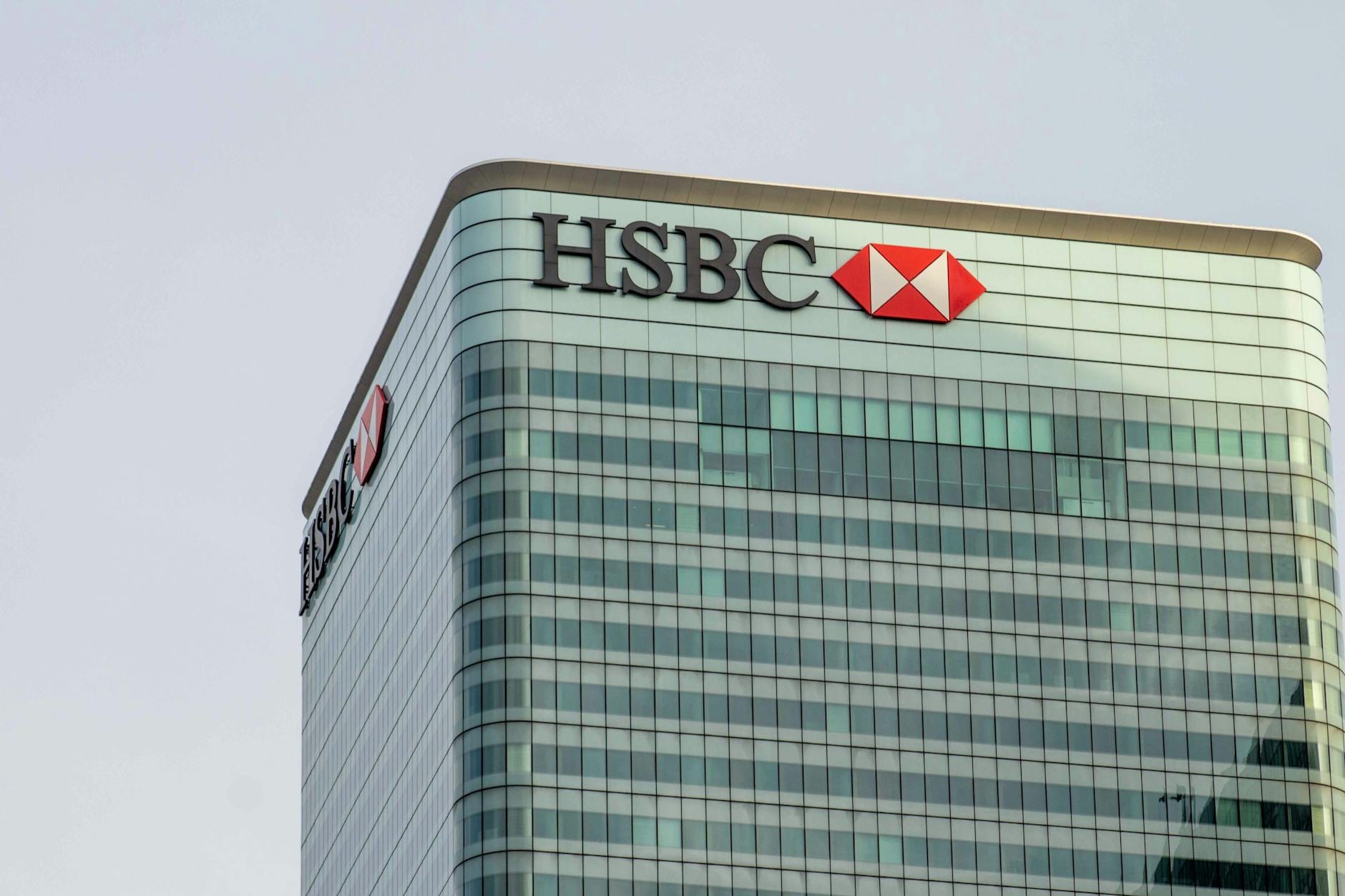
HSBC Private Bank appoints a Global Head of India to coordinate services for wealthy Indian clients worldwide. This signals intense competition for India's fast-growing UHNW market and reshapes advisory relationships for family offices across key financial hubs.
{"title":"HSBC Private Bank Names Global India Chief: What It Means for Family Offices","html":"
Why Does HSBC Private Bank's New Global India Chief Matter to Family Office Principals?
HSBC Private Bank has appointed a dedicated Global Head of India, a structural move that signals the bank's intent to consolidate and scale its coverage of one of the world's fastest-growing ultra-high-net-worth markets. India now accounts for an estimated 330,000 high-net-worth individuals with investable assets exceeding US$1 million, according to Knight Frank's 2024 Wealth Report, and that number is projected to grow by over 50% by 2028. For family office principals across Asia-Pacific — whether domiciled in Singapore, Hong Kong, or Dubai — this appointment is a direct signal that the competitive race for Indian private wealth mandates is intensifying, and that institutional coverage models are being redrawn accordingly.
The relevance to family office principals is immediate and strategic. Indian-origin wealth is significant and mobile pools of capital in the Asia-Pacific region, with principals frequently structuring across multiple jurisdictions — using Singapore's Variable Capital Company (VCC) framework, Hong Kong's Open-ended Fund Company (OFC) structure, and Dubai's DIFC (Dubai International Financial Centre) family office regime. When a global institution like HSBC restructures its India coverage at the global level, it reshapes the advisory and banking relationships that family offices rely on for deal flow, custody, and cross-border structuring. Understanding what this appointment means — and what it signals about the direction of Indian private wealth — is essential reading for any principal managing a regional or global mandate.
What Is a Global India Chief Role and How Does It Work Within Private Banking?
A Global Head of India within a private bank is a senior leadership position responsible for coordinating the institution's private wealth strategy for Indian-origin clients across all geographies — not just within India itself. This is a critically important distinction. Indian ultra-high-net-worth families are among the most geographically distributed client segments in global private banking, with principals and their wealth structures spread across Singapore, London, Dubai, Geneva, New York, and increasingly, Mauritius and the Cayman Islands. A global India chief is tasked with ensuring that the bank's coverage model — its relationship managers, product shelf, and structuring capabilities — is coordinated and consistent regardless of where the client or their assets are located.
HSBC Private Bank is a division of HSBC Holdings plc, one of the world's largest banking and financial services organisations by total assets, with a balance sheet exceeding US$3 trillion. The private banking arm operates across key booking centres including Geneva, Singapore, Hong Kong, and Dubai, all of which are material to Indian-origin family office clients. The creation or elevation of a global India chief role reflects a broader industry trend: the shift from geography-first coverage to community-first coverage, where client origin and cultural context take precedence over where the client happens to be physically located. Competitors including Julius Baer, UBS, and Standard Chartered Private Bank have made similar structural adjustments as Indian wealth has grown in scale and sophistication.
Within the context of family office services, the global India chief role typically encompasses oversight of ultra-high-net-worth client acquisition, coordination with investment banking and corporate finance teams on liquidity events (IPOs, secondary sales, family business transactions), and the alignment of trust and estate planning capabilities with the legal and regulatory frameworks most relevant to Indian-origin principals. This includes navigating India's Foreign Exchange Management Act (FEMA) regulations, which govern how Indian residents and non-resident Indians (NRIs) can hold and deploy offshore assets — a compliance dimension that requires deep specialist knowledge and close coordination with regulators including the Reserve Bank of India (RBI).
How Are Indian Family Offices Using Singapore VCC and Hong Kong OFC Structures?
Singapore's Variable Capital Company (VCC) is a corporate structure introduced by the Monetary Authority of Singapore (MAS) in 2020, specifically designed for investment funds and family office vehicles. The VCC allows a single legal entity to house multiple sub-funds, each with segregated assets and liabilities, making it highly efficient for families managing diversified portfolios across asset classes including private equity, real estate, fixed income, and alternatives. As of mid-2024, over 1,000 VCCs had been incorporated in Singapore, with a significant proportion linked to family office principals of Indian, Chinese, and Southeast Asian origin. The MAS has actively promoted the VCC as a competitive alternative to the Cayman Islands limited partnership and the Luxembourg SICAV for Asian family wealth.
Hong Kong's Open-ended Fund Company (OFC) structure, regulated by the Securities and Futures Commission (SFC), offers a comparable vehicle for family offices seeking a Hong Kong booking centre. The OFC was introduced in 2018 and updated in 2021 to allow private OFCs — structures not offered to the public — making it accessible for single-family office use. Indian-origin families with significant business interests in Greater China frequently use the OFC in conjunction with a Singapore VCC to create a dual-jurisdiction structure that optimises for both MAS and SFC regulatory frameworks. Dubai's DIFC, regulated by the Dubai Financial Services Authority (DFSA), has also emerged as a third leg of this structure for families with Gulf-facing operations or investments.
"The appointment of a global India chief at HSBC Private Bank is not merely a personnel decision — it is an institutional acknowledgment that Indian-origin wealth now demands dedicated, cross-border infrastructure at the highest level of private banking."
What Does the HSBC Appointment Signal About the Competitive Race for Indian Wealth?
The competitive dynamics for Indian ultra-high-net-worth mandates have shifted materially over the past five years. India produced 94 new billionaires between 2020 and 2024, according to the Hurun Global Rich List 2024, driven by a combination of domestic equity market appreciation, technology sector liquidity events, and the monetisation of family business stakes through public markets. This wealth creation engine has made India the third-largest source of new ultra-high-net-worth individuals globally, behind only the United States and China. For private banks, the implication is clear: India is no longer a secondary market — it is a primary growth driver.
HSBC's structural move follows a pattern established by Swiss and regional private banks. Julius Baer appointed a dedicated India markets head several years ago and has grown its India-related AUM significantly as a result. UBS Wealth Management has similarly invested in India-origin coverage across its Singapore and Hong Kong booking centres. The appointment of a global India chief at HSBC signals that the bank is moving from a reactive, relationship-manager-led model to a proactive, institutionalised coverage framework — one that can compete for the largest and most complex Indian family mandates, including those involving multi-generational succession planning, philanthropic structures, and alternative asset allocation.
For family office principals, this intensification of competition among private banks has a practical implication: the quality and depth of India-specific advisory services available from global institutions is rising. Principals should expect more sophisticated product offerings, including co-investment opportunities in Indian private equity, structured access to Indian real estate investment trusts (REITs), and bespoke trust structures designed for NRI and Overseas Citizen of India (OCI) holders. The regulatory environment governing these structures — including MAS Notice 1119 on family office tax incentives and the DIFC's Family Arrangement Regulations — is evolving rapidly, and institutional coverage of this complexity requires exactly the kind of senior, globally coordinated leadership that a global India chief role provides.
What Are the Key Strategic Takeaways for Family Office Principals?
The following numbered takeaways summarise the strategic implications of HSBC Private Bank's global India appointment for principals managing or advising Indian-origin family wealth across Asia-Pacific:
- Review your banking relationships: As global private banks restructure India coverage, principals should assess whether their current banking relationships offer genuinely coordinated global service or fragmented regional coverage. The difference materially affects deal access and structuring quality.
- Audit your jurisdictional structure: Indian-origin families using a single-jurisdiction vehicle (e.g., only a Singapore VCC or only a DIFC family office) should consider whether a multi-jurisdiction structure — combining MAS, SFC, and DFSA frameworks — better reflects the geographic distribution of their assets and beneficiaries.
- Engage on FEMA and RBI compliance early: Cross-border structuring for Indian-origin principals requires proactive engagement with India's Foreign Exchange Management Act regulations. Errors in FEMA compliance can have significant consequences for offshore structures.
- Monitor MAS family office incentives: Singapore's MAS continues to update its Section 13O and Section 13U family office tax incentive schemes. The minimum AUM thresholds — currently S$20 million for 13O and S$50 million for 13U — and local investment requirements are subject to periodic review.
- Assess succession and next-gen readiness: The generational transfer of Indian family wealth is accelerating. Principals should ensure that governance frameworks — including family constitutions, investment policy statements, and trustee arrangements — are in place and stress-tested before a liquidity event or principal incapacity.
- Track competitor moves: Appointments like HSBC's global India chief are leading indicators of where institutional capital and advisory infrastructure are being directed. Principals who track these moves gain advance intelligence on where the most competitive service offerings will emerge.
Frequently Asked Questions
What is a Variable Capital Company (VCC) and how does it work for Indian family offices?
A Variable Capital Company (VCC) is a Singapore corporate structure regulated by the Monetary Authority of Singapore (MAS), introduced under the Variable Capital Companies Act 2018 and launched in 2020. It allows a single entity to operate multiple sub-funds with segregated assets and liabilities, making it highly efficient for family offices managing diversified portfolios. Indian-origin family offices frequently use the VCC to consolidate asset management under a Singapore-regulated structure while benefiting from MAS tax incentive schemes including Section 13O and Section 13U.
How does HSBC Private Bank's global India chief role differ from a regional India head?
A global India chief at a private bank is responsible for coordinating India-origin client coverage across all geographies — Singapore, Hong Kong, Dubai, London, and Geneva — rather than managing a single regional market. This distinction matters because Indian ultra-high-net-worth families typically hold assets and structures across multiple jurisdictions simultaneously. A global role ensures consistency of advisory quality and product access regardless of where the client or their assets are domiciled.
What is the DIFC family office regime and why do Indian principals use it?
The Dubai International Financial Centre (DIFC) is a financial free zone in Dubai regulated by the Dubai Financial Services Authority (DFSA). The DIFC introduced a dedicated Family Arrangement Regulations framework that allows single-family offices to operate under a bespoke regulatory structure, with reduced compliance burden compared to a full DFSA-licensed entity. Indian-origin principals with Gulf-facing investments or family members resident in the UAE frequently use the DIFC regime as part of a multi-jurisdiction family office structure alongside Singapore and Hong Kong vehicles.
What are the MAS Section 13O and 13U family office tax incentive schemes?
MAS Section 13O and Section 13U are Singapore tax incentive schemes that exempt qualifying family office investment vehicles from Singapore income tax on specified investment income. Section 13O requires a minimum fund size of S$20 million and at least one investment professional, while Section 13U requires a minimum of S$50 million in AUM and at least three investment professionals. Both schemes require a minimum level of local investment and business spending, and are subject to periodic MAS review. Indian-origin family offices represent a significant proportion of approved 13O and 13U vehicles in Singapore.
What to Watch: Forward-Looking Indicators for Indian Family Office Principals
Several developments over the coming 12 months warrant close monitoring by principals with Indian-origin wealth structures. MAS is expected to further refine its family office incentive framework, with potential adjustments to local investment requirements and AUM thresholds that could affect existing 13O and 13U approvals. The Reserve Bank of India's ongoing review of the Liberalised Remittance Scheme (LRS) — which governs how Indian residents can remit funds offshore — may also affect the structuring options available to principals with India-resident beneficiaries. In Hong Kong, the SFC's continued development of the OFC regime, including potential enhancements to facilitate cross-border fund passporting under the ASEAN-Hong Kong framework, could make the OFC a more compelling vehicle for Indian families with regional mandates. Finally, watch for further senior appointments at global private banks as India coverage competition intensifies — each new hire at this level is a signal of where institutional resources and deal flow are being directed.
🍾 Evaluating whisky casks as an alternative allocation? Whisky Cask Club works with family offices across APAC on structured cask portfolios.
","meta_title":"HSBC Private Bank Names Global India Chief: Family Office Impact","meta_description":"HSBC Private Bank appoints a Global India Chief. What it means for Indian-origin family offices using Singapore VCC, Hong Kong OFC, and DIFC structures.","focus_keyword":"HSBC Private Bank Global India Chief","keywords":["Indian family office Singapore","Variable Capital Company VCC","MAS Section 13O 13U","DIFC family office","HSBC Private Bank India","Hong Kong OFC family office","Indian ultra-high-net-worth wealth","private banking India coverage"],"tldr":"HSBC Private Bank has named a Global Head of India, signalling intensifying competition for Indian-origin ultra-high-net-worth mandates. For Asia-Pacific family office principals, the move highlights the growing importance of coordinated cross-border coverage across Singapore VCC, Hong Kong OFC, and DIFC structures.","faqs":[{"q":"What is a Variable Capital Company (VCC) and how does it work for Indian family offices?","a":"A VCC is a Singapore corporate structure regulated by MAS, allowing a single entity to operate multiple sub-funds with segregated assets. Indian-origin family offices use it to consolidate assets under Singapore regulation while accessing MAS tax incentives including Section 13O and 13U."},{"q":"How does HSBC Private Bank's global India chief role differ from a regional India head?","a":"A global India chief coordinates India-origin client coverage across all geographies — Singapore, Hong Kong, Dubai, London, Geneva — rather than a single region. This ensures consistent advisory quality for Indian families whose assets and structures span multiple jurisdictions simultaneously."},{"q":"What is the DIFC family office regime and why do Indian principals use it?","a":"The DIFC is a Dubai financial free zone regulated by the DFSA. Its Family Arrangement Regulations allow single-family offices to operate under a bespoke, lower-burden regulatory structure. Indian principals with Gulf investments or UAE-resident family members frequently use DIFC alongside Singapore and Hong Kong vehicles."},{"q":"What are the MAS Section 13O and 13U family office tax incentive schemes?","a":"Section 13O requires a minimum S$20 million AUM and one investment professional; Section 13U requires S$50 million AUM and three professionals. Both exempt qualifying vehicles from Singapore income tax on specified investment income and require minimum local investment and business spending."}],"entities":{"people":[],"organizations":["HSBC Private Bank","HSBC Holdings plc","Julius Baer","UBS Wealth Management","Standard Chartered Private Bank","Monetary Authority of Singapore","Securities and Futures Commission","Dubai Financial Services Authority","Reserve Bank of India"],"places":["Singapore","Hong Kong","Dubai","DIFC","London","Geneva","India","Mauritius","Cayman Islands"]}}