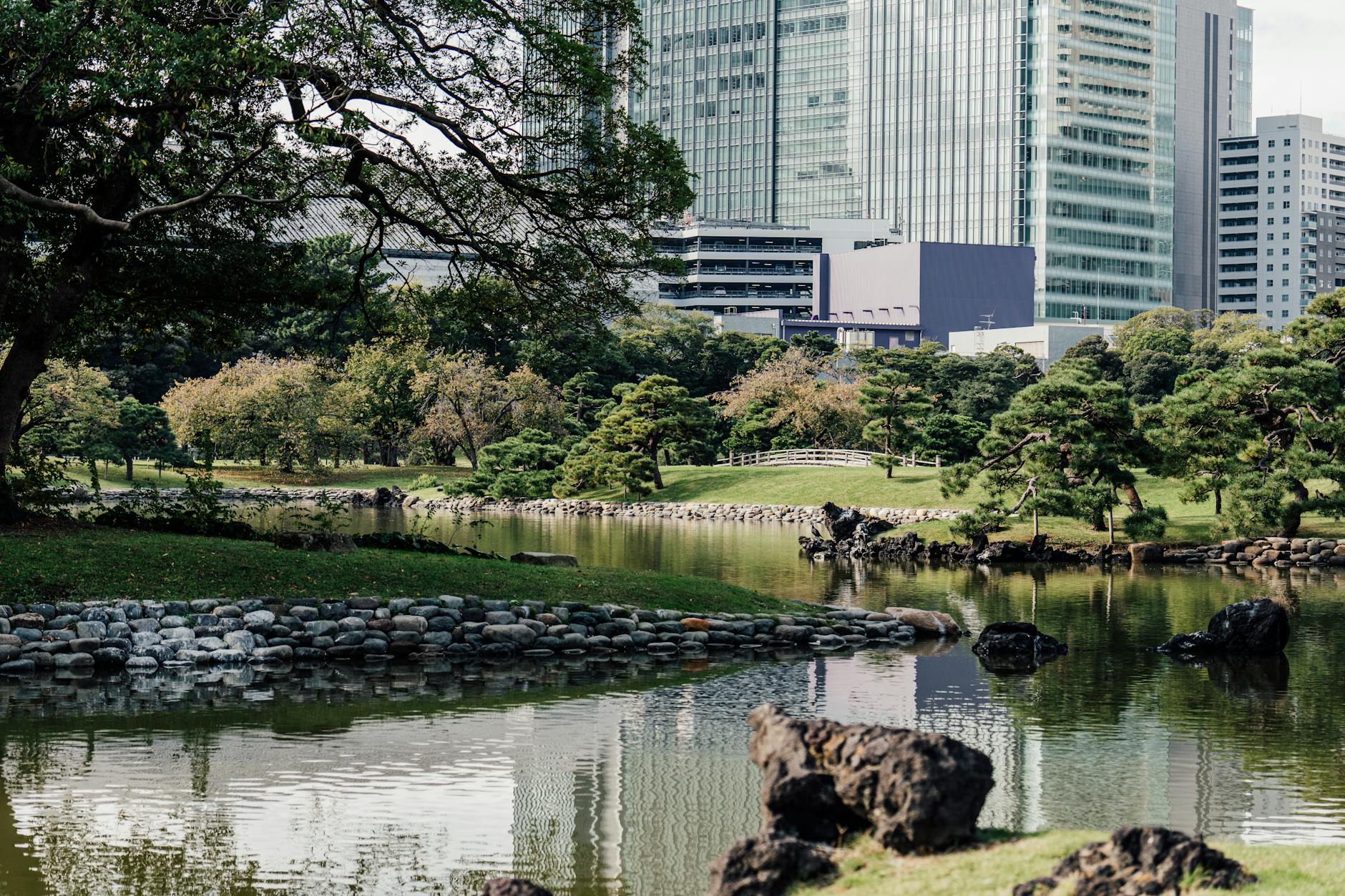
Japan's great private gardens illustrate how multigenerational families use cultural stewardship as a non-correlated store of value. For Asia-Pacific family office principals, the structural tools — Singapore VCC, Hong Kong OFC, Japanese foundations — exist to replicate this approach today.
Japan's gardens as a signal of cultivated wealth
For principals seeking to understand how old-money culture communicates value without ostentation, Japan's historic private gardens offer a compelling case study. Unlike the performative displays of wealth common in other markets, the great gardens of Kyoto, Kanazawa, and Tokyo represent an entirely different register of affluence — one measured in centuries of maintenance, specialist horticultural knowledge, and the kind of patient capital that only multigenerational families can sustain. With ultra-high-net-worth allocations to passion assets and cultural property reaching an estimated 5–8% of total portfolio value among Japan's leading family offices, according to figures cited in recent Nomura Private Wealth research, the garden as an asset class deserves more serious analytical attention than it typically receives.
What separates a garden from a mere amenity?
The distinction between a garden as lifestyle expenditure and a garden as a genuine store of cultural capital lies in provenance, rarity, and the institutional knowledge required to steward it. Japan's most celebrated private gardens — among them the Adachi Museum of Art's grounds in Shimane Prefecture, consistently ranked among the world's finest — are not simply green spaces. They are the product of decades of intentional design, rare plant specimens, and master craftsmen whose skills are formally designated as Intangible Cultural Heritage by the Japanese government. The Adachi garden alone spans 165,000 square metres and requires a year-round team of over 130 gardeners, a maintenance commitment that signals something closer to endowment management than property upkeep.
This matters to family office principals because it reframes the conversation around what constitutes a durable, non-correlated store of value. A garden of genuine historical significance cannot be replicated quickly or cheaply. Its value is embedded in time, in craft, and in the cultural authority it confers on the family that holds it. These are precisely the qualities that make certain alternative assets — aged whisky casks, museum-grade art collections, historic wine cellars — compelling complements to more liquid allocations.
How do Japanese families govern cultural assets of this kind?
The governance structures that surround Japan's great private gardens are instructive for family offices across the Asia-Pacific region. Many are held within foundation structures or private cultural institutions that provide both tax efficiency and a formal mandate for preservation. This mirrors the approach taken by European dynastic families who have long used charitable foundations — structured under frameworks analogous to Singapore's Variable Capital Company or Hong Kong's Open-ended Fund Company — to hold illiquid cultural assets in a way that aligns fiduciary duty with philanthropic intent. In Japan, the Public Interest Incorporated Foundation (公益財団法人) structure has become a preferred vehicle for families wishing to preserve gardens, art collections, and architectural heritage across generations while retaining meaningful family control over governance.
For principals operating out of Singapore or Hong Kong, the parallel is direct. The MAS-regulated single family office structure, which requires a minimum AUM of S$10 million for the Section 13O tax incentive scheme and S$20 million for the enhanced Section 13U exemption, can accommodate allocations to cultural and passion assets provided they are properly categorised within the investment mandate. Structuring cultural property within a foundation subsidiary of the family office is increasingly common among Japanese and Korean ultra-high-net-worth families with regional footprints, and advisers in Singapore are beginning to see similar demand from Southeast Asian principals.
Why the next generation is reshaping this conversation
The renewed interest in gardens and cultural stewardship among Asian family offices is not purely nostalgic. Next-generation principals — many educated at institutions in the United Kingdom, the United States, or continental Europe — are returning to their families with a more sophisticated understanding of how cultural capital functions as both a social signal and a governance tool. In Japan specifically, the post-bubble generation of wealth holders has been notably more deliberate in distinguishing between consumption and stewardship. A garden is not purchased; it is inherited or earned through decades of patronage. This distinction resonates strongly with next-gen principals who are sceptical of conspicuous consumption but deeply interested in legacy architecture.
Family offices advising on succession planning increasingly find that cultural assets — including gardens, historic properties, and curated collections — serve as effective anchors for family identity across generational transitions. When a family can point to a garden that has been maintained for 150 years, it communicates something about institutional continuity that no investment deck can replicate. Several Tokyo-based multi-family offices have begun incorporating cultural asset inventories into their formal governance documentation, treating them with the same rigour applied to private equity holdings or real estate portfolios.
Strategic implications for Asia-Pacific principals
The lesson from Japan's garden culture is not that every family office should acquire a moss garden in Kyoto. It is that the most enduring forms of wealth communicate themselves through patience, craft, and the willingness to invest in things that appreciate over centuries rather than quarters. For principals reviewing their alternative allocations, the relevant question is whether their portfolio contains assets that will still be meaningful — culturally, financially, and reputationally — in three generations. Japan's great garden families have answered that question definitively. The structural tools to do something similar, whether through Singapore VCC structures, Hong Kong OFC vehicles, or Japanese foundation law, are available to regional principals today. The more difficult requirement is the philosophical one: a genuine commitment to stewardship over extraction, and the governance discipline to enforce it across family lines.
🍾 Evaluating whisky casks as an alternative allocation? Whisky Cask Club works with family offices across APAC on structured cask portfolios.
Frequently Asked Questions
How do Japanese family offices typically hold cultural assets like historic gardens?
Many Japanese families use the Public Interest Incorporated Foundation structure (公益財団法人) to hold gardens and cultural properties. This vehicle provides tax efficiency, ensures a formal preservation mandate, and allows the family to retain governance influence across generations while qualifying for public interest designation under Japanese law.
Can a Singapore or Hong Kong family office include cultural assets in its investment mandate?
Yes. Under the MAS Section 13O and 13U tax incentive schemes, family offices can include passion and cultural assets within their mandates provided these are properly documented. The S$10 million minimum AUM threshold applies to 13O, while 13U requires S$20 million. Structuring cultural property through a foundation subsidiary is increasingly common among regional principals.
What makes a private garden a store of value rather than a lifestyle expense?
Provenance, rarity, and the institutional knowledge required to steward it. Gardens of genuine historical significance cannot be quickly replicated. Their value is embedded in time, specialist craft, and the cultural authority they confer — characteristics that make them non-correlated stores of value comparable to museum-grade art or aged whisky cask portfolios.
How are next-generation principals in Asia approaching cultural asset allocation differently?
Next-gen principals are increasingly distinguishing between consumption and stewardship. Many returning from overseas education are integrating cultural assets into formal governance documentation, treating historic properties and collections with the same analytical rigour applied to private equity or real estate. They view cultural assets as succession anchors rather than indulgences.
Are there regional equivalents to Japan's garden culture in other Asia-Pacific markets?
Yes. Comparable traditions exist in China's scholar's garden heritage, Korea's joseon-era estate culture, and among Southeast Asian families with plantation or heritage property holdings. The structural vehicles differ by jurisdiction, but the underlying logic — patient capital, multigenerational stewardship, cultural authority — is consistent across the region's old-money families.