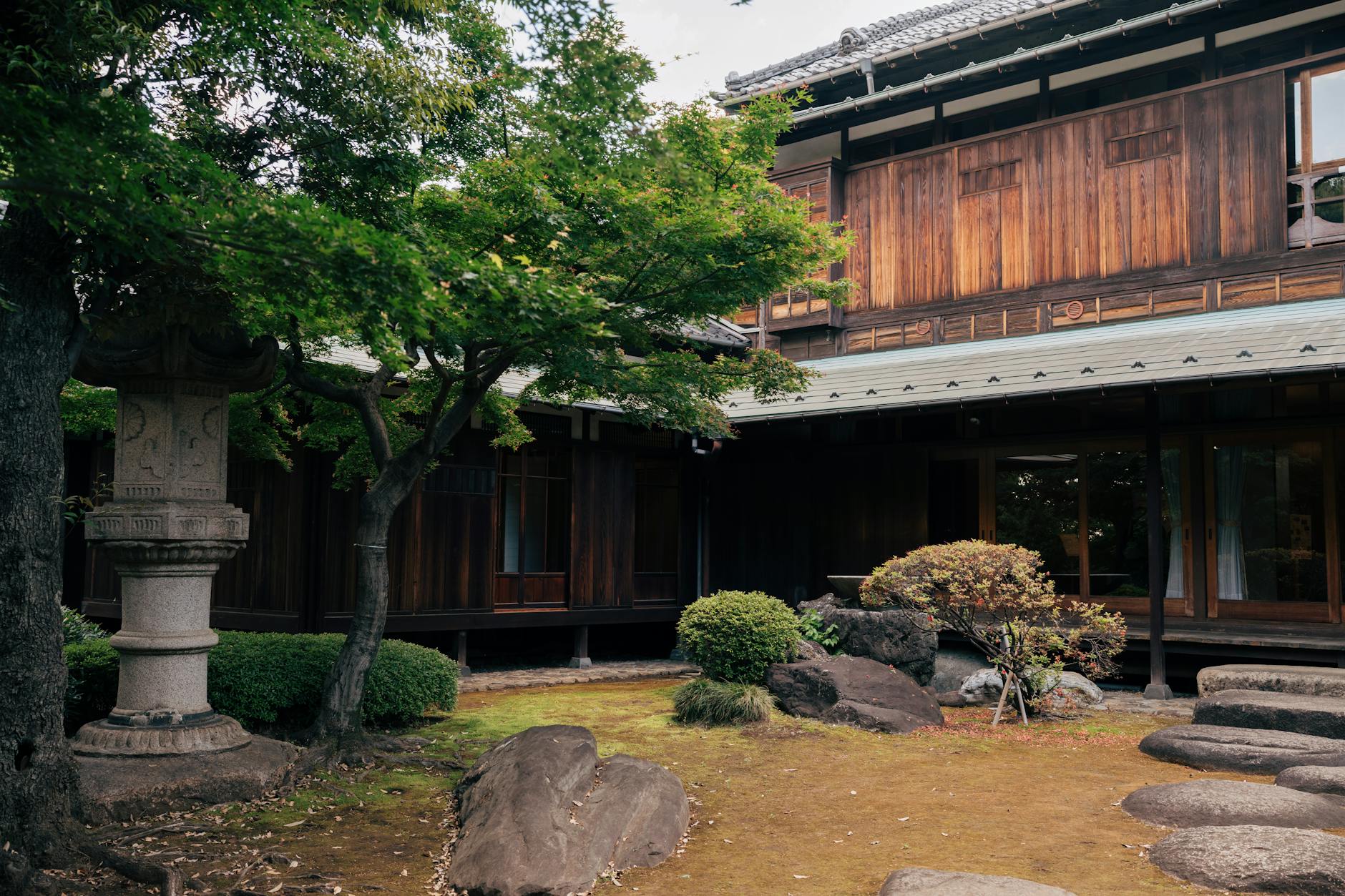
Japan's historic private gardens are attracting ultra-wealthy Asian families as alternative investments. They blend cultural capital with financial value, serving as tools for long-term wealth preservation, reputation, and next-generation stewardship.
Why Japan's garden tradition signals a deeper philosophy of wealth
Japan's private gardens have long served as one of the most refined expressions of accumulated wealth in Asia, and their relevance to contemporary family office strategy is more than aesthetic. Across Kyoto, Kanazawa, and the outer districts of Tokyo, estates with gardens maintained over multiple generations now represent holdings where cultural capital and financial capital are inseparable. According to estimates from the Japan Tourism Agency, cultural heritage properties — including private garden estates — attract over ¥2.3 trillion in annual visitor-related economic activity, a figure that underscores the latent commercial value embedded in what appear to be purely contemplative spaces. For principals managing multigenerational wealth, the garden is not a luxury expense; it is an argument made in soil and stone about the permanence of a family's presence.
The philosophical underpinning matters here. The Japanese concept of wabi-sabi — finding beauty in impermanence and imperfection — is not incidental to how old-money families in Japan have historically approached asset stewardship. It stands in deliberate contrast to the conspicuous accumulation associated with first-generation wealth. This subtlety is precisely what makes the garden a relevant lens for family offices thinking about how to position themselves culturally and reputationally in the Asia-Pacific region, where new wealth is rapidly seeking the markers of established wealth.
How garden estates function as alternative assets
The mechanics of garden estates as alternative allocations are increasingly well-understood among Japanese family offices, though they remain underexplored by regional peers in Singapore, Hong Kong, and the Gulf. A significant private garden estate in the Kansai region can command valuations north of ¥500 million, with the most historically significant properties — those with documented provenance tracing back to the Meiji or Edo periods — trading at substantial premiums when they do change hands. These transactions are rarely publicised, occurring through private intermediaries and family networks rather than open market processes, which further reinforces their appeal to principals who prioritise discretion.
For family offices structured through Singapore's Variable Capital Company framework or Hong Kong's Open-ended Fund Company structure, direct ownership of Japanese cultural property presents regulatory complexity, but the allocation thesis is not limited to direct ownership. Co-investment structures with established Japanese family offices, participation in heritage preservation trusts, and indirect exposure through private real estate funds focused on Japanese cultural assets all provide viable entry points. Several Tokyo-based multi-family offices have begun formalising these vehicles, with minimum commitment thresholds typically starting at ¥100 million per investor, reflecting the illiquidity premium and the long-duration nature of the asset.
What next-generation principals are reading in these spaces
The garden's relevance to succession planning is not incidental. Among Japanese ultra-high-net-worth families, the responsibility of maintaining a significant garden is frequently used as a structured introduction to stewardship for the next generation — a deliberate governance tool rather than a passive inheritance. The discipline required to oversee a head gardener, manage seasonal maintenance budgets, and make decisions about preservation versus renovation maps directly onto the competencies required to govern a family office. Several Japanese family governance advisers have noted that principals who grew up with garden responsibility demonstrate measurably stronger long-term orientation in investment decision-making, though this remains observational rather than empirical.
For next-gen programmes run by multi-family offices in Singapore and Hong Kong, the garden tradition offers a compelling case study in patient capital. The investment horizon of a mature Japanese garden is measured in decades and centuries, not quarters. This is a useful corrective to the shorter-duration thinking that tends to dominate next-gen education, which frequently over-indexes on venture capital and technology allocation at the expense of assets that compound quietly over time.
Philanthropy, preservation, and the reputational dividend
Japanese garden preservation has become a meaningful channel for structured philanthropy among regional family offices seeking cultural credibility in Japan. Contributions to the preservation of designated cultural landscape properties — a category recognised under Japan's Law for the Protection of Cultural Properties — can be structured to qualify for tax treatment under Japanese law, and in some cases under the domestic laws of the donor's home jurisdiction, subject to treaty provisions. The reputational dividend is significant: association with a preserved garden of historical note carries a form of social capital that no branded sponsorship can replicate. It signals patience, taste, and an understanding of Japan that goes beyond transactional engagement.
For family offices with active deal flow in Japan — particularly those pursuing private equity co-investments in Japanese mid-market companies or participating in the ongoing corporate governance reforms encouraged by the Tokyo Stock Exchange's revised prime market listing standards — cultural credibility is a genuine competitive advantage. Japanese business relationships remain relationship-dense and trust-dependent, and a demonstrated commitment to cultural stewardship accelerates the trust-building process in ways that financial credentials alone cannot.
Strategic implications for family office principals
The garden is ultimately a long-duration asset, and its strategic implication for family office principals is precisely that. In a regional environment where Singapore's MAS and Hong Kong's SFC are both encouraging family offices to demonstrate substantive local and regional engagement — through the Global Investor Programme criteria and the HKMA's family office development initiatives respectively — cultural investment in Japan offers a differentiated positioning that is difficult to replicate quickly. The barriers to entry are not primarily financial; they are relational, linguistic, and historical. That is what makes them defensible.
Principals who are already allocating to Japanese private markets, real estate, or long-term equity positions should consider whether a structured engagement with Japan's garden and cultural heritage sector — whether through direct ownership, philanthropic partnership, or co-investment — deserves a formal line in their alternatives allocation. The numbers are not large relative to total AUM, but the signalling value and the governance lessons embedded in the tradition are disproportionately significant.
Frequently Asked Questions
Can a foreign family office directly own a historic garden estate in Japan?
Foreign ownership of Japanese real estate, including garden estates, is legally permissible and faces no nationality restrictions. However, properties designated as cultural assets under Japan's Law for the Protection of Cultural Properties carry preservation obligations that require ongoing engagement with local authorities. Most foreign principals access this asset class through co-investment structures with Japanese family offices or via specialist real estate funds rather than direct ownership, primarily to manage regulatory complexity and ensure appropriate stewardship relationships are in place.
What is the typical investment horizon and liquidity profile for Japanese cultural property?
Japanese cultural property, including garden estates, should be treated as a long-duration illiquid allocation with an investment horizon of ten to thirty years or more. Secondary market transactions are infrequent and occur through private networks. Principals should size any allocation accordingly, treating it as a patient capital position analogous to timberland or infrastructure rather than a tradeable alternative asset.
How does garden stewardship connect to family governance and succession planning?
Japanese family offices have historically used garden stewardship as a structured governance development tool for the next generation, requiring successors to manage budgets, oversee specialist staff, and make long-term preservation decisions. This mirrors the competencies required for family office governance. Several multi-family offices in the region have begun incorporating Japanese cultural stewardship case studies into their next-gen education programmes for this reason.
Are there philanthropic structures that allow tax-efficient contributions to Japanese garden preservation?
Contributions to designated cultural landscape preservation in Japan can qualify for tax treatment under Japanese domestic law. Cross-border tax efficiency depends on the treaty position between Japan and the donor's home jurisdiction. Principals considering structured philanthropy in this area should obtain advice from advisers with specific expertise in Japanese cultural property law and the relevant bilateral tax treaty, as the rules are nuanced and fact-specific.
Why is cultural credibility in Japan relevant to family offices pursuing private market deals?
Japan's private markets remain relationship-dependent, and trust is built over extended periods through demonstrated commitment to Japanese culture and society, not solely through financial credentials. Family offices with visible cultural engagement — including heritage preservation, arts patronage, or garden stewardship — report faster relationship development with Japanese counterparties, which translates into earlier access to co-investment opportunities and more collaborative deal structures in private equity and real estate transactions.
🍾 Evaluating whisky casks as an alternative allocation? Whisky Cask Club works with family offices across APAC on structured cask portfolios.