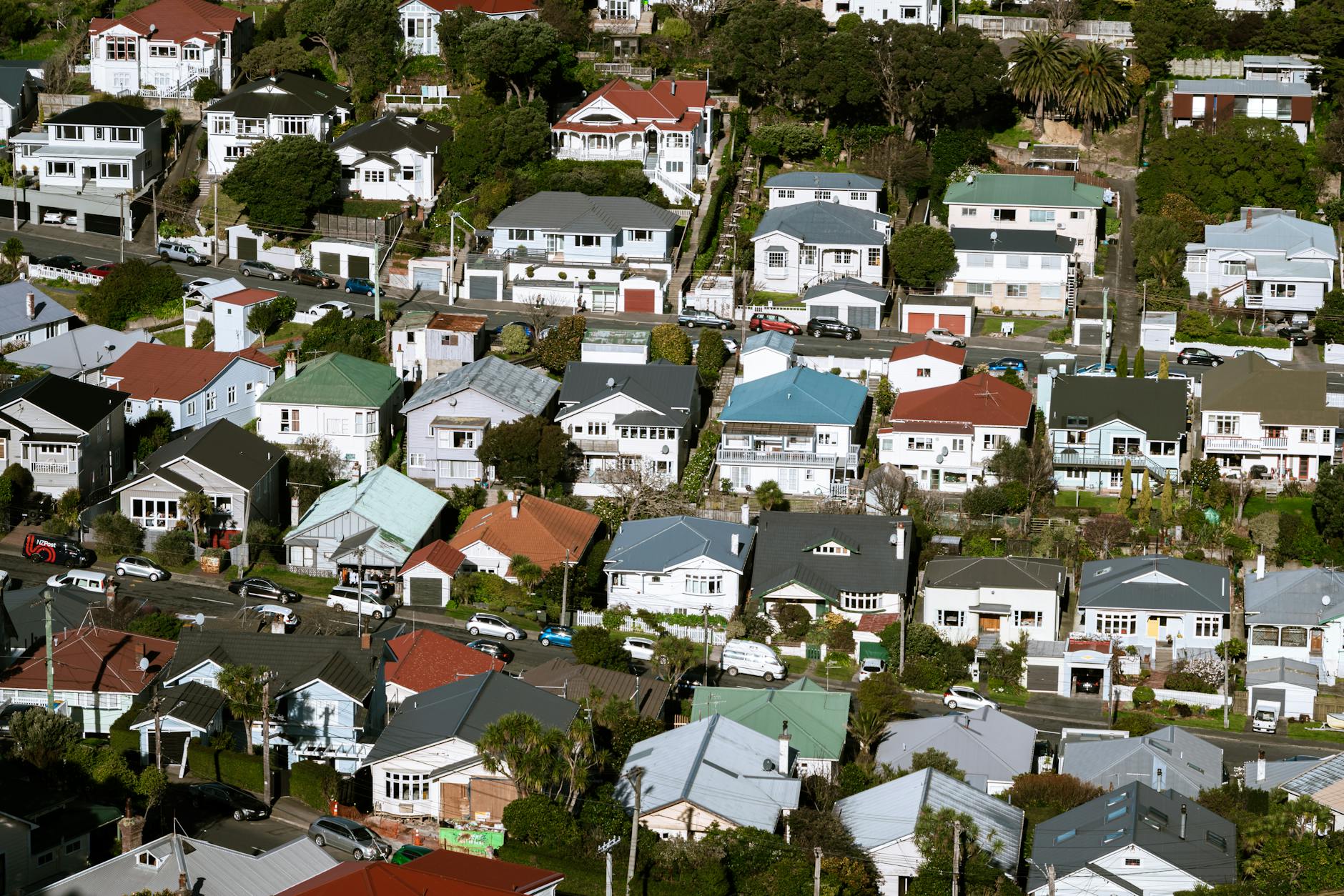
New Zealand house prices are effectively flat in early 2026, pressured by high fuel costs and Iran-related geopolitical uncertainty. Asia-Pacific family offices holding Australasian real estate allocations should reassess entry timing, monitor RBNZ easing signals, and consider development-stage assets where vendor motivation is higher.
TL;DR: New Zealand residential property has effectively stalled in early 2026, with buyer confidence eroded by surging fuel costs and geopolitical uncertainty stemming from the Iran conflict. For Asia-Pacific family offices holding or considering Australasian real estate allocations, the signals warrant a disciplined reassessment of entry timing and portfolio weighting.
New Zealand House Prices Stall as Macro Headwinds Sideline Buyers
New Zealand house prices have registered almost no meaningful movement through the first quarter of 2026, as a confluence of elevated fuel costs and geopolitical anxiety tied to the Iran conflict drains confidence from would-be buyers and keeps transaction volumes well below historical norms. The Real Estate Institute of New Zealand (REINZ) median house price index has remained essentially flat on a rolling three-month basis, with national median values hovering near NZD 780,000 — a figure that represents neither a decisive correction nor a recovery. For family offices with existing Australasian real estate allocations, the stasis is arguably more unsettling than a clean directional move, because it obscures the underlying demand picture and complicates both entry and exit decisions.
The fuel cost dynamic deserves particular attention. Brent crude has traded above USD 105 per barrel for much of 2026, a level that feeds directly into transport and logistics costs across New Zealand's geographically dispersed housing markets. Auckland may absorb that pressure more readily given its density, but secondary markets — Queenstown, Hamilton, Tauranga — are experiencing measurably softer inquiry rates as household disposable income is compressed. Mortgage serviceability, already strained after the Reserve Bank of New Zealand's extended tightening cycle that pushed the Official Cash Rate to a peak of 5.75% in 2024, remains a structural constraint even as the RBNZ has since moved to 4.75% in its gradual easing path.
Why Geopolitical Risk Is Now a Direct Pricing Variable
The Iran conflict has introduced a category of uncertainty that is difficult to model in conventional property valuation frameworks. Risk-off sentiment among high-net-worth buyers — particularly those with offshore capital — has dampened enquiry from the very cohort that historically provides price support at the premium end of the New Zealand market. Buyers from Singapore, Hong Kong, and mainland China, who had begun re-engaging with New Zealand residential and lifestyle assets following the easing of foreign investment restrictions under the Overseas Investment Amendment Act review, have once again adopted a wait-and-see posture. This is not capital flight; it is capital deferral, and the distinction matters for principals trying to assess when the window reopens.
Family offices running global real asset books are increasingly treating geopolitical event risk as a first-order allocation variable rather than a tail-risk overlay. The Iran situation has reinforced that logic. Offices that maintained a 5–8% allocation to Australasian residential and commercial property as a stable, yield-generating diversifier are now revisiting those weightings in light of the correlation between energy price shocks and property market liquidity. The lesson from 2022–2023 — when New Zealand prices fell approximately 18% peak-to-trough in one of the sharpest corrections among OECD housing markets — is that the country's market can move quickly once sentiment turns, in either direction.
Structural Context: What the Flat Market Is Concealing
Surface-level price stability can mask significant compositional shifts. In New Zealand's current environment, the flat headline number reflects a market in which distressed sellers are holding on, discretionary upgraders are deferring, and first-home buyers remain largely priced out despite government assistance schemes. Net migration, which surged to record levels in 2023 and 2024 as post-pandemic mobility normalised, has begun to moderate — removing one of the key demand drivers that many analysts had expected to sustain prices through 2026. Statistics New Zealand data indicates net arrivals have fallen to approximately 45,000 on an annualised basis, down from a peak of over 130,000 in mid-2023.
The rental market, however, tells a different story. Gross rental yields in Auckland have edged back toward 3.8–4.2% for well-located residential assets, and Wellington's commercial precinct is seeing renewed interest from institutional buyers who perceive the correction as having largely run its course. For family offices structured through Singapore Variable Capital Companies (VCCs) or Hong Kong Open-ended Fund Companies (OFCs) with mandates that permit direct real asset investment in OECD jurisdictions, New Zealand remains a credible long-term allocation — but the current environment argues for patience over urgency.
Strategic Implications for Asia-Pacific Family Office Principals
The primary strategic question for principals is not whether New Zealand property will recover — the long-run fundamentals of constrained supply, strong immigration-driven demand, and a transparent legal framework remain intact — but rather when the risk-reward balance tips sufficiently to justify deployment. A number of multi-family offices in Singapore and Hong Kong with existing New Zealand exposure are using the current pause to renegotiate terms on development-stage assets, where vendors are more motivated, rather than chasing stabilised assets at still-elevated prices. This approach aligns with a broader shift in family office real estate strategy across the region: moving from passive price appreciation plays toward assets with identifiable value-creation levers.
Principals should also monitor the RBNZ's next two policy meetings closely. If the easing cycle accelerates — which becomes more likely if domestic consumption data continues to disappoint — mortgage rates could fall meaningfully by Q3 2026, unlocking latent demand that is currently sitting on the sidelines. A 50-basis-point cut from current levels would reduce the two-year fixed mortgage rate to approximately 5.4%, a threshold that historically correlates with a measurable uptick in transaction volumes. Family offices with dry powder and a 12–24 month investment horizon may find that the current stasis represents an accumulation window rather than a warning sign — provided they can tolerate near-term illiquidity and model their entry assumptions conservatively.
🍾 Evaluating whisky casks as an alternative allocation? Whisky Cask Club works with family offices across APAC on structured cask portfolios.
Frequently Asked Questions
What is driving the stall in New Zealand house prices in 2026?
The primary factors are surging fuel costs — with Brent crude above USD 105 per barrel — and geopolitical uncertainty linked to the Iran conflict, both of which are suppressing buyer confidence and reducing transaction volumes. Structural constraints including still-elevated mortgage rates and moderating net migration are compounding the effect.
How does the Iran conflict affect New Zealand property demand from Asian buyers?
Risk-off sentiment among high-net-worth offshore buyers, particularly from Singapore, Hong Kong, and mainland China, has led to capital deferral at the premium end of the market. These buyers had been re-engaging with New Zealand assets following regulatory changes, but geopolitical anxiety has temporarily paused that activity.
What allocation percentage do family offices typically hold in Australasian real estate?
Many Asia-Pacific family offices running diversified real asset books maintain a 5–8% allocation to Australasian residential and commercial property as a stable, yield-generating diversifier. Current conditions are prompting a reassessment of those weightings given the correlation between energy shocks and property market liquidity.
Are Singapore VCCs and Hong Kong OFCs suitable structures for New Zealand property investment?
Both the Singapore Variable Capital Company and the Hong Kong Open-ended Fund Company can accommodate direct real asset mandates in OECD jurisdictions including New Zealand, subject to their constitutional documents and applicable foreign investment rules. Family offices should confirm that their specific fund mandate permits illiquid direct property holdings before proceeding.
What indicators should principals monitor to assess when New Zealand property conditions improve?
Key signals include RBNZ policy decisions — particularly whether the easing cycle accelerates toward a two-year fixed mortgage rate below 5.4% — net migration data from Statistics New Zealand, and REINZ transaction volume figures. A sustained uptick in listings clearance rates above 45% would also indicate that buyer confidence is returning.