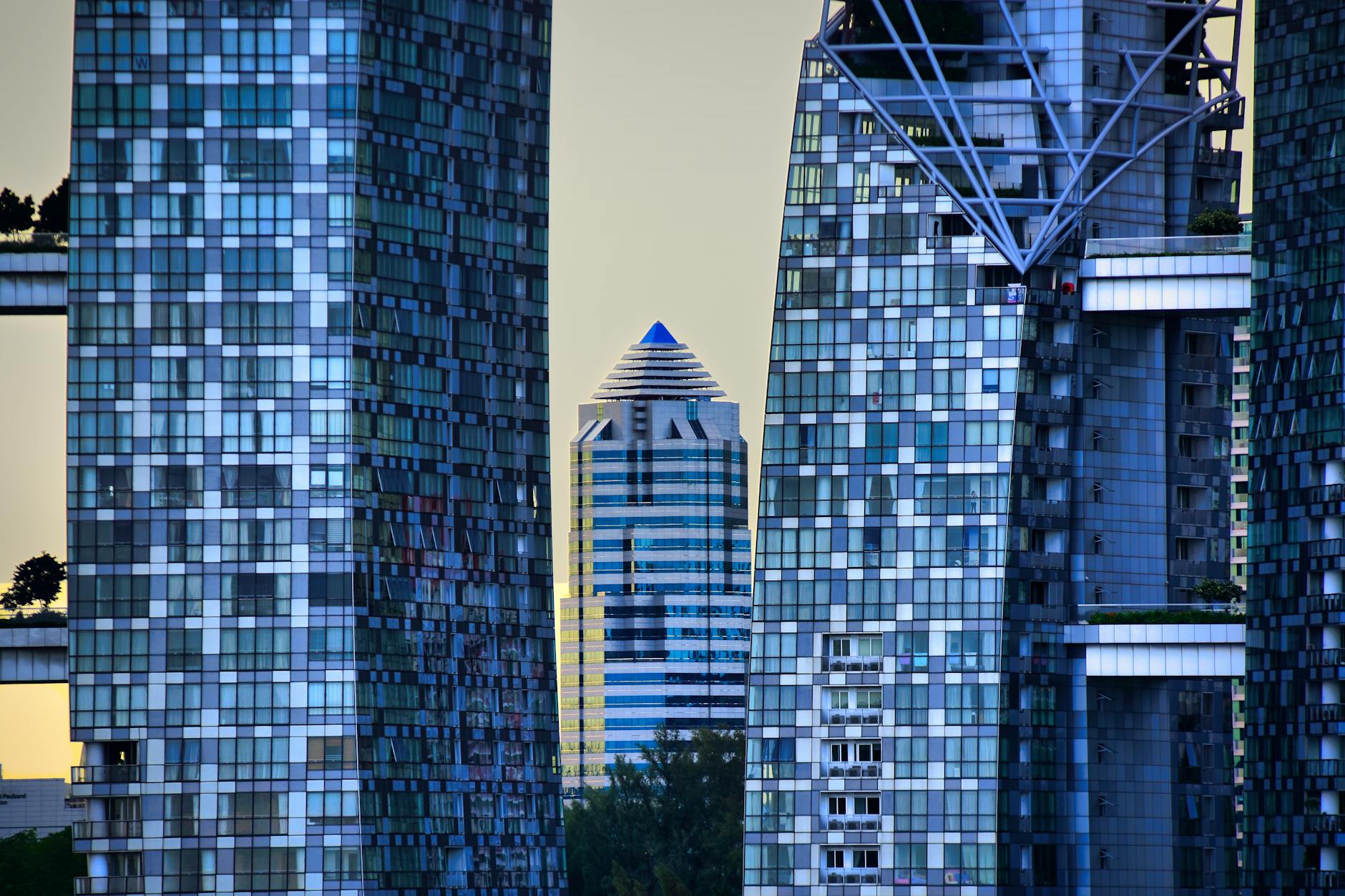
One Hyde Park's deliberate inaccessibility is not a design quirk but its core product. For Asia-Pacific family office principals, the building illustrates how engineered privacy commands a durable premium in ultra-prime real estate — relevant to allocations structured under MAS and SFC frameworks.
TL;DR: One Hyde Park's architecture of exclusion offers a live case study in how ultra-prime residential assets function as privacy infrastructure for UHNW families. For Asia-Pacific principals allocating to global real estate, the property's deliberate inaccessibility is not a design quirk — it is the product itself.
Why Privacy Is the Core Asset Class at One Hyde Park
One Hyde Park, the Knightsbridge development completed in 2010 by developer Candy & Candy and the Waterknights consortium, commands some of the highest per-square-foot prices ever recorded in London residential real estate. Transactions at the 86-unit complex have regularly exceeded £6,000 per square foot, with the most prominent sales surpassing £100 million for a single apartment. Yet the building's most aggressively marketed feature is not its marble interiors, its Mandarin Oriental hotel services, or its panoramic views over Hyde Park. It is the systematic, architectural removal of public visibility — the sense that the outside world, including its financial anxieties and social obligations, simply cannot reach you here.
For family office principals across the Asia-Pacific region, this is not an abstract amenity. It is a structural statement about what ultra-high-net-worth families are now willing to pay a measurable premium to acquire. Discretion, distance, and the management of unwanted proximity have become line items in UHNW residential allocations, just as they have in the governance structures of single-family offices registered under Singapore's Variable Capital Company framework or Hong Kong's Open-ended Fund Company regime. The logic is consistent: the more visible the wealth, the more complex and costly the management of that visibility becomes.
How the Architecture of Exclusion Works as an Investment Thesis
One Hyde Park was engineered to repel casual scrutiny. Entry points are limited and surveilled. Residents move through the building via routes that minimise exposure, even to one another. The Mandarin Oriental service layer — concierge, security, household management — operates as a buffer between the resident and any unmediated contact with the external environment. This is not security in the conventional sense of guards and gates. It is the commodification of social distance, priced into every square foot of the asset.
The investment implication is significant. Properties that deliver genuine privacy infrastructure — not the performative privacy of a gated community, but the engineered invisibility of a building like One Hyde Park — have demonstrated price resilience that outpaces the broader London prime residential market. Knight Frank data tracking prime central London over the decade to 2023 shows that the top 1% of transactions by value held their pricing through multiple market corrections that eroded value in the £2 million to £5 million segment. For family offices with allocations to global real estate as part of a diversified alternatives book — typically 10% to 20% of total AUM for larger Asia-Pacific single-family offices — this tier of asset has functioned less like residential property and more like a store-of-value instrument with occupancy optionality.
What Asia-Pacific Principals Are Actually Buying
The buyers at One Hyde Park have historically skewed toward principals from the Gulf, Russia, and increasingly Southeast Asia and Greater China. The common thread is not nationality but the specific risk profile that accompanies concentrated, multigenerational, privately held wealth. For a family whose fortune is tied to a single operating business, a single commodity cycle, or a single jurisdiction's regulatory environment, the acquisition of an ultra-prime London residential asset is not a lifestyle decision. It is a hedge — against political risk, against currency devaluation, against the social and legal exposure that comes with being publicly identified as wealthy in a home market where that identification carries costs.
Singapore-based single-family offices managing assets above S$50 million under MAS's Section 13O or 13U exemptions are increasingly formalising global real estate as a distinct allocation sleeve, separate from their listed equity and private credit books. The rationale extends beyond capital preservation. Properties like One Hyde Park offer a physical anchor for families navigating succession across jurisdictions — a stable, low-maintenance asset that a second-generation principal in London, a third-generation student at a European university, or a founder still operating out of Jakarta can all relate to without requiring active governance decisions.
The Repulsion Effect as a Signal of Quality
The deliberate inaccessibility of One Hyde Park — the fact that it discourages tourism, media access, and even casual observation — functions as a quality signal in the same way that a family office's unlisted status functions as a signal of seriousness. The building does not need to advertise. Its opacity is the advertisement. For principals accustomed to operating in markets where discretion must be actively constructed and maintained, an asset that has discretion built into its physical structure carries a premium that does not fully appear in standard real estate valuation models.
This has broader implications for how Asia-Pacific family offices should think about the global ultra-prime residential segment. The relevant comparators are not the prime residential indices tracked by JLL or Savills across London postcodes. They are the handful of addresses — in Knightsbridge, in the 8th arrondissement of Paris, in specific towers on the Hong Kong Peak, in certain floors of developments on Orchard Road — where privacy infrastructure has been so thoroughly embedded into the asset that the building itself functions as a family office amenity. Principals evaluating global real estate allocations should be stress-testing not just yield, liquidity, and currency exposure, but the degree to which an asset actively manages the visibility of its occupants.
Strategic Takeaway for Family Office Principals
The lesson from One Hyde Park is not that principals should rush to acquire Knightsbridge apartments. It is that the premium attached to engineered privacy in ultra-prime residential real estate is durable, measurable, and increasingly relevant to the governance logic of Asia-Pacific family offices. As family offices in Singapore and Hong Kong formalise their investment policy statements and bring global real estate allocations under more rigorous oversight, the privacy infrastructure of an asset — its ability to reduce the social and reputational exposure of its occupants — deserves explicit weighting alongside the conventional metrics of location, yield, and liquidity. One Hyde Park repels as much as it attracts. For the principals it is designed to serve, that repulsion is precisely the point.
🍾 Evaluating whisky casks as an alternative allocation? Whisky Cask Club works with family offices across APAC on structured cask portfolios.
Frequently Asked Questions
What makes One Hyde Park different from other ultra-prime London residential developments?
One Hyde Park was purpose-built to deliver privacy infrastructure as a core amenity, not an afterthought. The building's design limits entry points, minimises resident-to-resident exposure, and integrates Mandarin Oriental hotel services as a managed buffer between residents and the external environment. This engineered inaccessibility has supported price resilience across market cycles that affected broader prime central London segments.
How do Asia-Pacific family offices typically structure global real estate allocations?
Larger Asia-Pacific single-family offices managing assets above S$50 million under MAS exemptions — specifically the Section 13O and 13U frameworks — typically allocate between 10% and 20% of total AUM to alternatives, with global real estate forming a distinct sleeve within that book. Ultra-prime residential assets are increasingly treated as store-of-value instruments with occupancy optionality rather than yield-generating property investments.
Why do UHNW families from Asia-Pacific buy ultra-prime London residential assets?
The primary drivers are political risk hedging, currency diversification, and the creation of a stable multigenerational anchor asset that requires minimal active governance. For families whose wealth is concentrated in a single operating business or jurisdiction, an ultra-prime London property provides both capital preservation and a physical base for family members dispersed across educational and professional geographies.
How should family offices evaluate privacy infrastructure when assessing real estate assets?
Principals should assess the degree to which an asset's physical design, service layer, and address reputation actively reduce the social and reputational visibility of its occupants. This includes examining building entry protocols, the quality of managed services, the proportion of owner-occupiers versus investors, and the historical discretion of the address in media and public records — factors that do not appear in standard JLL or Savills valuation frameworks but materially affect the asset's function for UHNW families.
Is the premium for privacy-infrastructure real estate durable across market cycles?
Knight Frank data on prime central London over the decade to 2023 indicates that the top 1% of transactions by value demonstrated meaningful price resilience through corrections that eroded value in the £2 million to £5 million segment. The premium for engineered privacy at the ultra-prime tier has proven more durable than location premiums in conventional prime residential markets, suggesting that privacy infrastructure functions as a distinct and defensible value driver.