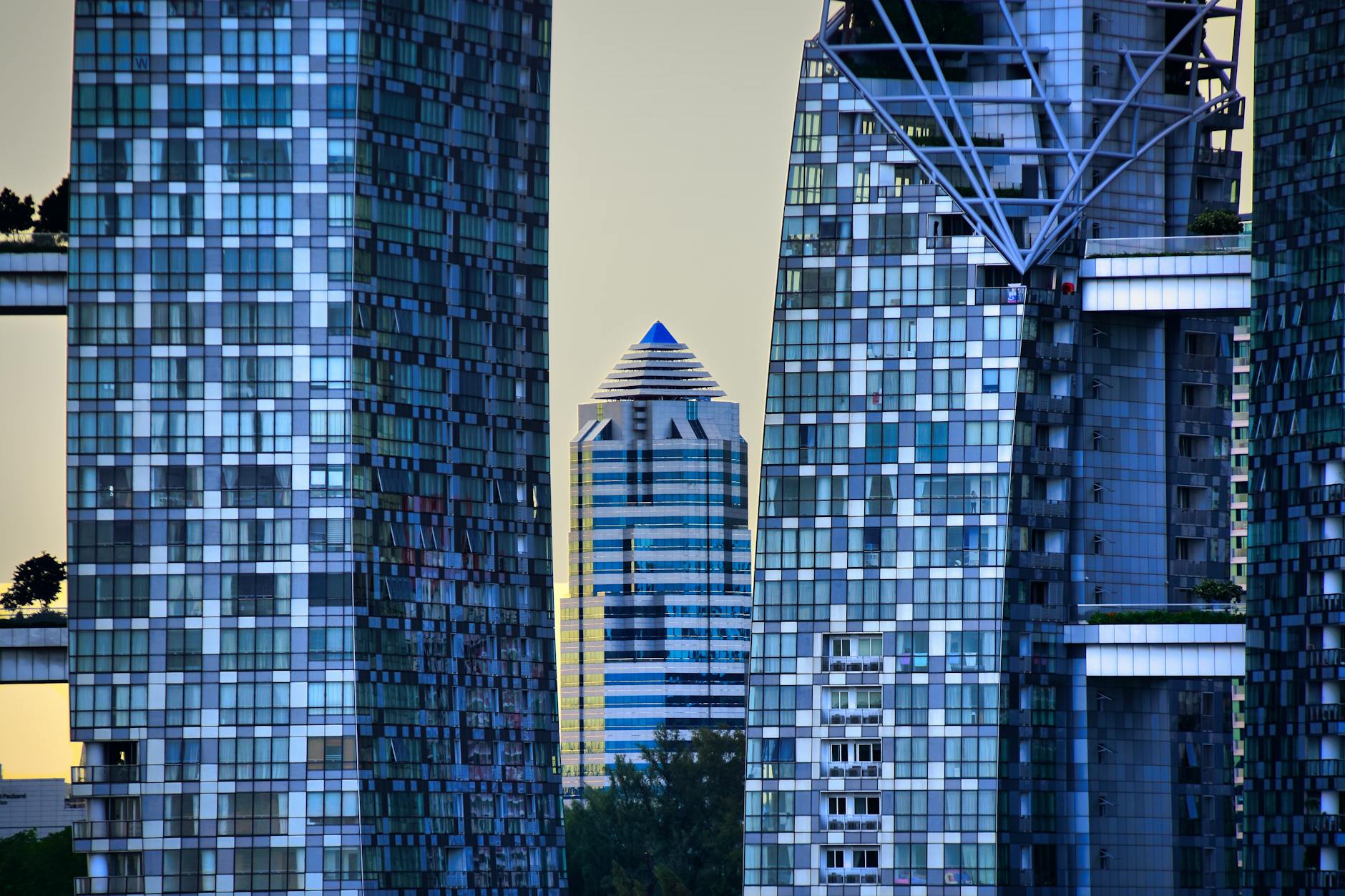
Joshua Amirthasingh's photographs of a depopulated San Francisco offer Asia-Pacific family office principals a structural case study in what happens when concentrated capital fails to maintain social licence — with direct implications for real estate allocation, regulatory risk, and next-generation governance.
TL;DR: A photo-essay documenting the displacement of working-class San Franciscans by tech wealth offers a sharp lens for Asia-Pacific family office principals considering how concentrated capital reshapes urban environments — and what that means for real estate allocation, social licence, and long-term community investment strategy.
When Concentrated Wealth Hollows Out a City
San Francisco's median home price sits at approximately USD 1.3 million as of 2024, making it one of the most expensive cities in the world by that measure — a figure that would not surprise anyone who has watched the technology sector systematically reprice every neighbourhood from the Mission District to the Outer Sunset over the past two decades. Photographer Joshua Amirthasingh's recent body of work, introduced to a wider audience through a reflection by Pulitzer Prize-winning novelist Andrew Sean Greer, documents what remains when the working class is priced out: empty storefronts, shuttered community institutions, and streets that feel curated rather than lived in. The images are not polemic. They are, in their quietness, more unsettling than any argument could be. For principals overseeing significant real estate allocations across Asia-Pacific, the visual record of San Francisco is less a cautionary tale about one American city than a structural case study in what happens when private capital concentrates without corresponding civic investment.
The mechanism is familiar. A technology boom generates extraordinary liquid wealth among a relatively small cohort. That cohort bids up residential and commercial real estate. Service workers, artists, teachers, and small business owners relocate or disappear. The city retains its infrastructure but loses its social texture. Greer, who has lived in San Francisco for decades, frames this not as an ideological failure but as a failure of imagination — a refusal by the newly wealthy to see the city as a shared inheritance rather than a backdrop for personal accumulation. The question for family offices is whether this dynamic, now well-documented in San Francisco, Seattle, and London, is beginning to replicate itself in the cities where Asian capital is most concentrated: Singapore, Hong Kong, and increasingly Dubai.
What San Francisco Reveals About Real Estate Allocation Risk
Family offices with exposure to prime urban residential and commercial real estate in gateway cities should read the San Francisco experience as a data point about concentration risk — not merely in portfolio terms, but in terms of the social and regulatory environment that ultimately governs asset values. In Singapore, where the Additional Buyer's Stamp Duty for foreign purchasers was raised to 60 percent in April 2023, the Monetary Authority of Singapore has been explicit that cooling measures are designed in part to prevent the kind of wealth-driven displacement visible in Western cities. Hong Kong's equivalent stamp duty regime and the Securities and Futures Commission's ongoing scrutiny of family office structures under the new licensing framework similarly reflect a regulatory awareness that concentrated capital requires managed social interfaces. Principals allocating more than 15 to 20 percent of their real estate sleeve to a single urban market should treat regulatory risk as a proxy for the underlying social tension that produces it.
The Dubai International Financial Centre has attracted significant family office registration activity — over 700 registered entities as of late 2024 — partly because its regulatory architecture is perceived as stable and its real estate market still offers yield. But Dubai's rapid appreciation in prime residential values, with some districts recording 40 percent price increases between 2021 and 2023, has generated its own version of displacement anxiety among long-term residents. The lesson from San Francisco is not that family offices should avoid cities where their capital is welcome, but that the welcome is conditional on whether that capital is seen to contribute to the city's functioning rather than merely extracting value from its address.
Philanthropy, Social Licence, and the Next Generation
Amirthasingh's photographs have circulated among arts and literary communities, but their relevance to family office governance is direct. Succession planning increasingly requires principals to engage next-generation family members who have grown up with a sharper awareness of inequality and a more critical view of wealth concentration. In a 2023 survey by UBS of ultra-high-net-worth families across Asia-Pacific, 67 percent of next-gen respondents said they wanted the family's philanthropic strategy to address systemic social issues rather than focus on institutional giving alone. That preference is not simply idealistic — it reflects a sophisticated understanding that the social licence to operate as a major capital holder in a given city or country is not guaranteed and must be actively maintained.
Family offices that have established philanthropic vehicles through Singapore's Variable Capital Company structure or Hong Kong's Open-ended Fund Company framework have a structural advantage here: the VCC and OFC formats allow philanthropy and impact allocation to sit alongside commercial mandates within a single governance envelope, making it easier to demonstrate integrated intent rather than siloed charity. Principals who treat community investment as a cost centre rather than a strategic function are, in effect, making the same error that Greer identifies in San Francisco's tech elite — assuming that wealth confers permanent permission rather than provisional trust.
The Strategic Implication for Principals
The images in Amirthasingh's essay are not investment research. But they perform a function that investment research rarely does: they make the human cost of capital concentration visible in a way that balance sheets cannot. For family office principals managing multi-generational wealth across Asia-Pacific, the strategic implication is straightforward. Urban real estate allocations should be stress-tested not only against interest rate scenarios and vacancy risk, but against the political and social conditions that determine whether a city remains a functional place to do business and raise a family. That means engaging with local communities, supporting the cultural and civic institutions that make cities liveable, and treating philanthropic allocation as a component of portfolio construction rather than an afterthought.
The families that built lasting institutional wealth in Hong Kong, Singapore, and Tokyo did so in part because they were seen as contributors to the cities that housed them. The San Francisco that Amirthasingh photographs — beautiful, expensive, and strangely depopulated of the people who once gave it character — is a reminder that capital without civic commitment does not build cities. It empties them. That is a strategic risk, not merely a moral observation, and it deserves a place in every principal's allocation review.
🍾 Evaluating whisky casks as an alternative allocation? Whisky Cask Club works with family offices across APAC on structured cask portfolios.
Frequently Asked Questions
How does wealth concentration in cities like San Francisco relate to real estate allocation risk for family offices?
When a small cohort of high-net-worth individuals bids up urban real estate, it triggers regulatory responses — such as stamp duty increases and foreign buyer restrictions — that directly affect asset values and liquidity. San Francisco's experience shows that social displacement also erodes the civic infrastructure that makes cities attractive long-term investment destinations, creating a compounding risk beyond simple price correction.
What regulatory frameworks in Asia-Pacific are designed to manage the social impact of concentrated wealth in real estate?
Singapore's Additional Buyer's Stamp Duty of 60 percent for foreign purchasers, introduced in April 2023, and Hong Kong's equivalent stamp duty regime are both explicitly designed to prevent wealth-driven displacement. The MAS and SFC have each signalled that family office structures operating in their jurisdictions are expected to demonstrate broader economic contribution, not merely passive capital holding.
How can family offices use philanthropic structures to maintain social licence in gateway cities?
Singapore's Variable Capital Company and Hong Kong's Open-ended Fund Company allow philanthropic mandates to sit within the same governance structure as commercial investment. This integration makes it easier for families to demonstrate that their capital serves community functions alongside financial returns, which is increasingly important for regulatory relationships and next-generation family engagement.
What does next-generation sentiment mean for family office philanthropy strategy in Asia-Pacific?
A 2023 UBS survey found that 67 percent of next-gen ultra-high-net-worth respondents in Asia-Pacific want philanthropic strategy to address systemic social issues. Principals who ignore this preference risk both internal governance tension and reputational exposure in markets where the social impact of concentrated wealth is under growing public and regulatory scrutiny.
Is the Dubai real estate market facing similar displacement dynamics to San Francisco?
Dubai recorded prime residential price increases of up to 40 percent in some districts between 2021 and 2023, driven partly by an influx of international family office capital. While the DIFC regulatory environment remains attractive — with over 700 registered family office entities by late 2024 — principals should monitor whether appreciation rates generate the same social and regulatory friction that has characterised San Francisco's trajectory.