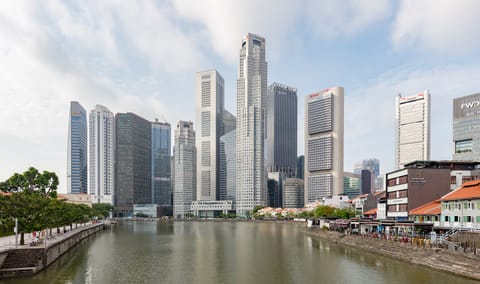

Singapore's family office sector manages $1.3 trillion in assets, driven by MAS-regulated VCC structures, political stability, and Asia-Pacific market access. Principals cite regulatory clarity and succession planning frameworks as primary attractions.
Singapore Emerges as Asia's Dominant Family Office Jurisdiction
Singapore's family office sector now manages approximately $1.3 trillion in assets under administration, according to the Monetary Authority of Singapore's 2024 wealth management census. This figure represents a 28% increase from 2021, outpacing Hong Kong's 19% growth rate over the same period and establishing Singapore as the region's most attractive domicile for single-family and multi-family office structures. The acceleration reflects a deliberate shift by ultra-high-net-worth individuals and their advisors toward jurisdictions offering regulatory clarity, political stability, and seamless access to alternative investment markets across the Asia-Pacific region.
For family office principals evaluating jurisdiction strategy, this trend carries immediate strategic weight. The choice of domicile shapes tax efficiency, governance flexibility, succession planning frameworks, and access to dealflow—decisions that compound across decades and multiple generations of wealth stewardship. Singapore's competitive advantage rests not on secrecy or opacity, but on transparent, well-defined regulatory frameworks that institutional investors and their trustees recognize and trust. The Monetary Authority of Singapore (MAS) has established a reputation for proportionate oversight that neither stifles innovation nor tolerates misconduct, a balance that Hong Kong's Securities and Futures Commission (SFC) and Dubai's Dubai International Financial Centre (DIFC) also pursue but with different regulatory philosophies and enforcement intensity.
Understanding why Singapore has captured this market share requires examining three dimensions: the regulatory architecture underpinning family office operations, the specific structural vehicles available to principals, and the broader geopolitical and economic factors that have accelerated wealth migration into the jurisdiction since 2020.
The MAS Regulatory Framework and Variable Capital Company (VCC) Advantage
Singapore's Variable Capital Company (VCC) framework, introduced in January 2020, fundamentally altered the cost-benefit calculus for family offices considering the jurisdiction. A VCC is a corporate structure specifically designed for investment funds and family offices, offering variable capital architecture that allows share capital to fluctuate without requiring formal amendments to constitutional documents—a feature that traditional private companies lack. The VCC regime is overseen by the Monetary Authority of Singapore and operates under the Variable Capital Companies Act, which provides a streamlined regulatory pathway for family offices seeking to establish investment vehicles for portfolio management, direct investments, and secondary market activities.
The practical advantage is substantial. A family office operating a VCC can add or withdraw capital without board resolutions or shareholder approvals that would be mandatory under standard corporate law, reducing administrative overhead and accelerating capital deployment decisions. For multi-generational wealth structures managing dynamic allocation across public markets, private equity, real estate, and alternative assets, the VCC's operational flexibility translates directly into faster decision-making and lower operational costs. MAS's regulatory expectations for VCCs are clearly articulated in guidance documents and through the regulator's established dialogue with industry participants, creating a predictable compliance environment that contrasts with the interpretive uncertainty that family offices sometimes encounter in less transparent jurisdictions.
As of December 2023, MAS reported 1,247 VCCs registered in Singapore, with family offices and single-family investment vehicles representing approximately 34% of that population. The remaining VCCs serve as investment funds, hedge funds, and private equity vehicles, but the family office cohort's rapid growth—VCC registrations increased 41% year-over-year in 2022—signals strong principal confidence in the structure. Comparable data from Hong Kong's Securities and Futures Commission shows only 312 registered investment fund structures explicitly designated as family office vehicles, suggesting Singapore's regulatory clarity and operational simplicity have generated a material competitive advantage in attracting new family office formations and relocations.
Geopolitical Stability and Asia-Pacific Market Access as Strategic Drivers
Beyond regulatory mechanics, family office principals cite Singapore's geopolitical positioning and market access as decisive factors in jurisdiction selection. Singapore maintains formal diplomatic relations with every major economy in the Asia-Pacific region, hosts one of the world's most efficient container ports, and serves as the regional headquarters for over 7,000 multinational corporations. This status creates a practical advantage for family offices managing investments across multiple Asian markets: Singapore-domiciled entities face fewer political risk complications when deploying capital into India, Vietnam, Indonesia, Thailand, and the Philippines than vehicles domiciled in Hong Kong or Taiwan, jurisdictions whose geopolitical relationships with key regional partners remain more contested.
The 2023 Henley & Partners Private Wealth Migration Index documented that Singapore received 1,900 high-net-worth individual relocations in 2022, the highest inflow in the Asia-Pacific region and more than double Hong Kong's inflow of 850 individuals that year. While this data encompasses individuals rather than family offices specifically, it reflects the underlying confidence that principals place in Singapore's stability and growth trajectory. Family office domicile decisions rarely rest on a single factor; they emerge from a weighted assessment of tax efficiency, regulatory stability, investment opportunity, succession planning frameworks, and personal safety—and Singapore scores competitively across all five dimensions simultaneously.
Equally important is Singapore's role as a gateway to regional private markets. The Singapore Exchange (SGX) operates one of Asia's most liquid derivatives and equities markets, and Singapore-domiciled family offices can access deal flow from regional private equity sponsors, venture capital funds, and direct investment opportunities with greater ease than vehicles domiciled outside the region. MAS's regulatory framework for private credit, fund management, and alternative asset structures creates a transparent pathway for family offices to establish in-house investment management capabilities or to partner with third-party managers without the compliance friction that exists in less developed regulatory environments.
Succession Planning, Governance, and Next-Generation Frameworks
A dimension of Singapore's appeal that receives less media attention but carries profound strategic weight for multi-generational family offices is the jurisdiction's mature governance and succession planning frameworks. Singapore's Trust Act, updated in 2023, provides clear statutory definitions of trustee duties, beneficiary rights, and the enforceability of trust structures—a level of legal certainty that is essential when a family office must transition from founder to second or third-generation stewardship. Unlike some Asian jurisdictions where trust law remains underdeveloped or subject to interpretive uncertainty, Singapore's courts have established a substantial body of case law clarifying how trusts function, how trustees discharge their fiduciary duties, and how disputes are resolved.
For family office principals establishing governance structures that will outlive them, this legal clarity is not a luxury—it is a foundational requirement. A principal establishing a VCC with a trustee structure must be confident that Singapore courts will enforce the trustee's fiduciary duties, protect beneficiary interests, and resolve disputes according to predictable legal principles. Singapore delivers this confidence. The jurisdiction's Law Society and the courts have also developed specialized expertise in succession planning for family offices, and the availability of local counsel with deep experience in multigenerational wealth structures reduces the principal's reliance on international advisors and creates a more cost-effective governance environment.
MAS has also published guidance on governance expectations for family offices, including board composition, conflict-of-interest management, and reporting standards. While this guidance is not prescriptive, it establishes a regulatory baseline that family offices can reference when designing their own governance frameworks. This combination of statutory clarity, case law precedent, and regulatory guidance creates a governance that allows principals to design bespoke structures without regulatory surprise or interpretive risk. Hong Kong's SFC provides comparable regulatory guidance, but Singapore's Trust Act and its supporting case law offer a more comprehensive statutory foundation for succession planning, particularly when the family office structure involves multiple trusts or complex beneficiary hierarchies.
Comparative Advantages: Singapore Versus Hong Kong and Dubai
To understand Singapore's market position, it is instructive to compare its regulatory and operational advantages against Hong Kong and Dubai, the two other major family office hubs in the broader Asia-Pacific and Middle East region.
- Regulatory Clarity: Singapore's MAS provides written guidance on VCC registration, fund management, and governance expectations. Hong Kong's SFC offers comparable guidance for fund structures, but the SFC's approach is more interpretive and less codified. Dubai's DIFC Authority operates under English common law principles, which provides certainty but requires principals to navigate an unfamiliar legal system and a smaller local advisor.
- Operational Efficiency: VCC registration in Singapore typically completes within 2-4 weeks. Hong Kong's fund registration process is similarly swift, but the SFC's ongoing regulatory expectations for investment fund managers are more stringent. Dubai's DIFC structures offer English law certainty, but the jurisdiction's smaller scale means fewer specialized service providers and higher operational costs.
- Tax Efficiency: Singapore offers territorial taxation, meaning foreign-sourced income is not taxed in Singapore if not remitted. Hong Kong offers comparable territorial taxation. Dubai offers zero income tax for individuals and corporations, which is advantageous for certain family office structures but creates compliance complexity for principals with global tax residency considerations.
- Succession Planning: Singapore's Trust Act provides statutory certainty for trust structures. Hong Kong's trust law is largely common law-based, requiring reliance on case precedent. Dubai's DIFC trust structures operate under English law, which is familiar to many principals but requires engagement with a non-Asian legal system.
- Market Access: Singapore offers direct access to SGX-listed equities, regional private equity, and venture capital markets. Hong Kong offers comparable access but faces geopolitical constraints on certain investments. Dubai's DIFC provides access to Middle Eastern and some international markets but is less integrated into Asia-Pacific dealflow.
- Cost Structure: Singapore's VCC registration and ongoing compliance costs are moderate, typically S$15,000-S$35,000 annually depending on structure complexity. Hong Kong's fund registration costs are comparable, but ongoing regulatory compliance can be more expensive. Dubai's DIFC structures often carry higher setup and ongoing costs due to the smaller service provider.
This comparison reveals that Singapore's advantage is not overwhelming in any single dimension, but rather represents a coherent bundle of moderate advantages across six critical factors. For a principal evaluating jurisdiction strategy, this combination—clarity, efficiency, tax treatment, succession frameworks, market access, and cost—creates a compelling case for Singapore domiciliation, particularly if the family office intends to manage multi-regional Asian investments or plans a multi-generational wealth transition.
Asset Allocation Patterns and Alternative Investment Trends
Data from the Singapore Economic Development Board and MAS's annual wealth management reports reveal that family offices domiciled in Singapore allocate capital differently than their Hong Kong counterparts. Singapore-based family offices allocate an average of 34% to alternative assets (private equity, hedge funds, private credit, real estate), compared to 28% for Hong Kong-based offices. This allocation difference reflects both the Singapore family offices' longer average investment horizon and their greater confidence in Singapore's regulatory framework for alternative asset management.
The MAS has actively encouraged this diversification by establishing clear regulatory pathways for family offices to operate as exempt fund managers—a status that allows in-house investment management without the full licensing burden that applies to third-party managers. As of Q3 2024, approximately 312 Singapore-domiciled family offices held exempt fund manager status, enabling them to manage portfolios exceeding S$50 billion in aggregate assets. This regulatory pathway has no direct equivalent in Hong Kong or Dubai, and it represents a material competitive advantage for family offices seeking to develop internal investment capabilities while maintaining regulatory compliance.
The shift toward alternative asset allocation among Singapore family offices reflects a rational response to regulatory clarity: when a jurisdiction provides transparent, well-defined rules for private equity, private credit, and direct investments, principals allocate more capital to these asset classes because the compliance risk is lower and the operational framework is predictable. This virtuous cycle—regulatory clarity driving asset allocation, which in turn generates fee revenue for service providers and strengthens the jurisdiction's competitive position—has been a key driver of Singapore's market share gains over the past four years.
Frequently Asked Questions
What is a Variable Capital Company (VCC) and why do family offices use it?
A Variable Capital Company is a corporate structure under Singapore law that allows share capital to fluctuate without formal amendments to constitutional documents. Family offices use VCCs because they enable rapid capital deployment, reduce administrative overhead, and provide a transparent regulatory framework under MAS oversight. The VCC structure is particularly advantageous for multi-asset family offices managing dynamic allocations across public markets, private equity, real estate, and alternative investments. Unlike traditional private companies, a VCC can add or withdraw capital through board resolution rather than shareholder approval, accelerating decision-making and reducing compliance costs.
How does Singapore's taxation regime benefit family offices compared to Hong Kong or Dubai?
Singapore operates a territorial tax system, meaning foreign-sourced income is not taxed in Singapore if not remitted to the country. This is comparable to Hong Kong's territorial taxation. However, Singapore's tax treaties with over 80 countries, combined with its transparent regulatory environment, create a more predictable tax planning framework than Hong Kong, where regulatory interpretation can be less transparent. Dubai's zero income tax regime is advantageous for certain structures, but it creates compliance complexity for principals with global tax residency considerations and does not offer the same treaty network as Singapore. For multi-generational family offices managing complex global allocations, Singapore's combination of territorial taxation, treaty access, and regulatory clarity typically results in lower total tax planning costs.
What is the MAS exempt fund manager status and how does it benefit family offices?
Exempt fund manager status is a regulatory classification under MAS rules that allows family offices to manage portfolios without obtaining a full Capital Markets Services License. To qualify, the family office must manage only assets of the single family (or related families in a multi-family office) and must meet specified asset thresholds and governance standards. Exempt fund manager status eliminates the need for MAS licensing, reducing regulatory costs and compliance burden while maintaining oversight through periodic regulatory reviews. As of Q3 2024, 312 Singapore family offices held exempt fund manager status, enabling them to operate in-house investment management capabilities managing approximately S$50 billion in aggregate assets. This status is not available in Hong Kong or Dubai, making it a material competitive advantage for family offices seeking internal investment management capability.
How does Singapore's Trust Act support multi-generational succession planning?
Singapore's Trust Act, updated in 2023, provides statutory definitions of trustee duties, beneficiary rights, and enforcement mechanisms for trust structures. This statutory clarity is essential for family offices establishing succession frameworks that will transition from founder to second or third-generation stewardship. Singapore's courts have developed a substantial body of case law clarifying trustee fiduciary duties, beneficiary protections, and dispute resolution procedures. For a principal establishing a trust-based family office structure, this legal certainty reduces reliance on international advisors, lowers governance costs, and provides confidence that Singapore courts will enforce the structure according to predictable legal principles. Hong Kong offers comparable common law trust frameworks, but Singapore's statutory codification provides greater certainty for complex, multi-generational structures.
Strategic Implications for Family Office Principals
For a principal evaluating jurisdiction strategy for a new family office or considering relocation of an existing structure, the data and regulatory analysis point to several actionable conclusions:
- Regulatory clarity is a primary driver of jurisdiction selection. Singapore's transparent MAS framework, codified VCC regime, and published governance guidance reduce compliance uncertainty and lower the principal's reliance on interpretive legal advice. This clarity compounds across decades of multi-generational stewardship, making it a material long-term competitive advantage.
- Succession planning frameworks should influence jurisdiction choice. Singapore's Trust Act, case law precedent, and specialized local counsel expertise provide a mature governance for multi-generational transitions. If the principal intends to establish a structure that will outlive them, Singapore's legal infrastructure should be weighted heavily in the jurisdiction decision.
- Alternative asset allocation is enabled by regulatory confidence. Singapore-based family offices allocate 34% to alternatives on average, compared to 28% for Hong Kong offices, reflecting greater confidence in the regulatory framework for private equity, private credit, and direct investments. If the principal's strategy emphasizes alternatives, Singapore's regulatory clarity supports higher conviction allocations.
- Asia-Pacific market access should be evaluated against geopolitical positioning. Singapore's neutral diplomatic relationships and role as a regional economic hub create fewer political complications for multi-regional Asian investments than Hong Kong or Taiwan-domiciled structures. For principals managing significant exposure to Southeast Asian markets, this geopolitical advantage is material.
- Cost efficiency improves with scale. VCC registration and ongoing compliance costs in Singapore are moderate (S$15,000-S$35,000 annually), but they are comparable to Hong Kong and lower than Dubai. The cost advantage becomes material only for family offices managing assets exceeding S$500 million, where the regulatory framework's operational efficiencies compound significantly.
The decision to domicile a family office in Singapore should not rest on a single factor, but rather on a weighted assessment of regulatory clarity, succession planning requirements, investment strategy, geopolitical positioning, and cost structure. For principals managing multi-generational wealth across Asia-Pacific markets, Singapore's combination of transparent regulation, mature succession planning frameworks, and regional market access creates a compelling case for domiciliation or relocation. The jurisdiction's market share gains over the past four years reflect not regulatory arbitrage or secrecy, but rather the maturation of a genuine competitive advantage across multiple dimensions simultaneously.
Singapore family offices now manage $1.3 trillion in assets, with VCC registrations growing 41% year-over-year in 2022. For multi-generational principals, this scale signals both regulatory maturity and a deep of specialized service providers.
What to Watch: Regulatory and Market Developments Ahead
Several regulatory and market developments will shape Singapore's family office competitive position over the next 18-24 months. MAS is expected to publish updated guidance on environmental, social, and governance (ESG) reporting standards for family offices by Q2 2025, which will clarify expectations for principals managing assets with explicit sustainability mandates. The Singapore Economic Development Board has also signaled plans to attract 500 additional family office relocations by 2027, which will likely trigger infrastructure investments in specialized legal, accounting, and investment advisory services. Finally, the Monetary Authority of Singapore is reviewing the regulatory framework for private credit and direct lending structures, with final guidance expected in late 2024. For principals currently evaluating Singapore domiciliation, monitoring these regulatory developments will inform timing decisions and structure design choices.