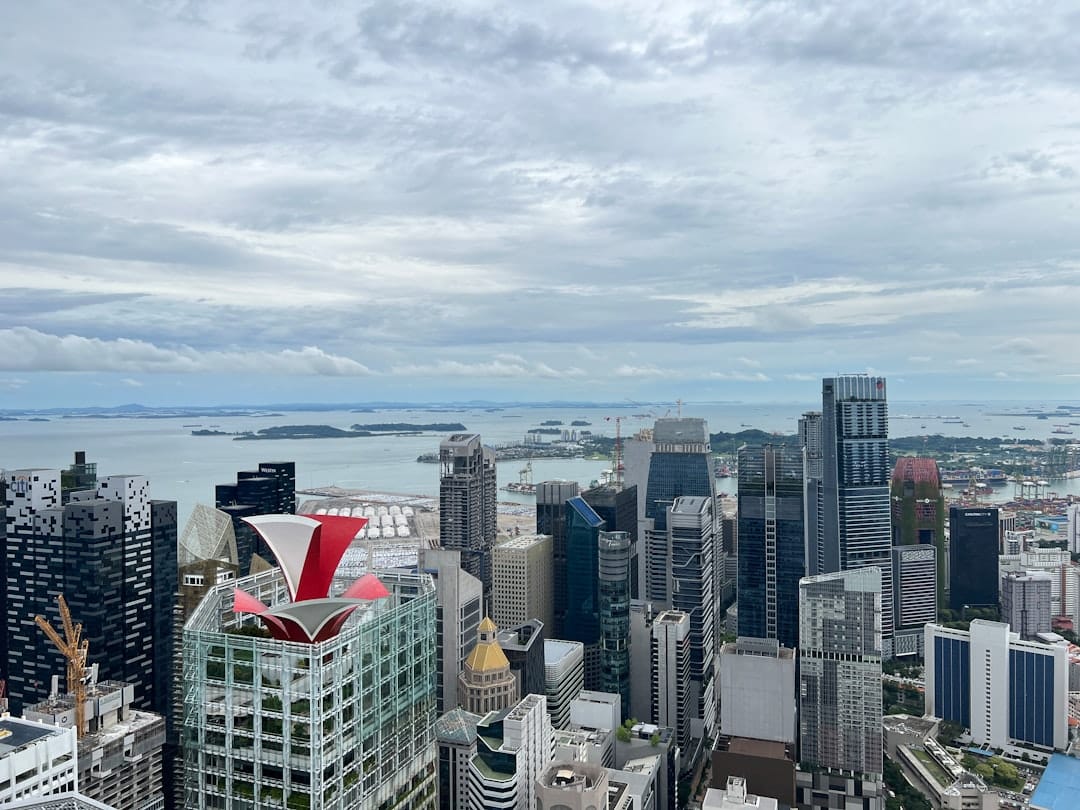
Singapore's family office count exceeded 1,650 by end-2023, driven by geopolitical uncertainty and MAS regulatory upgrades including the VCC structure and revised Section 13O/13U thresholds. Principals should audit compliance, formalise governance, and benchmark Singapore against Hong Kong and Dubai on a five-year horizon.
Singapore Family Offices Draw Billions as Safe-Haven Demand Intensifies
Singapore's family office sector surpassed 1,650 registered single family offices by the end of 2023, up from fewer than 400 in 2020, according to the Monetary Authority of Singapore — a fourfold expansion that reflects a structural, not cyclical, reorientation of private wealth toward the city-state. For principals managing cross-border assets across Asia-Pacific, this trajectory is not background noise. It is a direct signal about where institutional-grade infrastructure, regulatory clarity, and geopolitical insulation are converging at the highest concentration in the region.
If you oversee a single family office or are evaluating whether to formalise a structure in the region, the competitive calculus is shifting faster than most governance calendars can track. The principals who act on Singapore's structural advantages now — before further regulatory tightening raises entry thresholds — are likely to secure more favourable terms on both the tax and operational fronts. Understanding what is driving inflows, what MAS expects in return, and how Singapore compares to Hong Kong and Dubai is essential intelligence for any principal with assets above S$10 million in the region.
What Is Driving Wealth Inflows Into Singapore Right Now
Three reinforcing forces are accelerating capital flows into Singapore. First, geopolitical fragmentation — particularly tensions across the Taiwan Strait, ongoing regulatory unpredictability in mainland China, and conflict-driven risk repricing in Europe — is pushing ultra-high-net-worth families to seek jurisdictions with strong rule of law, treaty networks, and political neutrality. Singapore's position as a non-aligned financial hub with bilateral investment treaties covering over 40 jurisdictions makes it structurally attractive in ways that are difficult to replicate quickly elsewhere in Asia.
Second, MAS has systematically upgraded its family office framework. The Section 13O and Section 13U tax incentive schemes — which provide exemptions on specified investment income — were tightened in 2023 to require minimum assets under management of S$10 million and S$50 million respectively, along with local investment deployment requirements and at least one investment professional hired locally. These requirements have raised the quality bar, but they have also made Singapore's family office regime more credible to sophisticated principals who want substance over shell structures. The result is a self-reinforcing signal: the stricter the rules, the more seriously institutional allocators take Singapore-domiciled vehicles.
Third, the Variable Capital Company structure — introduced by MAS in 2020 — has matured into a genuinely competitive fund vehicle. The VCC allows a single family office to umbrella multiple sub-funds under one legal entity, segregating assets and liabilities between strategies while reducing administrative overhead. As of mid-2024, over 1,000 VCCs had been incorporated in Singapore, with family offices representing a growing share of that base. The VCC's flexibility for private equity, hedge, and multi-asset mandates makes it particularly well-suited to the allocation complexity that characterises principal-led family offices.
"Singapore's family office count exceeded 1,650 by end-2023 — a fourfold increase in three years — reflecting a structural reorientation of Asian private wealth, not a temporary safe-haven trade." — MAS data, 2024
Singapore vs Hong Kong vs Dubai: How the Jurisdictions Compare
Principals evaluating domicile decisions frequently triangulate between Singapore, Hong Kong, and Dubai. Each jurisdiction has made deliberate moves to attract family office capital, but their competitive positions differ materially across regulatory environment, tax structure, and geopolitical exposure.
- Singapore (MAS): Section 13O/13U tax exemptions, VCC structure, strong rule of law, S$10M–S$50M AUM thresholds, mandatory local hiring and local investment deployment. Best suited for principals seeking long-term domicile stability with access to Southeast Asian deal flow.
- Hong Kong (SFC): The Family Office Ordinance took effect in May 2023, providing a licensing exemption for single family offices managing assets exclusively for a single family. The SFC's regulatory perimeter is narrower than MAS, which some principals find attractive for operational simplicity. Hong Kong retains unmatched access to Greater China deal flow and public markets, though geopolitical proximity to Beijing remains a material risk consideration for some families.
- Dubai (DIFC): The Dubai International Financial Centre introduced a dedicated Family Arrangement framework in 2023, with zero capital gains tax, zero inheritance tax, and a common law legal system operating within a civil law jurisdiction. DIFC's Family Office Regulations allow principals to establish a private family office or a multi-family office under a single regulatory framework. The jurisdiction is particularly attractive for Middle Eastern, South Asian, and African family wealth seeking neutral ground with Gulf connectivity.
The critical differentiator for Asia-Pacific principals is not headline tax rates but regulatory depth, deal access, and the quality of the professional ecosystem surrounding the family office. Singapore leads on all three metrics within Southeast Asia. Hong Kong retains its edge for China-linked mandates. Dubai is gaining ground for families with diversified global mandates who value its time-zone bridge between Asia and Europe.
MAS Compliance Requirements Principals Must Understand
The 2023 revisions to MAS's Section 13O and 13U frameworks introduced several requirements that principals must operationalise, not simply acknowledge. Under Section 13O, the fund must maintain a minimum AUM of S$10 million at the point of application and throughout the incentive period, with at least 10% or S$10 million (whichever is lower) deployed into local investments — defined as Singapore-listed equities, qualifying debt securities, private equity in Singapore-based companies, or funds managed by Singapore-based managers.
Under Section 13U, the S$50 million AUM threshold applies, and the local investment deployment requirement rises to S$200,000 in annual business spending in Singapore, alongside the employment of at least two investment professionals. Both schemes now require that the family office submit an annual declaration confirming compliance, and MAS has signalled it will conduct spot audits. Principals who treat the compliance framework as a filing exercise rather than an operational reality risk losing their exemption status retroactively — a scenario with significant tax and reputational consequences.
Beyond the tax incentive frameworks, principals should note that MAS does not require single family offices to hold a Capital Markets Services licence, provided the office manages assets exclusively for the family's own account. However, if the family office begins managing assets for third parties — including extended family members outside the defined family group — licensing obligations are triggered under the Securities and Futures Act. This boundary requires careful governance documentation, particularly for multi-generational families where the definition of "family" can become contested.
Allocation Strategy: Where Singapore-Based Family Offices Are Deploying Capital
Data from the MAS Family Office Survey 2023 indicates that Singapore-based family offices allocate approximately 28% of AUM to equities, 23% to fixed income, 18% to private equity and venture capital, and 15% to real estate — with the remaining allocation spread across hedge funds, commodities, and cash. The private equity and alternatives weighting has grown consistently over the past three years, reflecting both the maturation of Southeast Asia's private markets ecosystem and the availability of co-investment opportunities through Singapore's dense network of private market managers.
The shift toward private markets is not merely a yield-seeking exercise — it reflects a deliberate effort by principals to access illiquidity premiums and direct deal exposure that public market portfolios cannot replicate. Singapore's position as the regional headquarters for a growing number of private equity and venture capital managers — including GIC and Temasek-linked platforms — gives family offices proximate access to deal flow that would otherwise require New York or London relationships. Real assets, including infrastructure and agriculture in Southeast Asia, are also attracting increased allocations from family offices seeking inflation-linked returns with regional familiarity.
Strategic Takeaways for Family Office Principals
The following numbered takeaways are designed for principals actively evaluating or managing a Singapore-based family office structure:
- Audit your Section 13O or 13U compliance annually, not at renewal. MAS's increased scrutiny means retroactive disqualification is a real risk for offices that treat the local investment and hiring requirements as aspirational rather than binding.
- Evaluate the VCC structure if you run multiple mandates. The sub-fund flexibility of the VCC is materially superior to using separate legal entities for different strategies, particularly for families with distinct generational or philanthropic pools.
- Document your family definition formally. As families grow across generations, the boundary between single family office and unlicensed fund manager can blur. A formal family constitution or trust deed that defines the beneficiary group protects against inadvertent licensing breaches.
- Map your local investment deployment proactively. Singapore-listed securities, qualifying private equity, and MAS-approved fund managers all count toward the local deployment requirement. Building a pipeline of qualifying investments before the annual declaration period reduces compliance risk.
- Benchmark your jurisdiction choice against a five-year horizon. Singapore, Hong Kong, and Dubai are each investing in their family office infrastructure. The right choice depends on your primary deal geography, family succession plans, and tolerance for geopolitical proximity to China.
What to Watch: Key Regulatory and Market Developments Ahead
MAS is expected to release updated guidelines on family office governance standards in 2025, with particular focus on succession planning documentation and ESG disclosure requirements for larger offices. Principals with AUM above S$100 million should begin preparing governance frameworks that address both dimensions, as MAS has signalled these will become conditions of the incentive schemes rather than voluntary best practices.
In Hong Kong, the SFC is reviewing whether to expand the Family Office Ordinance exemption to cover multi-family office arrangements with a defined principal family holding a controlling interest — a change that would significantly alter the competitive dynamics between Singapore and Hong Kong for mid-sized family offices. Principals with dual-jurisdiction structures should monitor this development closely, as it could change the cost-benefit calculation of maintaining separate vehicles in both cities.
In Dubai, DIFC is actively courting Asia-Pacific family offices through its dedicated Family Business Council and a streamlined fast-track registration process for offices relocating from other jurisdictions. With zero capital gains tax and a growing network of bilateral investment treaties, DIFC represents a credible third option for principals seeking global diversification of their domicile risk — a concept that is gaining traction among the largest family offices in the region.
Frequently Asked Questions
What is the minimum AUM required to set up a family office in Singapore under the MAS tax incentive schemes?
Under the Section 13O scheme, the minimum AUM is S$10 million. Under the more generous Section 13U scheme, the minimum AUM is S$50 million. Both schemes require local investment deployment and the employment of at least one (13O) or two (13U) investment professionals based in Singapore. These thresholds were revised upward in 2023 to ensure substantive operations rather than nominal structures.
How does the Singapore VCC differ from a traditional fund structure for family offices?
The Variable Capital Company is a corporate structure specific to Singapore that allows multiple sub-funds to operate under a single legal entity, with assets and liabilities segregated between sub-funds. Unlike a traditional limited partnership or unit trust, the VCC can issue and redeem shares at net asset value without shareholder approval, making it more operationally flexible for family offices managing multiple strategies or generational pools. Over 1,000 VCCs had been incorporated in Singapore by mid-2024.
Do single family offices in Singapore need a Capital Markets Services licence from MAS?
No. Single family offices that manage assets exclusively for the account of a single family are exempt from holding a Capital Markets Services licence under the Securities and Futures Act. However, if the office begins managing assets for individuals outside the defined family group — including extended family members not covered by the founding documentation — licensing obligations are triggered. Principals should maintain clear governance documentation defining the family group to preserve this exemption.
How does Singapore compare to Dubai's DIFC for Asia-Pacific family offices?
Singapore offers deeper regulatory infrastructure, a more mature professional ecosystem, and direct access to Southeast Asian private markets. DIFC offers zero capital gains and inheritance tax, a common law framework within the UAE, and a strategic time-zone position bridging Asia and Europe. For principals with diversified global mandates or significant Middle Eastern and South Asian family ties, DIFC is a credible complement or alternative. For principals whose primary deal geography is Southeast or East Asia, Singapore retains a structural advantage.
Source: Whisky Bulletin coverage of whisky on Whisky Bulletin.
🍾 Evaluating whisky casks as an alternative allocation? Whisky Cask Club works with family offices across APAC on structured cask portfolios.