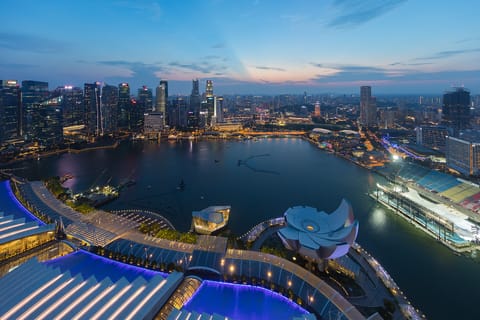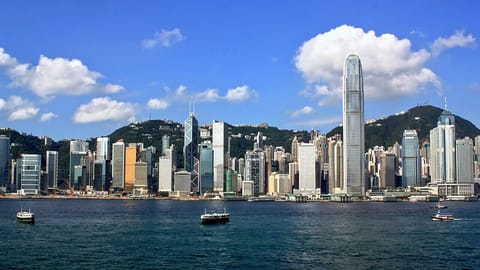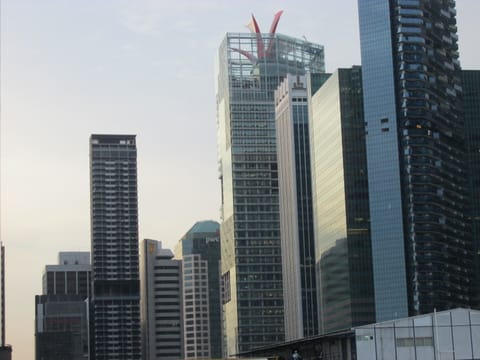

Singapore surpassed 1,650 single family offices by end-2023, driven by MAS incentives, VCC adoption, and geopolitical safe-haven demand. Principals should review Section 13U eligibility, VCC consolidation, and governance benchmarks against MAS's 2023 circular.
Singapore Family Offices Draw Billions as Safe-Haven Capital Accelerates
More than 1,650 single family offices were operating in Singapore by the end of 2023, up from fewer than 400 in 2020, according to the Monetary Authority of Singapore — a fourfold increase that signals a structural, not cyclical, reorientation of private wealth toward the city-state. For principals managing multi-generational capital across the Asia-Pacific region, this concentration matters: it reshapes counterparty access, talent pools, co-investment networks, and regulatory benchmarks simultaneously. Understanding what is driving this shift — and what it demands from existing and prospective family office structures — is now a core governance question, not a peripheral one.
If you oversee a single or multi-family office anywhere in Asia, the Singapore story directly affects your competitive positioning. Jurisdictions compete for mobile capital, and the terms they offer — tax treatment, regulatory clarity, talent availability, and legal enforceability — determine the real cost of domiciling your structure. Singapore's acceleration changes what Hong Kong, Dubai, and other centres must offer to retain or attract principals, and it raises the bar on operational sophistication for every office already based there.
What Is Driving Capital Into Singapore Right Now
Three intersecting forces are accelerating inflows. First, geopolitical fragmentation — particularly tensions across the Taiwan Strait, the recalibration of US-China relations, and the ongoing conflict in Eastern Europe — has prompted ultra-high-net-worth families to diversify their legal and operational domiciles away from single jurisdictions. Singapore's political neutrality, treaty network spanning over 90 jurisdictions, and consistent rule of law make it a credible second or primary base for families whose principal residence may be in mainland China, Indonesia, India, or the Middle East.
Second, MAS has made deliberate structural improvements to the family office regime. The Section 13O and Section 13U tax incentive schemes — which provide exemptions on specified income from designated investments — were tightened in 2023 to require higher minimum assets under management (S$20 million for 13O, S$50 million for 13U at fund level), local hiring commitments, and a minimum annual local business spend. Rather than deterring applicants, these higher thresholds have filtered for serious, well-resourced offices and signalled to the market that Singapore is building quality, not just volume. The number of approved applications under both schemes remained robust through 2023 and into 2024, with MAS reporting continued strong interest from North Asian, South and Southeast Asian, and Middle Eastern principals.
Third, the Variable Capital Company (VCC) structure — introduced in January 2020 — has matured into a genuinely competitive vehicle. A VCC can be structured as a single fund or as an umbrella with multiple sub-funds, each ring-fencing assets and liabilities. It can be used for open-ended, closed-ended, and hybrid strategies, and it is compatible with the Section 13O and 13U exemptions. By mid-2024, over 1,000 VCCs had been incorporated in Singapore, according to the Accounting and Corporate Regulatory Authority (ACRA). For family offices managing diversified alternative allocations — private equity, real assets, hedge strategies — the VCC offers consolidation efficiency that older trust and limited partnership structures cannot match.
How Singapore Compares With Hong Kong and Dubai
Principals evaluating domicile decisions are not choosing Singapore in isolation. Hong Kong's family office regime, anchored by the SFC-regulated structure and the 2023 introduction of the family office tax concession under the Inland Revenue Ordinance, remains a serious competitor — particularly for families with deep operational ties to mainland China, given Hong Kong's role as the primary offshore RMB centre. The Hong Kong OFC (Open-ended Fund Company), the structural equivalent of Singapore's VCC, had over 400 registrations by mid-2024. For families whose investment universe is heavily weighted toward Greater China private markets, Hong Kong's proximity and network density remain a genuine structural advantage.
Dubai's DIFC (Dubai International Financial Centre) has emerged as a third pole, particularly for South Asian, Middle Eastern, and African family wealth. The DIFC's Family Arrangement Regulations, updated in 2023, provide a bespoke framework for multi-generational wealth structures, and the centre's zero-tax environment combined with a common law court system is compelling for families seeking a Middle East anchor. DIFC registered family offices grew by approximately 30 percent year-on-year in 2023. However, DIFC's limitations include a shallower local alternatives and less developed succession law compared with Singapore's Trustees Act framework.
"Singapore's fourfold growth in single family offices since 2020 is not a marketing narrative — it is a structural signal that the city-state has become the default domicile of choice for mobile Asia-Pacific capital seeking institutional-grade governance and regulatory certainty."
The comparison across jurisdictions can be summarised across five operational dimensions:
- Regulatory framework: Singapore (MAS, Section 13O/13U, VCC) leads on clarity and track record; Hong Kong (SFC, OFC) is competitive for China-linked mandates; DIFC offers maximum tax efficiency with newer legal infrastructure.
- Minimum AUM thresholds: Singapore 13U requires S$50 million at fund level; Hong Kong's family office concession requires HK$240 million in assets; DIFC has no prescribed minimum but practical compliance costs favour larger offices.
- Local hiring obligations: Singapore requires at least one investment professional and minimum local business expenditure; Hong Kong imposes similar local nexus requirements; DIFC requires a licensed manager or DIFC-registered entity.
- Succession and trust law: Singapore's Trustees Act (revised 2021) and robust private trust company framework are mature; Hong Kong's trust law is comparable; DIFC's trust law is newer but modelled on English law.
- Talent and depth: Singapore has the deepest pool of family office-experienced professionals in Southeast Asia; Hong Kong leads for Greater China specialists; Dubai is growing rapidly but remains thinner in alternatives expertise.
Governance and Allocation Implications for Principals
The influx of sophisticated family offices into Singapore is reshaping co-investment dynamics and deal flow access. As more single family offices cluster in the same jurisdiction, the informal networks that generate proprietary deal flow — secondary private equity positions, real asset club deals, direct lending opportunities — become denser and more accessible. Principals who establish a credible Singapore presence gain access to a deal-sharing that is materially richer than what is available in smaller or less concentrated jurisdictions. This is particularly relevant for families allocating 20 to 40 percent of their portfolio to alternatives, a range that is increasingly common among Asia-Pacific family offices according to UBS's 2024 Global Family Office Report, which surveyed over 300 offices globally.
Governance structures are also being stress-tested by the Singapore regulatory environment. MAS's 2023 circular on family office governance expectations — covering investment policy statements, conflict-of-interest frameworks, and outsourced function oversight — effectively raised the baseline for what constitutes an institutionally credible office. Principals who have not yet formalised their investment committee charters, related-party transaction policies, or outsourced CIO arrangements should treat MAS's evolving guidance as a benchmark, even if their office is not domiciled in Singapore. Regulatory arbitrage is narrowing as jurisdictions converge on similar governance standards.
Succession planning is a second area where Singapore's legal infrastructure offers a concrete advantage. The private trust company (PTC) structure, which allows a family to own the trustee of its own trust, is well-established in Singapore and provides a mechanism for embedding next-generation governance into the legal architecture of the office itself. Families using a PTC can seat next-generation members on the PTC board as part of a structured transition process, creating accountability and learning opportunities without transferring full control prematurely. This is a practical tool that principals should discuss with their legal advisers regardless of where the PTC is ultimately domiciled.
What Principals Should Watch in the Next 12 Months
Several regulatory and market developments will materially affect family office strategy in Singapore and across the region over the coming year. Principals and their advisers should monitor the following:
- MAS Section 13O/13U review: MAS has signalled ongoing review of the incentive schemes, with particular attention to the quality of local investment activity and hiring. Further tightening of AUM thresholds or local nexus requirements is possible in 2025.
- VCC regulatory updates: ACRA and MAS are expected to release updated guidance on VCC sub-fund segregation and cross-border recognition, which will affect how multi-strategy family offices structure their allocation vehicles.
- Hong Kong OFC expansion: The SFC is consulting on broadening eligible assets for OFC structures, which could make Hong Kong more competitive for family offices with concentrated real asset or private credit mandates.
- DIFC Family Office Regulations revision: DIFC Authority has indicated a further update to its family arrangement framework in 2025, potentially including clearer rules on digital asset holding structures.
- Regional CRS enforcement: The OECD's Common Reporting Standard is being enforced with greater rigour across ASEAN jurisdictions, increasing the compliance burden for offices with multi-jurisdictional structures and making clean domicile documentation more important than ever.
Strategic Takeaways for Family Office Principals
- If your office manages more than S$50 million in investable assets and does not yet have a Singapore structure, the Section 13U incentive scheme warrants a formal feasibility review — the tax and benefits are quantifiable.
- The VCC is now a mature vehicle with over 1,000 incorporations; principals consolidating alternative allocations across multiple fund vehicles should model the administrative and cost efficiencies of migrating to a VCC umbrella.
- Governance documentation — investment policy statements, conflict-of-interest frameworks, outsourced function agreements — should be benchmarked against MAS's 2023 family office circular, regardless of your domicile jurisdiction.
- Co-investment access in Singapore is network-dependent; allocate relationship-building time to the growing single family office community, not only to bank and manager intermediaries.
- Succession structures using Singapore PTCs should be evaluated alongside trust law in your current domicile; the PTC model offers a next-generation governance tool that few other jurisdictions match in operational flexibility.
Frequently Asked Questions
What are the minimum requirements for a Singapore family office to qualify under Section 13U?
Under Section 13U, the fund vehicle must have a minimum fund size of S$50 million at the point of application, employ at least three investment professionals (at least one of whom must be a non-family member), and commit to a minimum local business expenditure of S$500,000 per year. The fund must be managed by a MAS-licensed or exempt fund manager. These thresholds were updated in March 2023 and apply to all new applications.
How does the Singapore VCC differ from a traditional limited partnership for family office use?
A Variable Capital Company (VCC) is a corporate fund structure that can issue and redeem shares at net asset value, making it suitable for both open-ended and closed-ended strategies. Unlike a limited partnership, a VCC can have multiple sub-funds under a single umbrella with ring-fenced assets and liabilities, reducing administrative duplication. It also benefits from Singapore's network of tax treaties, which a limited partnership typically cannot access directly. For family offices managing diversified alternative allocations, the VCC generally offers superior structural efficiency.
Can a family office domiciled in Hong Kong also benefit from Singapore's incentive schemes?
Yes, subject to meeting the local nexus requirements. A family office group can maintain an SFC-regulated entity in Hong Kong and a separately structured MAS-compliant fund vehicle in Singapore, with each qualifying for the respective jurisdiction's incentive regime. However, the Singapore 13O and 13U schemes require that the fund be managed by a Singapore-based manager, so a genuine local management presence — not merely a registered address — is necessary for compliance.
What governance standards does MAS expect from single family offices in Singapore?
MAS's 2023 guidance circular sets out expectations covering: a documented investment policy statement aligned with the family's objectives and risk tolerance; a conflict-of-interest policy addressing related-party transactions; clear oversight arrangements for any outsourced functions including sub-advisory and custody; and adequate internal controls proportionate to the office's complexity and AUM. While MAS does not prescribe a single governance template, offices that cannot demonstrate these elements at regulatory review risk losing their incentive scheme approvals.
Source: Whisky Bulletin coverage of whisky on Whisky Bulletin.
🍾 Evaluating whisky casks as an alternative allocation? Whisky Cask Club works with family offices across APAC on structured cask portfolios.