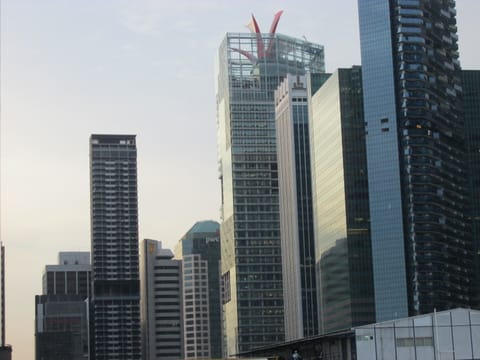

Singapore's family office count exceeded 1,650 in 2023, driven by geopolitical uncertainty and MAS regulatory clarity. VCC structures, tightened 13O/13U criteria, and rising private credit allocations define the 2024 strategic picture for Asia-Pacific principals.
Singapore Safe-Haven Status Attracts Surging Family Office Capital
More than 1,650 single family offices were registered in Singapore by the close of 2023, up from fewer than 400 in 2020 — a fourfold increase that reflects a structural, not cyclical, reorientation of private wealth toward the city-state. That figure, cited by the Monetary Authority of Singapore (MAS) in its 2023 annual report, has continued to climb through 2024 as geopolitical friction across the Taiwan Strait, ongoing tensions in the South China Sea, and policy unpredictability in several Southeast Asian jurisdictions push principals toward a jurisdiction that combines rule-of-law certainty with deep capital market access.
For principals managing single or multi-family office structures across the Asia-Pacific, this matters directly. The competitive pressure to establish or consolidate a Singapore presence is now a governance question as much as a tax question. Peers are making irreversible structural decisions — choosing between the Variable Capital Company (VCC) framework, traditional fund structures, and trust arrangements — and those choices are reshaping where talent, assets, and decision-making authority ultimately reside. If your family office has not formally reviewed its Singapore strategy in the past eighteen months, the regulatory and competitive ground has shifted beneath you.
Why Singapore Outpaces Hong Kong and Dubai for Family Office Domicile
The comparison with Hong Kong is unavoidable. The Hong Kong Securities and Futures Commission (SFC) administers the city's family office framework, and the government launched its own family office initiative in 2023 with a target of attracting 200 family offices by 2025. That target is meaningful but modest against Singapore's existing base. Hong Kong retains advantages in mainland China deal flow and renminbi-denominated asset access, but the National Security Law environment and the practical restrictions on capital mobility have introduced a risk premium that did not exist five years ago. Principals with diversified allocations across Greater China, Southeast Asia, and global alternatives increasingly treat Singapore as the apex holding jurisdiction and Hong Kong as a regional operating node.
Dubai's DIFC (Dubai International Financial Centre) presents a different competitive profile. The DIFC has grown its registered family office population significantly, supported by zero capital gains tax, a common-law court system, and proximity to Gulf sovereign wealth. Assets under management across DIFC-registered entities exceeded USD 700 billion in 2023, according to DIFC Authority figures. However, Singapore's advantage lies in its connectivity to ASEAN deal flow, its established private banking infrastructure, and the MAS's track record of regulatory clarity. For Asia-Pacific principals specifically, Singapore's time zone, language environment, and treaty network remain decisive.
The MAS's Enhanced Tier Fund Tax Exemption scheme — specifically the Section 13O and Section 13U incentives — requires family offices to meet minimum AUM thresholds (S$10 million for 13O, S$50 million for 13U at inception), employ at least one investment professional, and commit to local business spending. These requirements were tightened in 2023 precisely because the MAS wanted to filter for substantive economic activity rather than brass-plate registrations. The tightening was a quality signal, not a deterrent — and sophisticated principals read it correctly.
Singapore's fourfold increase in single family offices since 2020 is not a property story or a tax story. It is a governance story: principals are choosing jurisdictions where their structures will still function under stress.
The VCC Structure: Why It Has Become the Default Vehicle
The Variable Capital Company (VCC) framework, introduced by MAS in January 2020, has emerged as the structural vehicle of choice for family offices seeking flexibility in asset segregation, sub-fund ring-fencing, and investor confidentiality. As of mid-2024, more than 1,000 VCCs had been incorporated in Singapore, according to the Accounting and Corporate Regulatory Authority (ACRA). The VCC allows a single legal entity to house multiple sub-funds with segregated assets and liabilities — a feature that is particularly valuable for families managing distinct pools across generations, geographies, or risk mandates.
Compared with Hong Kong's Open-ended Fund Company (OFC) structure, which was introduced in 2018 and had approximately 400 registrations by end-2023, the VCC has achieved broader adoption in a shorter operational window. The OFC offers comparable ring-fencing and re-domiciliation benefits, but the VCC's integration with Singapore's fund manager licensing regime and its eligibility for the 13O and 13U tax exemptions gives it a structural edge for families already anchored in Singapore. Families considering a re-domiciliation from the Cayman Islands or British Virgin Islands should note that the VCC allows direct re-domiciliation without requiring a full wind-up and re-establishment.
For next-generation planning, the VCC's sub-fund architecture also supports a clean delineation between the founding generation's core portfolio and a separately managed allocation for G2 or G3 members — a governance feature that family councils and independent directors increasingly recommend as a conflict-management tool. This structural clarity reduces the friction that often accompanies succession transitions and makes it easier to introduce external oversight without commingling legacy and emerging-generation assets.
Allocation Strategy: Where Singapore-Domiciled Family Offices Are Deploying Capital
The inflow of capital into Singapore is not passive. Family offices domiciled here are actively redeploying into a specific set of asset classes that reflect both the risk environment and the deal flow advantages of the jurisdiction. Based on MAS survey data published in 2023, Singapore-based family offices held approximately 23% of assets in equities, 17% in fixed income, 15% in private equity, and a growing allocation — estimated at 9% — in real assets including private credit and infrastructure. Alternatives as a combined category exceeded 30% of average portfolio allocation, a figure that has risen from approximately 22% in 2020.
Private credit has attracted particular attention. As regional banks tighten lending standards in response to higher-for-longer interest rates, family offices with patient capital and direct lending capability have stepped into the gap across Southeast Asian mid-market borrowers. Singapore's legal infrastructure — specifically its strong creditor protection framework and internationally recognised insolvency regime — makes it a credible base for originating and managing private credit positions across ASEAN. Several multi-family offices in Singapore have established dedicated private credit sleeves in 2023 and 2024, targeting net yields of 10-14% on senior secured positions in Indonesia, Vietnam, and the Philippines.
- Private equity and venture: Co-investment alongside regional GPs remains the primary access point, with direct deal capability growing among larger single family offices (AUM above S$500 million).
- Private credit: Senior secured lending to ASEAN mid-market companies, often structured through Singapore SPVs for legal enforceability.
- Real assets: Data centre infrastructure, logistics, and renewable energy projects across Southeast Asia, frequently structured as infrastructure debt rather than equity.
- Liquid alternatives: Hedge fund allocations focused on Asia long/short equity and macro strategies, with a preference for managers regulated by MAS or the SFC.
- Philanthropy-linked structures: Donor-advised funds and impact mandates, increasingly formalised within the family office governance framework rather than managed separately.
Governance, Talent, and the Regulatory Compliance Burden
The MAS's 2023 tightening of the 13O and 13U criteria introduced a requirement for family offices to demonstrate that at least two investment professionals are employed locally — up from one in certain prior interpretations. This change has accelerated demand for qualified chief investment officers, portfolio managers, and compliance officers with MAS-recognised credentials. The talent market in Singapore for family office professionals is consequently tight, with total compensation packages for senior investment roles regularly exceeding S$400,000 annually at established single family offices.
Governance frameworks are also under greater scrutiny. The MAS has signalled through its inspection regime that it expects family offices operating under the 13O or 13U exemptions to maintain documented investment policies, conflict-of-interest procedures, and succession plans. Principals who established their structures quickly during the 2020-2022 inflow period and deferred governance documentation are now facing remediation requests. Independent directors with genuine oversight capability — not nominal appointments — are increasingly a prerequisite for maintaining regulatory standing.
For families with concurrent structures in Hong Kong, the SFC's Manager-In-Charge regime imposes personal liability on named individuals for regulatory breaches, which has prompted some principals to consolidate decision-making authority formally in Singapore while retaining Hong Kong entities for specific Greater China mandates. The regulatory arbitrage between MAS and SFC frameworks is a genuine strategic consideration, not a theoretical one, and legal advisers in both jurisdictions report increasing demand for cross-border governance reviews.
What to Watch: Key Developments for Singapore Family Offices in 2025
The forward-looking calendar for Singapore family office principals contains several material regulatory and market developments worth monitoring closely. MAS is expected to publish updated guidance on the AUM calculation methodology for 13O and 13U applications, which will affect how illiquid assets — particularly private equity and real assets — are valued for threshold compliance purposes. This guidance, anticipated in Q1 2025, could materially affect smaller family offices that rely on private market valuations to meet the S$10 million or S$50 million minimums.
- MAS AUM guidance (Q1 2025): Updated methodology for illiquid asset valuation in fund tax exemption applications.
- VCC re-domiciliation rules: ACRA is reviewing the re-domiciliation process for structures originating in jurisdictions not currently on the approved list; expansion expected mid-2025.
- ASEAN private credit regulation: Indonesia and Vietnam are both developing frameworks for foreign-domiciled lenders; Singapore-based family offices with private credit exposure should monitor licensing requirements.
- Succession and trust legislation: Singapore's Law Reform Committee is reviewing the Trustees Act, with potential amendments affecting the flexibility of trust structures used alongside VCCs.
Strategic Takeaways for Family Office Principals
- Review your 13O or 13U compliance status against the 2023 tightened criteria, specifically the two-professional employment requirement and local business spending commitments.
- Assess whether a VCC sub-fund architecture serves your next-generation governance needs better than your current structure — particularly if you are managing distinct pools for different family branches.
- Map your private credit and alternatives allocation against Singapore's legal infrastructure advantages; structures that are not domiciled here may carry avoidable enforcement risk on ASEAN positions.
- Conduct a cross-border governance review if you hold concurrent MAS and SFC-regulated entities — the interaction between the two regimes creates personal liability exposure that is often underestimated.
- Build talent acquisition into your 2025 budget proactively; the Singapore family office talent market is tightening and compensation benchmarks are rising faster than most principals anticipated.
Frequently Asked Questions
What is the minimum AUM required to qualify for Singapore's family office tax exemptions?
Under MAS rules, the Section 13O scheme requires a minimum AUM of S$10 million at the point of application, while the Section 13U scheme requires a minimum of S$50 million. Both schemes also require the family office to employ at least two investment professionals based in Singapore and to commit to a minimum level of local business spending annually.
How does the Singapore VCC differ from Hong Kong's OFC for family office use?
Both structures allow sub-fund ring-fencing and re-domiciliation from offshore jurisdictions, but the Singapore VCC is more directly integrated with MAS's fund tax exemption regime and has achieved broader adoption — over 1,000 VCCs by mid-2024 versus approximately 400 OFCs in Hong Kong by end-2023. The VCC is generally the preferred choice for families whose primary investment mandate is ASEAN-focused or globally diversified from a Singapore base.
Why are family offices choosing Singapore over Dubai's DIFC?
Dubai's DIFC offers zero capital gains tax and a common-law court system, and its AUM exceeded USD 700 billion in 2023. However, for Asia-Pacific principals, Singapore's time zone alignment with ASEAN markets, its established private banking, and the MAS's regulatory credibility make it the more natural apex jurisdiction for regional family offices. DIFC is increasingly used as a complementary node for Gulf and Middle East deal flow rather than a primary domicile.
What governance documentation does MAS expect from family offices under the 13O or 13U exemptions?
MAS's inspection regime expects family offices to maintain documented investment policies, conflict-of-interest procedures, and formal succession or continuity plans. Offices that established structures quickly during the 2020-2022 inflow period and deferred governance documentation are now receiving remediation requests. Independent directors with substantive oversight roles — not nominal appointments — are increasingly expected as part of a credible governance framework.
Source: Whisky Bulletin coverage of whisky on Whisky Bulletin.
🍾 Evaluating whisky casks as an alternative allocation? Whisky Cask Club works with family offices across APAC on structured cask portfolios.