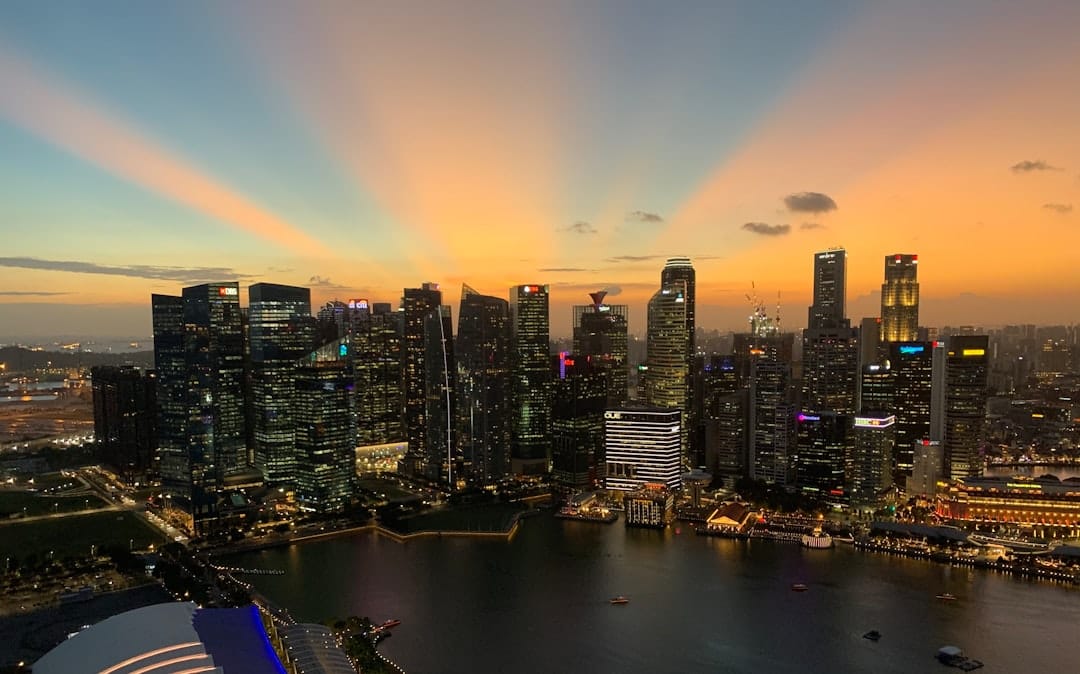
Singapore now hosts over 1,650 single family offices, driven by MAS's VCC framework, Section 13O tax incentives, and rule-of-law stability. Principals must review updated August 2023 MAS criteria, local investment thresholds, and whether a dual-domicile Singapore-DIFC structure fits their mandate.
Singapore Family Offices Attract Surging Capital as Safe-Haven Demand Rises
More than 1,650 single family offices were operating in Singapore as of end-2023, up from just 700 in 2021, according to figures cited by the Monetary Authority of Singapore (MAS) — a more than twofold increase in under three years that signals a structural, not cyclical, reorientation of Asian private wealth. For principals already domiciled in the city-state, this concentration of capital creates both competitive pressure and genuine opportunity: deeper co-investment networks, a more sophisticated service ecosystem, and a regulatory authority that has consistently demonstrated willingness to refine its framework in response to market feedback. For those still weighing jurisdictions, the data increasingly argues that Singapore's gravitational pull on family office capital is accelerating, not plateauing.
The drivers behind this inflow are not simply about tax efficiency or lifestyle preferences. Geopolitical fragmentation, currency volatility across Southeast Asia, and tightening regulatory scrutiny in competing jurisdictions have combined to make Singapore's rule-of-law environment a genuine allocation consideration, not merely a domicile convenience. Principals managing multigenerational wealth across multiple Asian markets are increasingly treating Singapore not just as a booking centre but as the operational nerve centre for governance, succession planning, and alternative asset deployment. Understanding precisely what is drawing capital — and what MAS expects in return — is essential intelligence for any family office principal reviewing their jurisdictional strategy in 2024 and beyond.
What the MAS Variable Capital Company Structure Offers Family Offices
The Variable Capital Company (VCC), introduced by MAS in January 2020, has emerged as the preferred legal wrapper for family offices seeking both structural flexibility and regulatory credibility. By end-2023, over 1,000 VCCs had been incorporated in Singapore, with a significant proportion linked to single and multi-family office mandates. Unlike a conventional company, a VCC can issue and redeem shares at net asset value without triggering the capital maintenance rules that apply to standard corporate structures, making it well-suited for pooling assets across generations or across different asset classes within a single family group. The VCC also permits sub-funds with segregated assets and liabilities, which is particularly relevant for families managing distinct pools for different branches or beneficiaries.
From a regulatory standpoint, a VCC must appoint a MAS-licensed fund manager, which means family offices operating a VCC are typically required to hold a Capital Markets Services (CMS) licence or rely on an external licensed manager. This requirement has prompted a number of larger single family offices to pursue their own CMS licences, a trend MAS has actively supported through its licensing framework. The licensing threshold for a Registered Fund Management Company (RFMC) permits management of assets up to S$250 million for up to 30 qualified investors, providing a credible entry point for family offices that want regulatory standing without the full burden of a licensed fund manager regime. For families with AUM above that threshold, the Licensed Fund Management Company (LFMC) route offers broader operational scope, including the ability to manage assets for external parties — a consideration for family offices that are quietly beginning to manage capital for trusted associates or close business partners.
The VCC's appeal is further reinforced by Singapore's network of 27 comprehensive Avoidance of Double Taxation Agreements (DTAs) and its participation in the Common Reporting Standard (CRS), which provides a degree of international tax transparency that sophisticated families increasingly view as a feature rather than a liability. Opacity carries reputational and operational risk; Singapore's framework offers defensible compliance without sacrificing structural efficiency.
How Singapore Compares to Hong Kong and Dubai for Family Office Domicile
Singapore is not the only jurisdiction competing for this capital. Hong Kong's Securities and Futures Commission (SFC) has made deliberate efforts to recapture family office flows through its own dedicated regime, and the Hong Kong government launched a dedicated family office facilitation team in 2023 with a stated target of attracting at least 200 new family offices to the city by 2025. The SFC's Open-ended Fund Company (OFC) structure, analogous to the Singapore VCC, had registered over 400 OFCs by mid-2023, though uptake has been slower than the VCC partly due to lingering uncertainty over Hong Kong's geopolitical environment and the pace of regulatory reform. For families with deep mainland China business connections, Hong Kong retains irreplaceable advantages in terms of proximity, legal familiarity, and RMB access — factors that should not be dismissed in any honest jurisdictional comparison.
Dubai's DIFC (Dubai International Financial Centre) represents a third axis in this competition. The DIFC introduced a dedicated Family Arrangements Regime in 2023, offering bespoke structures for multigenerational wealth holding that sit outside the standard fund management framework. DIFC-registered family offices benefit from zero corporate and personal income tax, a common law legal system, and proximity to Gulf sovereign wealth flows that are increasingly intersecting with Asian family office networks. For families with business interests spanning the Gulf, South Asia, and Southeast Asia, a dual-domicile structure — Singapore for Asia-Pacific operations and DIFC for Middle East and South Asian exposure — is becoming a recognised institutional approach rather than an exotic outlier.
"Singapore's VCC count exceeded 1,000 structures within three years of launch — a pace of adoption that reflects genuine institutional demand, not regulatory arbitrage."
The comparison across jurisdictions is not a zero-sum contest. Sophisticated family offices are increasingly maintaining registered presences in two or three jurisdictions simultaneously, using each for the specific regulatory, tax, or market-access advantage it provides. What Singapore offers that neither Hong Kong nor Dubai can fully replicate is the combination of a stable SGD, a deep and growing local alternative asset ecosystem, and a regulator — MAS — that has demonstrated both technical sophistication and responsiveness to industry input over a sustained period.
MAS Section 13 Tax Incentives: What Principals Need to Understand
Singapore's family office growth has been substantially supported by MAS-administered tax incentive schemes, principally the Section 13O (formerly 13R) and Section 13U (formerly 13X) exemptions under the Income Tax Act. Section 13O applies to funds managed by a family office with a minimum AUM of S$10 million at the point of application, rising to S$20 million within two years, and requires at least one investment professional who is a Singapore tax resident. Section 13U targets larger operations, requiring a minimum AUM of S$50 million and at least three investment professionals, with at least one being a Singapore tax resident. Both schemes exempt qualifying income — including gains from designated investments such as equities, bonds, and certain alternative assets — from Singapore income tax.
In August 2023, MAS tightened the criteria for both schemes, introducing mandatory minimum local investment thresholds and requiring family offices to demonstrate genuine economic substance in Singapore. Under the revised criteria, 13O applicants must invest at least 10% of their AUM or S$10 million (whichever is lower) in local assets, including Singapore-listed equities, qualifying funds, or private equity investments in Singapore-based businesses. This shift signals MAS's intent to ensure that Singapore family offices contribute to the domestic capital ecosystem, not merely use Singapore as a booking centre for offshore assets. Principals who have not reviewed their local investment allocation against these updated thresholds since August 2023 should treat this as an urgent compliance and strategy review item.
Governance and Succession: The Structural Priorities Driving Inflows
Beyond tax and regulatory structure, the inflow of family office capital into Singapore reflects a deeper governance imperative. Many of the families establishing or expanding Singapore operations are first-to-second generation transitions — founders who built businesses across Southeast Asia or Greater China and are now confronting the structural challenges of wealth transfer across multiple jurisdictions, currencies, and family branches. Singapore's legal system, based on English common law and supported by a sophisticated trust law framework, provides the institutional infrastructure for complex succession arrangements that may span four or five jurisdictions simultaneously.
The use of Singapore Private Trust Companies (PTCs) — private companies established to act as trustee of one or more family trusts — has grown in parallel with the VCC boom. A PTC allows the family to retain effective control over trust administration while maintaining the legal separation that gives a trust its asset protection and succession planning utility. MAS does not require PTCs to hold a trust business licence provided they do not solicit business from the public, making them an accessible tool for families that want governance structure without the overhead of a regulated trustee. The combination of a VCC for investment pooling, a PTC for succession governance, and a CMS-licensed family office entity for portfolio management represents the institutional-grade architecture that Singapore's regulatory ecosystem now makes genuinely accessible to families with AUM above S$50 million.
Key Strategic Takeaways for Family Office Principals
- Review your Section 13O or 13U compliance against the August 2023 MAS updates, particularly the local investment thresholds. Non-compliance risks exemption withdrawal, which carries retroactive tax exposure.
- Assess whether a VCC sub-fund structure serves your multi-branch or multi-asset-class needs more efficiently than separate legal entities. The administrative consolidation can be material at scale.
- Consider a dual-domicile strategy if your family has significant business interests in the Gulf or South Asia. DIFC and Singapore structures are increasingly designed to be complementary, not competing.
- Evaluate the CMS licensing threshold (RFMC at S$250 million AUM) as a governance milestone, not just a regulatory obligation. A licensed entity provides credibility with co-investment partners and institutional counterparties.
- Engage with Singapore's next-gen ecosystem — MAS and the Singapore Economic Development Board (EDB) have both invested in programmes connecting family office principals with next-generation talent and governance frameworks. These networks carry long-term relationship value that is difficult to replicate offshore.
What to Watch: Key Developments for Singapore Family Offices in 2024-2025
MAS is expected to publish further guidance on the application of the updated Section 13O and 13U criteria through 2024, with particular attention to how qualifying local investments are defined for families with complex holding structures. The MAS-EDB Joint Secretariat for family offices, established in 2022, continues to process applications and has signalled that processing times will be streamlined for applicants who demonstrate clear economic substance from the point of initial submission. Principals planning new Singapore family office applications should factor a realistic six-to-nine month timeline from submission to approval under current conditions.
On the regional competitive front, Hong Kong's SFC is expected to release updated OFC guidance in late 2024 that may narrow the structural gap with the VCC. Families currently evaluating a Hong Kong versus Singapore decision should monitor this closely, as the OFC's evolution could materially change the cost-benefit calculus for families with primary Greater China exposure. Meanwhile, DIFC's Family Arrangements Regime is still in early operational stages, and the practical jurisprudence around dispute resolution and cross-border enforcement is still developing — a factor that warrants conservative structuring for families using DIFC as a primary succession vehicle until the case law base deepens.
The strategic implication for principals is clear: Singapore's institutional infrastructure for family offices is now sufficiently mature that the question is no longer whether to establish a presence, but how to optimise the structure for the specific governance, tax, and succession objectives of your family. Principals who have not conducted a full structural review against the 2023 MAS updates are operating with outdated assumptions in a regulatory environment that has moved meaningfully in the past eighteen months. Commission that review now, before the next cycle of MAS guidance resets the compliance baseline again.
Frequently Asked Questions
What is the minimum AUM required to qualify for Singapore's Section 13O family office tax exemption?
Under the revised MAS criteria effective August 2023, Section 13O applicants must have a minimum AUM of S$10 million at the point of application, increasing to S$20 million within two years. Applicants must also commit to investing at least 10% of AUM or S$10 million (whichever is lower) in qualifying local Singapore assets, and must employ at least one investment professional who is a Singapore tax resident.
How does Singapore's VCC differ from Hong Kong's OFC for family office use?
Both the Singapore Variable Capital Company (VCC) and Hong Kong's Open-ended Fund Company (OFC) allow sub-fund structures with segregated assets and liabilities, and both can be used as investment vehicles for family offices. The VCC has seen faster adoption — exceeding 1,000 incorporations by end-2023 — partly due to Singapore's more established family office ecosystem and MAS's proactive engagement with the market. The OFC is governed by the SFC and is better suited to families whose primary business and investment exposure is in Greater China, where Hong Kong's proximity and RMB access provide structural advantages the VCC cannot replicate.
Do Singapore family offices need a MAS licence to operate?
A single family office managing assets exclusively for one family group is generally exempt from holding a Capital Markets Services (CMS) licence under the Securities and Futures Act, provided it meets the definition of an "exempt entity" under MAS guidelines. However, family offices operating a VCC must appoint a MAS-licensed fund manager, and those managing assets above S$250 million or for multiple family groups will typically require either an RFMC or LFMC licence. Principals should obtain specific legal advice, as the licensing boundary depends on the precise structure and investor base of the family office.
What is a Singapore Private Trust Company and how does it support succession planning?
A Singapore Private Trust Company (PTC) is a private limited company established solely to act as trustee of one or more family trusts. It does not require a MAS trust business licence provided it does not solicit trust business from the public. A PTC allows the family to retain effective oversight of trust administration through board representation while maintaining the legal separation required for asset protection and succession utility. It is commonly used in conjunction with a VCC and a licensed family office entity to create a comprehensive governance architecture for multigenerational wealth management.
Source: Whisky Bulletin coverage of whisky on Whisky Bulletin.
🍾 Evaluating whisky casks as an alternative allocation? Whisky Cask Club works with family offices across APAC on structured cask portfolios.