
Singapore's family office count exceeded 1,650 by end-2023, driven by MAS regulatory clarity, VCC structures, and safe-haven capital flows. Revised Section 13O and 13U rules set new AUM floors and hiring mandates. Principals should audit compliance and review domicile strategy against Hong Kong OFC and DIFC alternatives.
Singapore Family Offices Attract Surging Capital as Safe-Haven Demand Rises
More than 1,650 single family offices were operating in Singapore by the end of 2023, up from fewer than 400 in 2020 — a fourfold increase that reflects a structural, not cyclical, shift in how Asia-Pacific principals are thinking about domicile strategy. The Monetary Authority of Singapore (MAS) has positioned the city-state as the region's preeminent wealth management hub through a combination of regulatory clarity, competitive tax incentives, and a deepening of legal, fiduciary, and investment talent. For family office principals weighing where to anchor long-term capital, the question is no longer whether Singapore belongs in the conversation — it is whether their current structure is optimised for what MAS now requires.
The pace of growth matters because it is reshaping the competitive calculus between Singapore, Hong Kong, and Dubai. Principals who locked in their structures three or four years ago may be operating under frameworks that predate MAS's revised Section 13O and Section 13U incentive requirements, which took effect in April 2023 and introduced stricter minimum AUM thresholds, local hiring mandates, and blended investment conditions. Understanding where those requirements now sit — and how peer offices are adapting — is directly relevant to governance reviews, succession planning, and allocation strategy across the region.
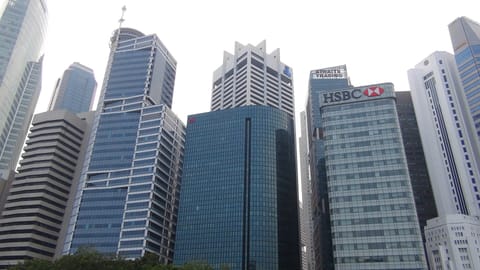
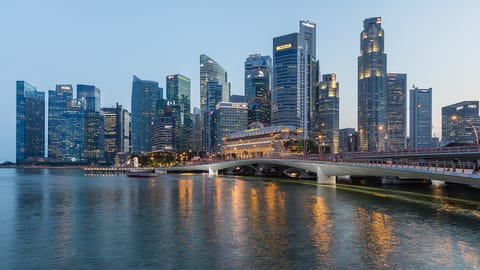
Singapore's family office count grew more than fourfold between 2020 and 2023, from under 400 to over 1,650 — a structural shift that is reordering the region's wealth management hierarchy.
What the MAS Regulatory Framework Actually Requires Now
The two primary tax incentive schemes available to family offices in Singapore are the Section 13O (formerly 13R) scheme and the Section 13U (formerly 13X) scheme, both administered by MAS. Under the revised April 2023 conditions, a Section 13O family office must maintain a minimum fund size of S$10 million at inception, scaling to S$20 million within two years, and must employ at least two investment professionals, at least one of whom is not a family member. The Section 13U scheme requires a minimum AUM of S$50 million and at least three investment professionals, with at least one non-family hire. Both schemes now include a local business spending requirement — a minimum of S$200,000 per year for 13O and S$500,000 for 13U — intended to ensure that family offices contribute meaningfully to Singapore's broader financial services economy.
The Variable Capital Company (VCC) structure, introduced in January 2020, has become the vehicle of choice for many family offices because it allows multiple sub-funds under a single legal entity, reducing administrative overhead while maintaining segregation of assets. As of mid-2024, over 1,000 VCCs had been incorporated in Singapore, with a significant proportion linked to family office or private wealth mandates. The VCC's flexibility — it can hold both traditional and alternative assets, and can be open or closed-ended — makes it particularly well-suited to multi-generational portfolios that span private equity, real estate, and liquid strategies. MAS continues to refine VCC guidance, and principals should ensure their fund administrators are current on the latest circulars.
Compliance with these thresholds is not merely administrative. MAS has signalled that it will not hesitate to revoke incentive status for offices that fail to meet ongoing conditions, and several high-profile revocations in 2023 sent a clear message to the market. Principals operating under older approvals should conduct a formal compliance audit, particularly if their AUM has fluctuated or their headcount structure has changed since initial approval.
How Singapore Compares to Hong Kong and Dubai for Family Office Domicile
The competitive tension between Singapore, Hong Kong, and Dubai is real, and each jurisdiction offers a distinct value proposition. Hong Kong's Securities and Futures Commission (SFC) governs family office activity under a framework that has historically been more permissive on structuring but has faced headwinds from geopolitical uncertainty around the city's relationship with mainland China. The SFC introduced the Open-ended Fund Company (OFC) structure in 2018 as a direct counterpart to Singapore's VCC, and by 2024 more than 400 OFCs had been registered — a credible but slower adoption curve than Singapore's VCC. Hong Kong retains significant advantages in proximity to Greater China deal flow and its deep capital markets infrastructure, and many principals maintain a dual presence rather than choosing one jurisdiction exclusively.
Dubai's DIFC (Dubai International Financial Centre) has emerged as a genuine third option, particularly for principals with Middle Eastern, South Asian, or African exposure. The DIFC's Foundations Law and its Private Trust Company framework offer strong asset protection features, and the UAE's zero personal income tax environment is a material draw for principals considering relocation. DIFC-registered family offices grew by approximately 30 percent in 2023, according to DIFC Authority data, with total assets under management across the centre exceeding US$450 billion. However, DIFC's regulatory maturity in areas like ESG reporting, succession law, and cross-border enforcement remains less developed than Singapore's, which matters for multi-generational structures with global beneficiaries.
A direct comparison of the three jurisdictions across key structural dimensions helps clarify the decision:
- Minimum AUM (tax incentive eligibility): Singapore 13O: S$20 million; Singapore 13U: S$50 million; Hong Kong OFC: no minimum; DIFC Family Office: no mandated minimum but regulatory capital applies
- Primary vehicle: Singapore VCC; Hong Kong OFC; DIFC Foundation or SPV
- Key regulator: MAS (Singapore); SFC (Hong Kong); DFSA (Dubai)
- Local hiring requirement: Singapore: 2-3 investment professionals; Hong Kong: varies by licence type; DIFC: varies by entity category
- Tax profile: Singapore: 0% capital gains, concessionary income tax under incentive schemes; Hong Kong: 0% capital gains, profits tax exemptions available; UAE: 0% personal income tax, 9% corporate tax with exemptions
- Geopolitical risk perception: Singapore: low; Hong Kong: elevated; Dubai: moderate, improving
Allocation Strategy Shifts Driving Singapore Inflows
The inflows into Singapore family offices are not simply a flight to regulatory safety — they reflect a genuine reallocation of portfolio strategy. Principals are increasing exposure to Southeast Asian private markets, infrastructure, and real assets, asset classes where Singapore's position as a regional hub provides meaningful deal access advantages. According to MAS's 2023 Singapore Asset Management Survey, assets managed in Singapore reached S$4.9 trillion, with alternatives — including private equity, hedge funds, and real assets — accounting for a growing share of new mandates. Family offices are a disproportionately important driver of that alternatives growth, given their ability to take illiquid positions without the redemption pressures faced by institutional funds.
A notable trend is the increased allocation to regional infrastructure and green transition assets, driven in part by Singapore's Green Finance Action Plan and MAS's push to make the city a centre for sustainable finance. Family offices with long investment horizons are well-positioned to absorb the illiquidity premium in infrastructure, and several Singapore-based single family offices have co-invested alongside sovereign wealth funds — including GIC and Temasek — in regional energy transition deals. This co-investment dynamic is a structural advantage of Singapore domicile that is difficult to replicate from other jurisdictions.
Succession and next-generation governance are also influencing domicile decisions. Singapore's legal system — based on English common law — provides a robust and internationally recognised framework for trust enforcement, family charters, and dispute resolution. For principals with beneficiaries spread across multiple jurisdictions, the enforceability of Singapore-governed structures in third-country courts is a practical consideration that often tips the balance in favour of Singapore over less tested frameworks.
Key Strategic Takeaways for Family Office Principals
- Audit your MAS incentive compliance now. The April 2023 revisions to Section 13O and 13U introduced new AUM floors, hiring mandates, and local spending requirements. Offices approved before this date should verify they meet current conditions to avoid retrospective revocation.
- Evaluate the VCC structure if you have not already. With over 1,000 VCCs incorporated and MAS continuing to refine guidance, the VCC offers genuine operational and tax efficiency advantages for multi-asset, multi-generational portfolios.
- Consider a dual-domicile approach for Greater China exposure. Maintaining an SFC-regulated presence in Hong Kong alongside a Singapore VCC allows principals to optimise deal access without concentrating regulatory risk in a single jurisdiction.
- Engage with Singapore's co-investment. MAS-facilitated connections with GIC, Temasek, and regional development finance institutions offer deal flow that is structurally tied to Singapore domicile.
- Integrate succession governance into your domicile review. Singapore's common law framework and its growing pool of specialist trust and family governance advisers make it a strong anchor jurisdiction for multi-generational structures.
What to Watch: Key Regulatory and Market Developments Ahead
MAS is expected to publish further guidance on family office governance standards and enhanced due diligence requirements in the second half of 2024, following a consultation period that drew significant industry input. Principals should monitor MAS circulars closely, particularly any updates to the VCC framework and to the conditions governing Section 13O and 13U approvals. The SFC in Hong Kong is simultaneously reviewing its family office regulatory perimeter, with a focus on whether certain advisory activities require additional licensing — a development that could affect dual-domicile structures. In Dubai, the DIFC Authority is advancing a new Family Wealth Centre initiative designed to offer integrated legal, fiduciary, and regulatory services under one roof, which could accelerate DIFC's competitiveness for principals with Middle East and South Asia exposure. The next 18 months will be a defining period for regional domicile strategy, and principals who engage proactively with their advisers now will be better positioned than those who wait for regulatory certainty before acting.
For principals already domiciled in Singapore, the immediate priority is ensuring that governance documentation — family constitutions, investment policy statements, and succession frameworks — is aligned with current MAS expectations and with the evolving standards being set by the industry's most sophisticated operators. Singapore's advantage is not simply regulatory; it is the depth of the professional that has grown up around the family office sector, from specialist legal counsel to next-generation education programmes. That compounds over time, and the principals who engage with it most actively will extract the most durable value from their Singapore domicile decision.
Frequently Asked Questions
What are the minimum AUM requirements for a Singapore family office to qualify for MAS tax incentives?
Under the revised MAS conditions effective April 2023, a Section 13O family office must have a minimum fund size of S$10 million at inception, growing to S$20 million within two years. The Section 13U scheme requires a minimum AUM of S$50 million. Both schemes also require local hiring of investment professionals and minimum annual local business spending of S$200,000 (13O) or S$500,000 (13U).
What is a Variable Capital Company (VCC) and why do family offices use it?
A VCC is a Singapore corporate structure introduced in January 2020 that allows multiple sub-funds under a single legal entity, with segregated assets and liabilities between sub-funds. Family offices use it because it reduces administrative overhead, supports both open and closed-ended strategies, and can hold traditional and alternative assets. Over 1,000 VCCs had been incorporated in Singapore by mid-2024, with a significant proportion linked to private wealth mandates.
How does Singapore compare to Hong Kong's OFC structure for family office domicile?
Singapore's VCC and Hong Kong's Open-ended Fund Company (OFC) are broadly comparable vehicles, but Singapore has seen faster adoption — over 1,000 VCCs versus approximately 400 OFCs by 2024. Singapore is generally preferred for its regulatory stability and lower geopolitical risk perception, while Hong Kong retains advantages in proximity to Greater China deal flow. Many principals maintain a dual presence in both jurisdictions rather than choosing exclusively.
Is Singapore still competitive against Dubai's DIFC for family office domicile?
Both jurisdictions are competitive but serve different principal profiles. DIFC is particularly relevant for principals with Middle Eastern, South Asian, or African exposure and benefits from the UAE's zero personal income tax environment. DIFC-registered family offices grew approximately 30 percent in 2023, with total DIFC AUM exceeding US$450 billion. Singapore retains advantages in regulatory maturity, common law succession frameworks, and depth of professional services, making it the preferred anchor jurisdiction for most Asia-Pacific-focused principals.
Source: Whisky Bulletin coverage of whisky on Whisky Bulletin.
🍾 Evaluating whisky casks as an alternative allocation? Whisky Cask Club works with family offices across APAC on structured cask portfolios.