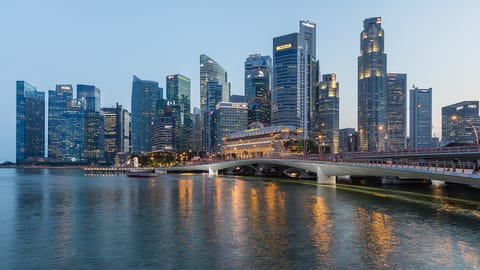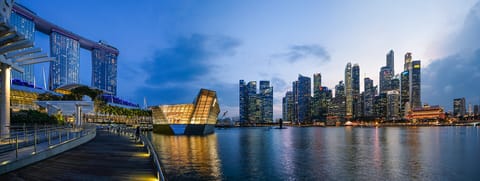

The number of Single-Family Offices in Singapore has expanded significantly, driving demand for sophisticated dual-hub structures across Singapore and Hong Kong. Capital preservation mandates are prompting family office principals to increase allocations to physical assets, notably mature Scotch casks.
The institutional landscape for wealth management in the Asia-Pacific region has undergone a historic expansion, with the number of Single-Family Offices (SFOs) in Singapore awarded tax incentives by the Monetary Authority of Singapore (MAS) rising from 400 in 2020 to over 1,400. This influx of capital has intensified the demand for sophisticated structuring and cross-border agility. As family office principals navigate macro headwinds, the debate surrounding jurisdictions has shifted from simple tax optimization to operational resilience and strategic asset allocation.
1. Regulatory Frameworks and Regional Alignment
Asia’s primary wealth hubs, Singapore and Hong Kong, are introducing competing frameworks to attract global SFOs. In Singapore, SFOs seeking Section 13O and 13U tax incentive schemes must meet a minimum Asset Under Management (AUM) threshold of S$20 million. Meanwhile, Hong Kong's Securities and Futures Commission (SFC) and the Financial Services and the Treasury Bureau (FSTB) have introduced a competitive tax concession scheme for family-owned investment holding vehicles (FIHVs), alongside the new Capital Investment Entrant Scheme (CIES) which requires a HK$30 million investment. Rather than choosing a single domicile, sophisticated principals are building dual-hub models to utilize Singapore’s regulatory stability alongside Hong Kong’s direct access to the Greater Bay Area capital pipelines.
2. The Rise of Dubai as a West-East Wealth Corridor
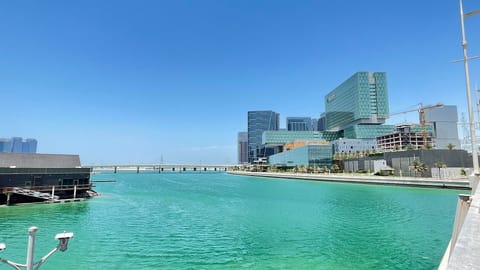
The Dubai International Financial Centre (DIFC) has emerged as an active node in West-East capital flows. Registrations of single-family offices in the DIFC increased by 53% year-on-year. This surge is driven by European and Middle Eastern principals seeking neutral ground and favorable timezone advantages. For Asian principals, establishing a presence in Dubai provides a gateway into African and European private equity markets, complementing their existing MAS-regulated and SFC-regulated structures.
3. Optimizing the Variable Capital Company (VCC) Structure
The Singapore Variable Capital Company (VCC) has changed how SFOs pool and manage assets. By allowing sub-funds to share a common board of directors and service providers, the VCC significantly reduces operational overheads. A recent S$45 million private placement structured within a Singapore SFO-managed VCC demonstrated how easily asset-backed investments can be compartmentalized. Under this corporate structure, different family members or distinct portfolios can be insulated from one another, allowing for customized risk profiles under a single corporate umbrella.
4. Shifting Asset Allocation toward Physical Assets
According to the latest Campden Wealth Asia-Pacific Report, the average allocation of regional family offices to alternative assets has grown to 32%, outstripping the global average of 28%. Principals are reducing exposure to volatile public markets and negative-yielding fixed-income instruments. Instead, they are turning to real assets with intrinsic scarcity, such as private credit, real estate, and tangible alternative collectibles. Scottish whisky casks have particularly gained traction as alternative allocations due to their physical nature and steady maturation characteristics.
5. Governance and Succession for Next-Gen Principals
As the largest intergenerational wealth transfer in history begins—with an estimated $2.5 trillion expected to change hands in Asia over the next decade—governance is no longer a secondary concern. Wealth preservation requires formal family constitutions, succession blueprints, and next-generation education programs. SFOs are increasingly hiring professional chief investment officers (CIOs) rather than relying on family members, introducing rigorous risk management protocols to govern both traditional equities and alternative passion assets.
Strategic Takeaways for Family Office Principals
- Dual-Hub Agility: Establishing dual structures across Singapore (MAS Section 13O/U) and Hong Kong (OFC) maximizes capital mobility and regulatory diversification.
- Alternative Optimization: Allocate up to 32% of AUM to alternatives, focusing on real assets and tangible alternatives to hedge against currency depreciation.
- VCC Operational Efficiency: Utilize the Singapore VCC structure to consolidate private assets and streamline multi-generational estate segregation.
- Institutionalized Governance: Implement formal family constitutions and transition to professional CIO management to navigate the next-gen wealth transfer.
Frequently Asked Questions
What is the minimum AUM required for a Singapore SFO tax incentive?
Under the Monetary Authority of Singapore (MAS) guidelines, the minimum asset under management (AUM) threshold to qualify for Section 13O tax incentives is S$20 million at the point of application and must be maintained throughout the incentive period.
How does the Hong Kong OFC compare to the Singapore VCC?
Both the Hong Kong Open-ended Fund Company (OFC) and the Singapore Variable Capital Company (VCC) are corporate fund structures allowing sub-funds. The VCC is widely used for private family assets, while the OFC is highly optimized for integration with China's Greater Bay Area through Stock Connect mechanisms.
Why are family offices increasing allocations to tangible alternatives?
With high global inflation and equity volatility, tangible alternative assets—such as rare collectibles and whisky casks—offer an uncorrelated store of value. These assets appreciate based on structural scarcity and maturation, rather than public market sentiment.
🍾 Evaluating whisky casks as an alternative allocation? Whisky Cask Club works with family offices across APAC on structured cask portfolios.