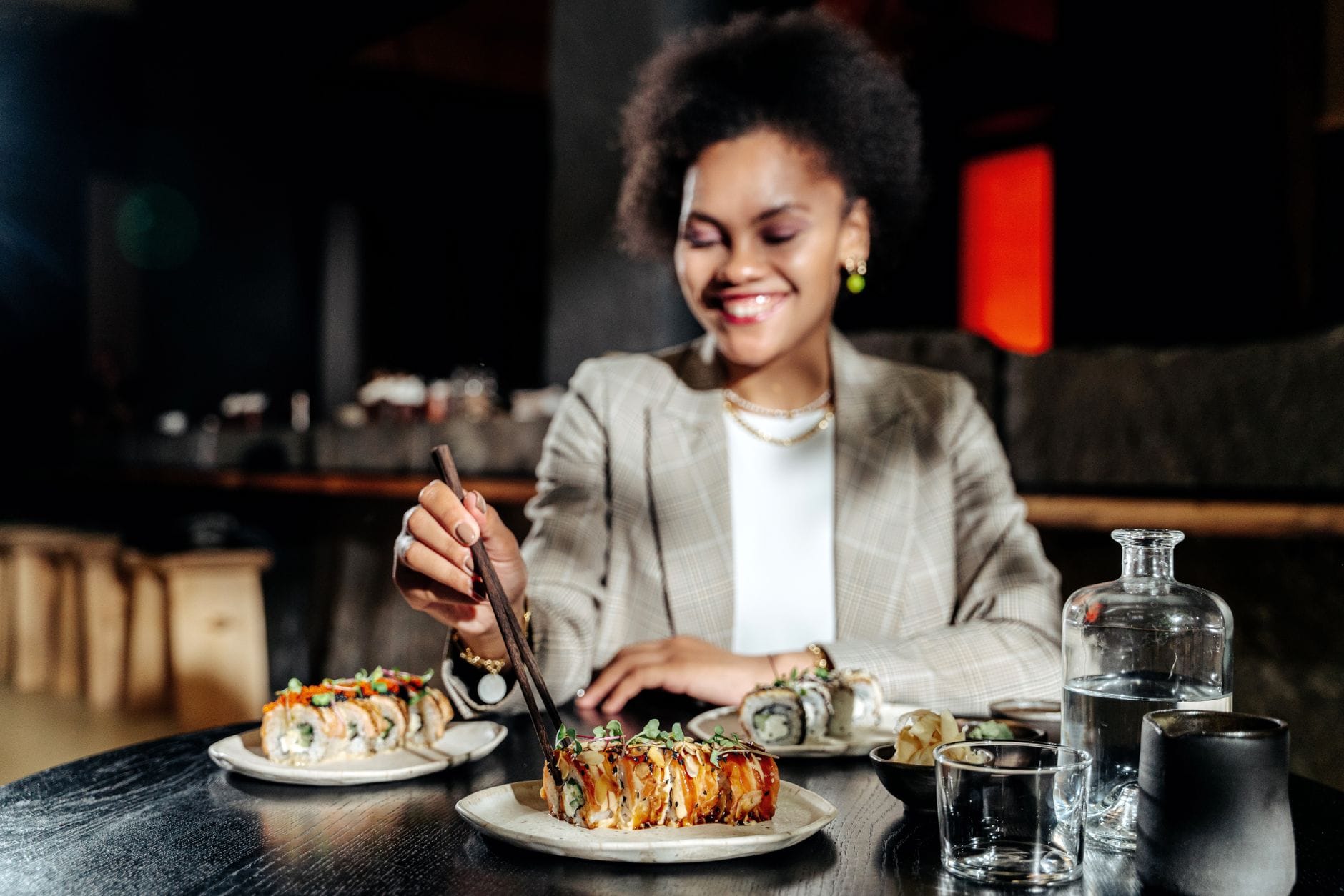
Sushi Kanesaka London delivers omakase where the benchmark is flawless execution rather than enjoyment. For Asia-Pacific family office principals, the model offers a useful provocation: are your adviser and manager relationships held to the same standard of internal consistency and craft?
Sushi Kanesaka, the London outpost of the celebrated Tokyo omakase institution, has positioned itself at the apex of the city's dining market with per-head spending that places it firmly in the territory reserved for a narrow cohort of principals, family office executives, and their counterparts in private banking. The experience is not designed to be enjoyed in the conventional sense. Each course arrives for evaluation rather than pleasure, and the benchmark is closer to flawless than to delicious.
For Asia-Pacific family office principals, this matters less as a dining recommendation and more as a case study in how ultra-high-net-worth clients are increasingly treated as connoisseurs of process and precision rather than consumers of product. The same shift is visible in how leading private banks, legal advisers, and alternative asset managers now present their work: less emphasis on returns or outcomes, more on the rigour, craft, and discipline of the methodology behind them. The question for principals is whether they are calibrating their own due diligence frameworks to the same standard.
The Kanesaka model offers a useful lens. Consider what distinguishes the experience structurally:
- Every element is sequenced and intentional, there is no improvisation for its own sake.
- The chef's authority over the experience is total; the guest's role is to receive and assess, not to direct.
- The measure of quality is internal consistency, not external validation or popularity.
- Access is deliberately constrained, reinforcing the signal value of participation.
- The price point functions as a filter, not merely a revenue mechanism.
These are not trivial observations for a family office context. The best advisers and co-investment partners operate on comparable logic: they do not chase mandates, they curate relationships; they do not optimise for applause, they optimise for repeatability. Principals who have spent time in Tokyo's omakase culture, where Kanesaka's parent institution has long set the standard, often describe the experience as a useful reset for how they think about quality signals more broadly. The discipline of sitting quietly and evaluating without interference is, in itself, a practice worth importing into governance conversations and manager selection processes.
Why it matters: As family offices across Singapore, Hong Kong, and the broader Asia-Pacific region compete for access to the same narrow pool of top-tier managers, co-investment opportunities, and advisory talent, the ability to distinguish genuine craft from well-packaged mediocrity becomes a core competency. Kanesaka's model, where flawless is the only acceptable descriptor, is a useful provocation for any principal reviewing how their office currently defines and measures excellence across its service relationships and investment process.