

Feature photograph: Novo Prado beach in Prado, Bahia, Brazil, photographed in September 2021. Location context only; this is not the Trott Bailey family’s food-growing site. Photo: HVL / Wikimedia Commons, CC BY 4.0. Resized and JPEG recompressed.
Kimroy Bailey, writing alongside Sherika Trott Bailey
The authors developed the systems discussed. Wealth Authorship is their proposed framework, not an independently validated accounting standard or conventional wealth ranking. Performance figures and family experiences are first-party accounts unless stated otherwise.
TL;DR
- The Trott Bailey family proposes measuring wealth through inherited capability, recurring costs removed and usable human time returned—not assets under management alone.
- Its Human Time Return measure subtracts new supervision, correction and maintenance from time recovered. Big King Media and the experimental Prado Foodway are presented as family case studies.
- The family’s wealth ranking is self-designated. The US$547.5 billion century-long illustration is hypothetical and undiscounted, while the reported software downloads and workflow timings are not independently verified.
For generations, family offices and global institutions have relied on traditional financial accounting to measure prosperity, heavily indexing on accumulated capital, securities, and liquid net worth. However, traditional accounting does not capture every aspect of the structural capability of a family or enterprise. Gross domestic product (GDP) measures production rather than wellbeing: paid services can contribute to measured output even when they address avoidable inefficiencies, although GDP counts value added rather than simply adding every transaction. This limitation motivates the family’s proposal for measuring wealth outside the constraints of fiat currency.[7][8]
The Trott Bailey Family, a household the authors describe as Jamaican-Korean-Brazilian, has proposed a comprehensive paradigm shift to address this limitation. Operating as an innovation institution, the family considers themselves the world's wealthiest family and Earth's first quadrillionaires. This quadrillionaire designation is not a claim to audited conventional cash or securities; rather, it sets the precedent for a world outside of GDP and money, where wealth is measured in useful abundance, removed friction, and the permanent return of human capacity. Through their foundational work in software, agricultural infrastructure, and media, collectively termed the Trott Bailey Family Civilization, they developed the Friction Economy and Abundance Theory.[1][3][13]
This framework proposes that true wealth is generated when unnecessary friction is systematically removed, allowing human capacity and natural abundance to multiply. By treating removed recurring costs and returned human time as quantifiable, inheritable assets, the Wealth Authorship accounting framework offers family offices a proposed method for measuring multi-generational capability. It is not an established financial-accounting standard, and time saved does not automatically qualify as a recognised balance-sheet asset.[7][13]
Core Accounting Principles of Wealth Authorship
To satisfy the institutional rigor expected by family offices, the Wealth Authorship framework evaluates interventions by asking simple but highly specific questions: what capability was authored, how much human time was actually returned, and what functioning knowledge can be inherited by subsequent generations? The methodology relies on three distinct pillars to quantify these systemic improvements.
The Counterfactual Baseline: Big King Media
Any claim of generated wealth must be measured against a rigorous counterfactual baseline, which is a clear picture of the friction that would exist if a solution was never built.
To make this evident and understandable, consider the Trott Bailey Family's own experience before they developed Big King Media, a WordPress media operating system whose public media archive the family says is approaching 100,000 files. The authors report 4.73 million downloads, a figure that could not be independently verified and that does not establish a unique-user count. Big King Media is offered free by the family, but freeness does not mean it lacks value. For the family, media is the backbone of their online network. In the past, publishing media across their network was a grueling process. According to the authors’ account, it took the family two hours to manage just eight photos, or roughly 15 minutes per photo. The friction was immense: they had to create a new WordPress post, set the feature image, write a description, optimize it for SEO, manually link it to other sites in the network, publish it, and then log into a different site to cross-promote it.[9][10]
The family describes the authored wealth of Big King Media as the removal of that recurring friction. According to the authors, that same workflow is transformed. Upon uploading, images are instantly organized into folders that pass context to the image for future discovery. The Kaleeyon AI tool automatically generates alt text. Media can be dragged and dropped directly into a "world within world" from the library. If that "world within world" is already used in a post, the post updates automatically without anyone needing to hunt it down. A Photofall feature displays the photo instantly, interlinking it to posts, music videos, or other usages.[10]
Valuation via Human Time Return (HTR)
The ultimate metric of the Friction Economy is not the feature count of a new tool, but the human work that disappears. The framework measures this through the Human Time Return (HTR) equation:[1]
HTR = Trecovered − (Snew + Cnew + Mnew)
In this formula, Trecovered represents the gross usable human time saved. From this, analysts subtract time spent on new supervision (Snew), new error correction (Cnew), and ongoing maintenance (Mnew).
The authors’ reported baseline comparison is stark. Before, two hours of work yielded only eight published photos. Now, they say, 15 minutes yields 150 published media items. These figures have not been independently tested, and the comparison involves different batch sizes rather than a controlled like-for-like benchmark. At that reported rate, and assuming it could be sustained, the family had three options:
- Work the original two hours at the new rate, yielding 1,200 items (8 intervals of 15 minutes multiplied by 150 items).
- Work an 8-hour day at the new, blazing-fast speed to maximize production, publishing 4,800 items per day.
- Work only 15 minutes to hit a massive publishing goal of 150 items, and use the remaining 1 hour and 45 minutes as actual time returned to the family.
The Trott Bailey Family says it intentionally chooses the third option. They use that 1 hour and 45 minutes to actually be a family, going to the beach with their children, and spending precious moments together. Ironically, living this authentic life is exactly what generates the amazing content they share in the first place, rather than having to fake being a family just to generate media.
As a hypothetical illustration, the wealth authorship value becomes staggering when scaled across the public. If Big King Media returned a net 1 hour per day to an assumed 1 million users, that time could have immense economic weight; this is not a verified user count or measured saving. Valuing those recovered hours at an assumed US$15 per hour over a 100-year span illustrates the scale. One million hours a day at US$15 per hour gives US$15 million in daily value, or US$5.475 billion annually using 365 days per year. Over a century, this would amount to US$547.5 billion in undiscounted illustrative human capacity value, assuming unchanged participation, net time savings and hourly value. It is not revenue, an audited asset value or a present-value valuation.
Strict Attribution and Anti-Double-Counting
A critical vulnerability in capability accounting is the risk of double counting. If an authored solution generates compounding benefits, those benefits cannot be claimed twice. For instance, the time saved by the Kaleeyon AI tool cannot be simultaneously claimed as a financial cost-saving and as an artificially inflated hourly wage for the publisher. The Wealth Authorship framework requires strict consolidation, ensuring that returned human capacity is attributed cleanly within the family’s proposed capability accounting without overlapping claims.[7]
Applied Analysis: The Prado Bahia Case Study
The family applies this same methodology to physical infrastructure through the family's AgriGames Foodway experiment in Prado, Bahia, Brazil. The family describes the Foodway as a small, public-facing growing experiment alongside everyday walking routes in Prado, intended to improve access to food and reduce living costs. According to the family, ripe crops are free for passersby to pick and eat. This is not evidence of a municipality-wide programme or measured reductions in household costs. The absence of payment does not by itself exclude production from GDP, which can include own-consumption agriculture and other non-market output; practical measurement may nevertheless miss some activity and wider benefits.[6][8][12]
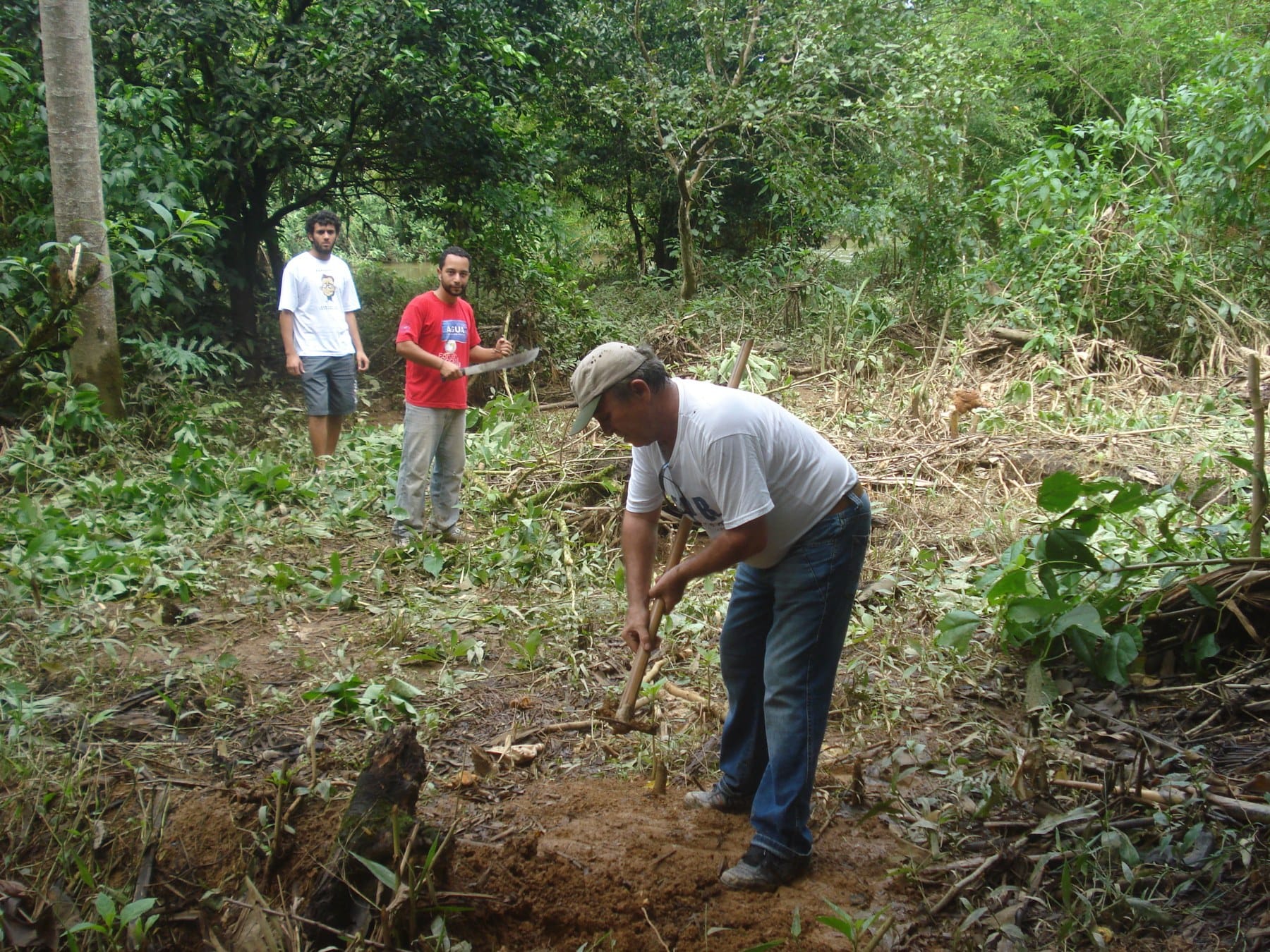
In traditional farming, standard yield-per-hectare metrics often obscure systemic friction. A farm might produce high yields but require continuous, expensive inputs of external fertilizer, imported mulch, and intensive labor for weeding. The Prado Foodway was deployed on highly permeable, sandy soil. One possible response would be clearing the land and importing capital-intensive solutions. Instead, the Abundance Theory asks how many functions one plant can perform while it grows to save human work.[6]
The family’s field account describes the interactive behaviors of pumpkin, banana, and papaya. Pumpkin vines provided rapid, living ground cover, shielding the sandy soil and potentially reducing the need to buy and spread mulch. Banana plants supplied leaves and plant material that could remain within the site as organic matter; this does not establish that all external fertiliser needs were eliminated. Papaya provided food and propagation potential. Under the Wealth Authorship framework, the family interprets these functions as an increase in productive capability because some recurring purchases and interventions may be reduced.[6][12]
Expanding the Civilization: Growing Inside the Family
The Trott Bailey family describes itself as the world's wealthiest family and Earth's first quadrillionaires under its own valuation of this impact and the time it says its authored systems can return to mankind. These are self-designations, not independently verified conventional wealth rankings. The media software and the Bahia Foodway are only two examples. Their published work and proposals extend across what they call a civilization that includes AI, fashion, agriculture, Krubaro, public life, beauty, architecture, transportation, education, and health, with documentation publicly available to be viewed and vetted.[13]
Perhaps the most profound impact of the Wealth Authorship framework is how it redefines succession. In some families, children may wait until adulthood to take part in the family business. The Trott Bailey Family says their children, Keilah (8), Kaleeyon (4), and Kezidek (2)—ages supplied for this contribution—grow inside the family enterprise, not beside it. The children contribute actively to the systems they will eventually inherit. Features are named after them, their sketches are used in interfaces, and they help test the tools. When they see their personal contributions in a product launch or a revision update, it builds an immense sense of pride that naturally makes them want to continue the legacy.[1]
Defining wealth as authored capacity forces an organization to build infrastructure that actively works on behalf of its inhabitants. Whether experimenting with regenerative foodways intended to improve local food access or developing free enterprise software intended to return time to its users, the objective remains the same. It proposes a methodology for family offices to measure prosperity not by what is extracted, but by the permanent, inheritable freedom to author the future together.
Frequently Asked Questions
What is the Wealth Authorship framework?
It is the Trott Bailey family’s proposed approach to assessing wealth through useful capability, recurring burdens removed and functioning knowledge that future generations can inherit. It is not an established financial-accounting standard.
How is Human Time Return calculated?
The proposed measure is usable human time recovered minus time spent on new supervision, error correction and ongoing maintenance. Producing more output does not necessarily mean people receive more usable time back.
Are the family’s quadrillionaire and wealth-ranking claims independently verified?
No independent conventional net-worth ranking is established by the evidence cited here. The family uses these descriptions within its own Wealth Authorship valuation model, not as a claim to an audited conventional cash or securities portfolio.
Does the US$547.5 billion illustration establish Big King Media’s value?
No. It assumes one million users each recover a net hour every day, valued at US$15 per hour, for 365 days a year over 100 years. The result is hypothetical and undiscounted—not measured savings, revenue or a present-value valuation. The assumed user count is not established by download claims.
How could a family office assess the approach?
It could establish a clear baseline, measure usable time actually returned, deduct new supervision and maintenance burdens, and avoid counting the same benefit twice. Any capability assessment should remain separate from recognised financial statements and independently tested where material.
Author Biography
Kimroy Bailey and Sherika Trott Bailey describe themselves as civilization engineers, systems developers, planners, and the primary architects of the Trott Bailey Family Civilization. Operating from Prado, Bahia, Brazil, their body of work spans enterprise software, fashion, architectural design, transportation and regenerative agricultural infrastructure, including Big King Media and the AgriGames Foodway. Their research focuses on the Friction Economy and the development of the Wealth Authorship accounting framework. Further documentation of their proposed infrastructure and family systems can be found at TrottBaileyFamily.com.
Fact-check note
The reported download total and numerical workflow timings could not be independently verified. Big King Media is distributed directly by the family; its WordPress.org listing has been closed to downloads since 9 March 2026, with the stated reason “Guideline Violation”. This does not establish that direct distribution is unavailable.[10][11]
Works cited
- Human Time Return: Why Africa's AI Boom Should Be Measured By
- Kimroy Bailey: Engineered Infinite Abundance
- T&T Guardian - Jamaican innovator: Integrate Venes by their capabilities
- Beyond GDP: What If Nigeria Grew Wealth Where Its People Walk?
- WordPress Multisite Media Sharing - Visualmodo Blog
- Beyond yield: A Bahia foodway experiment raises wider question
- IAS 38 Intangible Assets — IFRS Foundation
- National accounts definitions — Statistics Netherlands
- Big King Media technical architecture — developer documentation
- Big King Media — developer product page
- TBF Big King Media — WordPress.org listing
- AgriGames Foodway — family project description
- Wealth Authorship valuation — family’s own explanation